
Catholic Church
Church weddings, baptisms and communion rates fall, and congregations rise by 0.3% in Spain
The Catholic Church's 2024 annual report reflects a growth in adult baptisms and trainee priests, and a decline in the number of priests, nuns and monasteries compared to 2023

Madrid
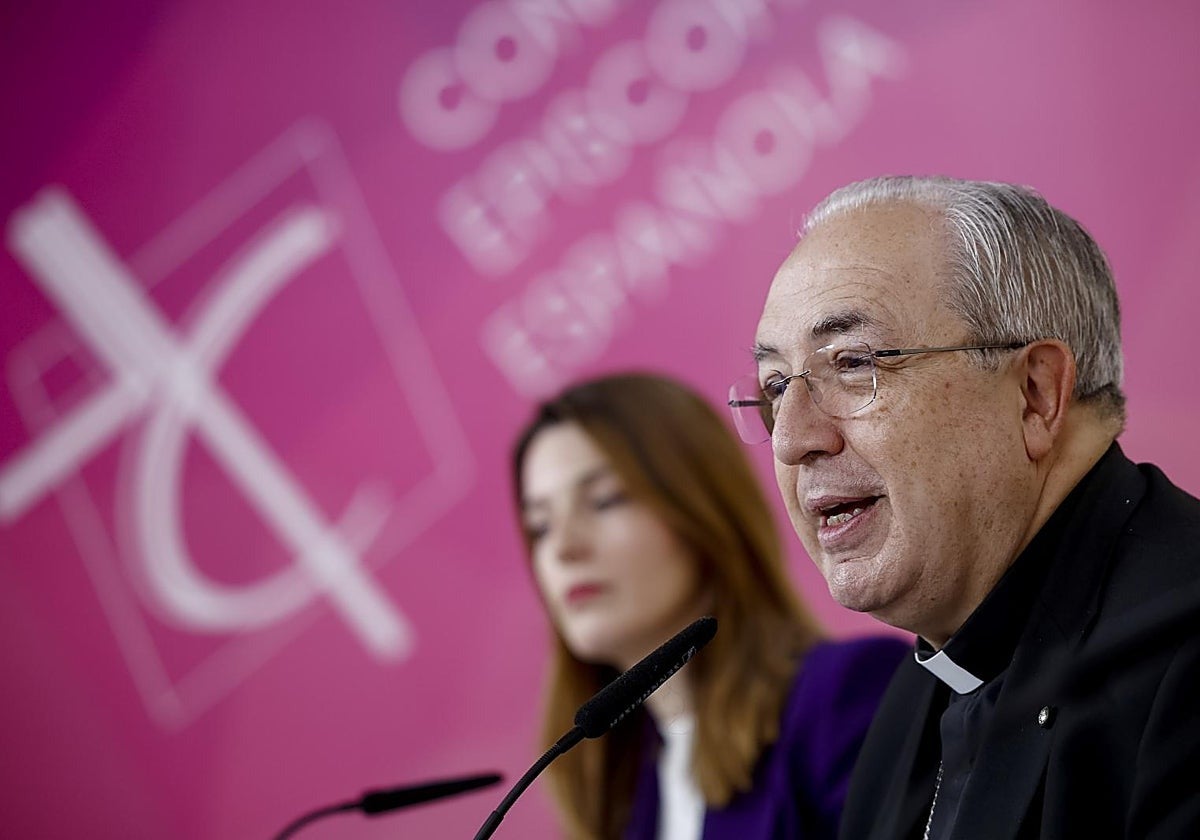
In 2024, the Catholic Church in Spain recorded a decrease in all sacraments (marriages, baptisms, first communions, confirmations and anointing of the sick), except for baptisms of those over 7 years old, which continued to grow and increased by 12.6% compared to 2023. This is what has been found in the report on the activities of the Catholic Church 2024, drawn up by the Spanish Episcopal Conference (CEE) and presented last week by the secretary general and spokesman of the CEE, César García Magán, and Ester Martín, director of the transparency office, in charge of creating this document full of figures and statistics that summarise the work of the Church.
According to the report, the largest decrease is in church weddings, which fell by 6.08%, from 33,500 in 2023 to 31,462 in 2024; followed by first communions, which fell from 162,580 to 154,677 (4.86% less). The total number of baptisms also fell by almost 4%, from 152,426 in 2023 to 146,370 in 2024. However, there is a 12.57% increase in baptisms of people over 7 years old (in practice), they rose from 11,835 in 2023 to 13,323 in 2024, an increase of 12.6%.
Furthermore, the data in the report shows that in 2024 there were a total of 103,535 confirmations, 3.38% fewer than the previous year, when there were 107,153; and 26,013 anointings of the sick, 0.41% down on 2023, when there were 26,120.
The Episcopal Conference blames this decline in sacraments as "a natural trend of the population" and the fall in the birth rate ("40% less since 2008"), as well as the increase in the number of people without partners. "The INE updated its data last week. There are now 1.2 million more singles in the last three years and only 105,000 married couples. This is reflected in the sacraments received in our country," said Ester Martín at the press conference held at the Episcopate's headquarters.
Magán, on his end, welcomed the increase in the number of baptisms of older people (2,053 more in two years) because of the degree of commitment and the degree of responsibility involved in these baptisms "is assumed to be greater, because it is born of a personal conviction and, furthermore, in a socio-cultural context where there is no longer a convention or, rather, a collective faith, in which all children are baptised", the spokesman explained.
Mass still strong
The report's data illustrates the Church's powerful social, pastoral, cultural and economic presence. "The Church is the largest social network that exists in Spain", Martín stressed. Among other noteworthy data, participation in liturgical life stands out: more than 8,236,000 people over the age of ten (0.3% more than in 2023, some 26,000 more) regularly attend mass in one of the 22,922 parishes in the country (11,479 rural and 11,443 urban), which confirms the validity of worship in an increasingly secularised society.
The document shows that in 2024 more than 9.5 million Eucharists were celebrated in Spain, which 14,994 priests sustain by dedicating nearly 26.5 million hours to masses, spiritual guidance, service in parish offices and visits to the sick.
For the first time, the number of priests has fallen below 15,000. In 2023 there were 15,285 and in 2022, 15,699, i.e. 4.5% less in these three years. However, there has been a significant increase in the number of seminarians, who in 2024 were 1,036 compared to 957 in 2023, which is 8% more. Magán views these new vocations "with hope" and trusts that they will allow us to continue to guarantee pastoral care in both rural and urban Spain in the future. "We are opening new parishes in the cities, but we cannot close those in rural Spain because there are elderly people to care for," he said.
There has also been a decline in the monastic life: from 703 operational monasteries in 2023 to 690, and from 7,664 nuns and monks in 2023 to 7,449 in 2024, 215 fewer.
In terms of spreading the faith, the Church highlights the work of 82,106 catechists, 34,494 religion teachers and 9,648 Spanish missionaries present in 1,131 mission territories in 133 countries. Peru, with 524, is the country with the highest number of Spanish missionaries, followed by Venezuela (397) and Argentina (330). There are even Spanish Catholics on mission in Australia (18).
Educational and fraternal work
The 2,527 Catholic educational establishments, chosen by almost 1.5 million students, continue to be one of the pillars of ecclesiastical activity. According to the report, these schools save 5,067 million euros per year for the State. Almost three million students chose to study Religion as part of their academic education.
The document also highlights the cultural and social dimension of religious celebrations: 426 events are listed as being of interest for tourists, more than 5,500 brotherhoods bring together a million members and millions of visitors come each year to the 638 sanctuaries spread throughout Spain. In Santiago de Compostela, almost half a million pilgrims completed the Camino in 2024.
The cultural heritage of the Church also occupies a prominent place: 3,161 properties of cultural interest and 842 construction, conservation and rehabilitation projects carried out during the last year reflect, according to the bishops, "the contribution of the Church to Spanish cultural identity".
164,000 sick visitors
The report particularly highlights the care work: almost 4 million people were cared for in more than 9,000 health and care centres. The 972 health centres - hospitals, outpatient clinics and nursing homes - cared for 1,330,128 people, while the 8,088 care centres cared for 2,482,107.
The largest number of resources is dedicated to the fight against poverty: 6,282 centres provided shelter and support to almost 2 million people. Other key areas include assistance to migrants and refugees, integration into the labour force, protection of women, rehabilitation of drug addicts and the defence of life and the family.
The Church also highlights the work of the Prison Pastoral, with 159 chaplains and 2,047 volunteers in 84 prisons; and the Health Pastoral, with 882 chaplains and 18,832 volunteers, responsible for more than 164,000 monthly visits to the sick in hospitals and homes.
The economic section of the report highlights that diocesan expenditure amounted to 1,428 million euros, a figure that multiplies 3.3 times what was received from the IRPF tax allocation (429 million), thanks to the 9 million taxpayers who marked the 'X' for the Catholic Church on their income tax return.
Both Ester Martín and César García Magán underlined the Church's "growing commitment" to transparency and pointed out that beyond figures and statistics, the Report is "an exercise in transparency of what we do and who we are".
Before the end of the press conference, Magán wished the journalists a merry Christmas and expressed the EEC's wish for Pope Leo XIV to visit our country in 2026. The spokesman recalled some recent words of the pontiff who said that this visit to Spain next year was "a real possibility".
![[]](http://static.vocstatic.com/voc26/latest/assets/images/favicon/surinenglish/apple-touch-icon-57x57.png)