
Economy
Another trade war is brewing as China hits Spain and EU with huge tariffs on some meat products
The Spanish government has called for dialogue and is open to helping the industry after Beijing announced taxes of up to 62.4%

Madrid
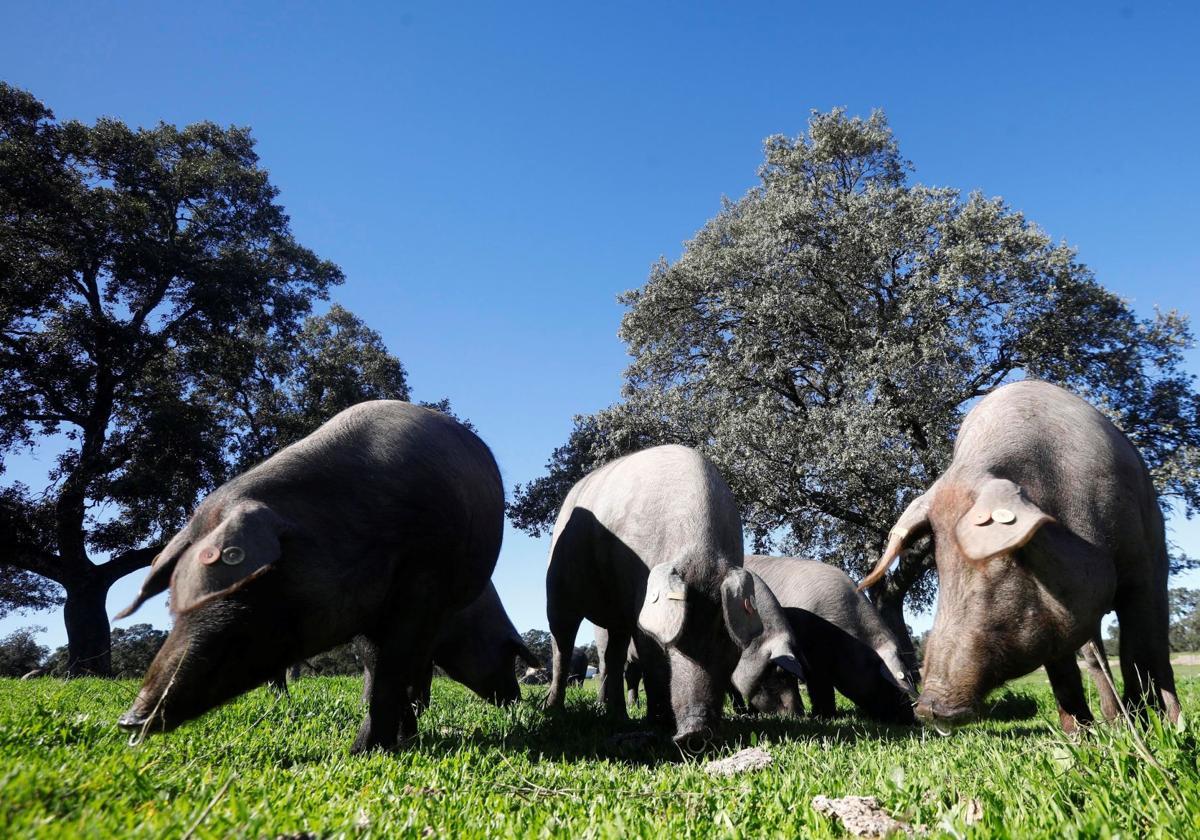
Another trade war is brewing for Europe and Spain. This time, meat products are the target and China is the enemy. The Asian giant's ministry of trade announced last Friday that it will impose temporary tariffs of up to 62.4% on these goods from the EU starting this Wednesday. This will affect, to a greater or lesser extent, national companies in Spain such as ElPozo, Campofrío and Sánchez Romero Carvajal, with rates of around 20%. Iberian ham and other cured meats are excluded from this trade retaliation from Beijing.
Beijing's crackdown on this type of chilled and frozen goods - pork meat, pork offal, pork fat and other pork derivatives - is part of the anti-dumping investigation launched by Beijing, which accused Brussels of damaging the Chinese pork industry with its exports. It is interpreted as punishment for the tax levies adopted by the European Union in October 2024 on electric vehicles manufactured in China.
Despite this harsh blow, a significant number of Spanish companies have managed to avoid the most onerous penalties of 62.4% imposed across the board on all European meat producers. Among the affected Spanish companies or those operating in Spain are Litera Meat, with a tariff of 15.6%, and a subsidiary of the Danish company DAT-Schaub, with 31.3%. Companies such as ElPozo Alimentación, Campofrío and Sánchez Romero Carvajal Jabugo will face a 20% surcharge. In total, nearly 50 Spanish companies or subsidiaries operating in Spain will be hit by the 20% tariff from Beijing.
"All the necessary steps"
Spain's Minister of Agriculture, Fisheries and Food, Luis Planas, stated on Friday that he was in favour of seeking a negotiated solution with China. He stressed that Spain's trade relations with China are "fluid" and "intense", particularly in the agri-food sector, adding that, in the absence of a more in-depth analysis, both the Ministry of Economy and the Ministry of Agriculture are "in favour of resolving any differences that may exist through negotiation" and that, "logically", they are going to support the pork sector "in relation to this and other situations that may arise".
The European Commission also gave assurances that it will take "all necessary steps" to defend producers and the meat industry from these temporary tariffs. "We will study the details, we will decide on next steps, but I can categorically assure you that we will take all necessary steps to defend our producers and our industry," EC spokesperson Olof Gill said during the Commission's daily press conference.
300,000 tonnes exported in the first half-year
The Spanish meat sector trade organisation Anice indicated that, in the first half of 2025, pork and by-product exports to China had begun to recover the ground lost in recent years. It added that, between January and June, 279,838.58 tonnes were exported, valued at 570.5 million euros, a 13.9% increase compared to the same period in 2024.
The main associations in this industry are lamenting the imposition of these tariffs, although they stressed that Spain has the lowest tariff compared to the rest of Europe. This is due, according to Interporc, to the "transparency, agility and professionalism" with which Spanish companies made themselves available to the Chinese authorities, the good coordination between Interporc and the sector associations with companies and the trusting relationships with operators in China.
![[]](http://static.vocstatic.com/voc26/latest/assets/images/favicon/surinenglish/apple-touch-icon-57x57.png)