
History
Researchers discover evidence of cannibalism in Spain with 11 individuals dismembered, cooked and devoured
Scientists have identified cuts and fractures to access the bone marrow and even human teeth marks on the skeletal remains

J. Arrieta
Burgos
A research team led by the Catalan institute of human palaeoecology and social evolution (Iphes-Cerca) and scientists from the Spanish national research council (CSIC) has documented a case of human cannibalism among the local Neolithic communities that occurred some 5,700 years ago in the El Mirador cave, which is part of the Atapuerca mountain range in Burgos.
Already, earlier this century, the remains of "six individuals from the early Bronze Age (about 4600-4100 years ago), which showed signs of cannibalism", were discovered. Subsequent excavations unearthed older remains with similar indications. A statistical analysis of radiocarbon dates identified a single earlier event (around 5709-5573 years ago) unrelated to those. That study "showed that the cannibalised people were of local origin. The episode coincided with the end of the Neolithic occupation, suggesting that this was not a common behaviour among the cave dwellers". This practice was not "a response to famine".
According to researcher Palmira Saladié, anthropophagy (cannibalism) "is one of the most complex behaviours to interpret, due to the difficulty involved in the consumption of human beings by other human beings and the lack of necessary evidence to link it to a specific behavioural context". The remains correspond to at least 11 individuals, among them children, adolescents and adults, who were skinned, skinned, disarticulated, fractured, cooked and consumed, according to the evidence identified in the bones. It was a systematic consumption, with no "visible" evidence of rituals or ceremonies, "probably related to conflicts between neighbouring groups or between local groups and newcomers".
The remains come from two sectors of the cave and have been preserved in an "exceptional" state. This has made it possible to identify cut marks, fractures to access the marrow, cooking and even traces of human teeth. Other analyses have revealed that they were all "eaten in a very short space of time".
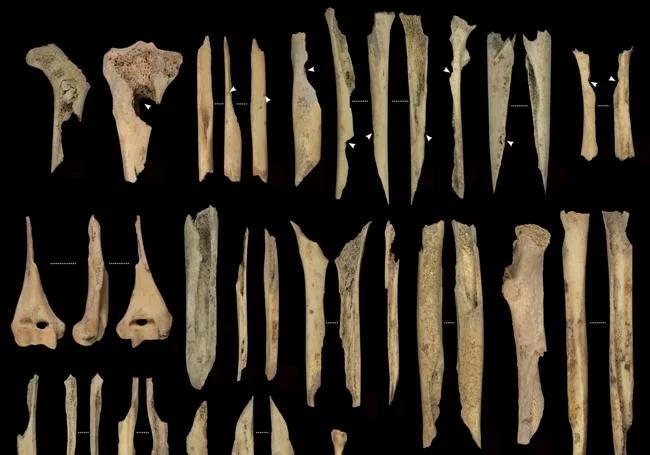
"We are not dealing with a funerary tradition or a response to an extreme famine," said Francesc Marginedas of Iphes. "The evidence points to a possible violent action, given the short space of time in which it all happened, possibly between peasant communities in conflict," he added.
Everything suggests that it was "an inter-group confrontation", with the elimination of an entire group and the subsequent consumption of the victims. "Conflict and the development of strategies to avoid it are part of human nature," said the researchers, who related this episode to other known massacres from the European Neolithic period, such as those at Talheim (Germany) or Els Trocs (Huesca). Likewise, similar behaviours from the same period have been discovered in sites such as the Fontbrégoua cave in France or in Herxheim (Germany).
![[]](http://static.vocstatic.com/voc26/latest/assets/images/favicon/surinenglish/apple-touch-icon-57x57.png)