
Opinion
Where words go to die
When Spaniards hear the word “fosa", it evokes mass graves filled during and after the Civil War, where ideology and violence buried not only bodies but also memory
Troy Nahumko
It is the deepest, darkest place on the planet. It’s a place where hope and light no longer exist. An impenetrable void where light cannot reach. It is the Earth’s deepest wound: a crease in the crust where the Pacific plate slides beneath the Philippine, an unseen violence translated into depth. A realm of pure negation: the Challenger Deep, a gash in the Earth’s skin that plunges eleven kilometres beneath the bright Pacific. It is not the abyss of Dante or Milton, yet one cannot help but feel the echo of old terrors in its presence.
Yet, when Spaniards hear the word “fosa", this is not this image that comes to mind. Here, the word evokes another darkness: mass graves filled during and after the Civil War, where ideology and violence buried not only bodies but also memory. A place of terrible sadness where rancid ideology terminated hope. In Spain, fosas are not history - they are still being unearthed.
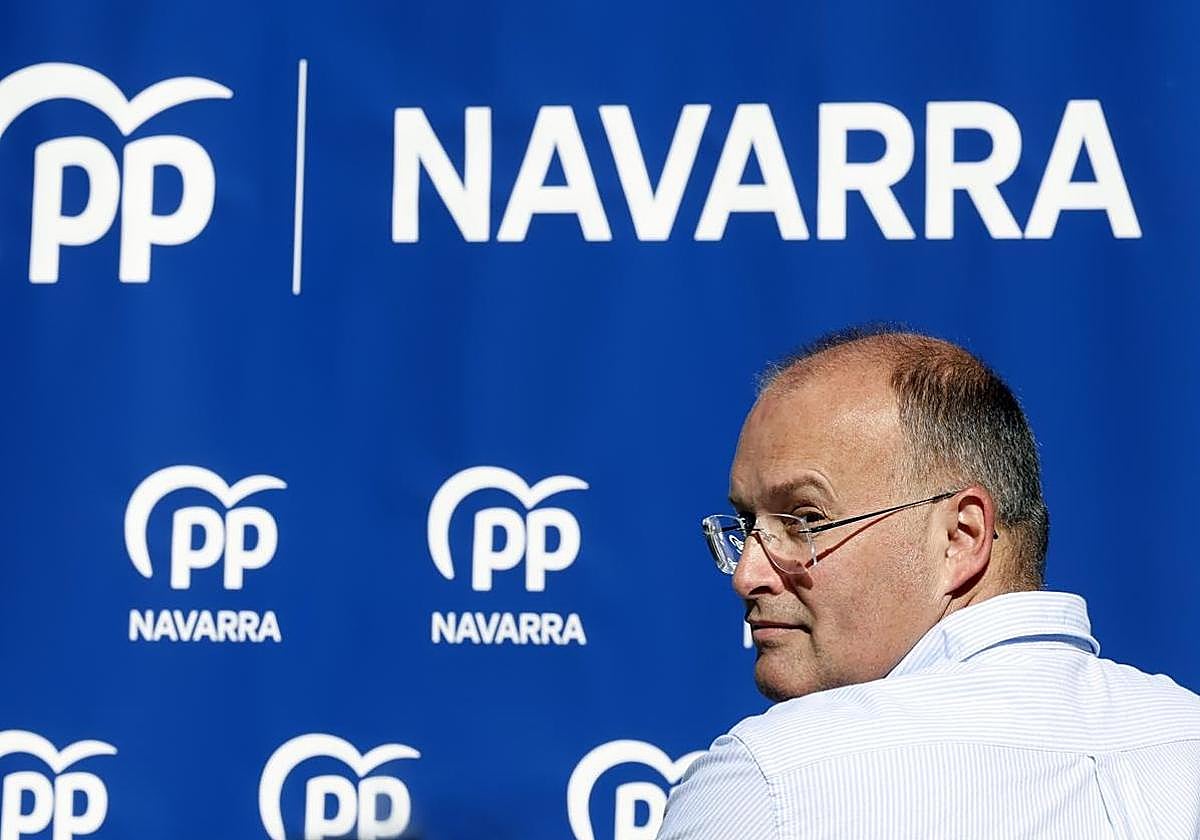
It is precisely this ambiguity that Miguel Tellado, number two in Alberto Núñez Feijóo’s Partido Popular, purposely played with the other day. He could have used the common idiom "cavar una tumba". Instead, he chose "fosa". This was no slip of the tongue, no casual synonym. Even this humble learner of Spanish can hear the weight of that choice. A tumba (tomb) is singular, ceremonial, even dignified. A fosa (mass grave) is collective, anonymous, a pit where victims are thrown. In Spain, it is an open wound that the far right has fought for decades to keep closed. It is the more than 4,000 unanswered questions that lie uninvestigated around the country and a brutal reminder from the descendants of the perpetrators of what can happen to those who oppose them.
This is not an isolated case. It is part of an ongoing war over words.
The war on language
Words are never neutral. Metaphors don’t just decorate speech; they frame how we think. As the linguist George Lakoff reminds us, metaphors highlight some truths and hide others. If immigration is a "wave", then migrants are not people but a natural disaster. If political opponents are "enemies", then compromise becomes treason. If Franco’s coup was a "Cruzada" rather than a military uprising, then dictatorship becomes salvation. In Extremadura and other communities around the country, the conventional right and far right are changing the historical memory laws and rebaptizing them as ‘leyes de la concordia’. In the process directly erasing the word dictatorship from official communications and pretending that summary executions and dictatorship can somehow be softened into a reasonable agreement - equating victims and perpetrators
History shows how dangerous this can be. In Rwanda, radio broadcasts dehumanised the Tutsi minority by calling them "cockroaches", priming listeners for the genocide that would take place. Donald Trump retold Aesop’s fable of the farmer and the snake to frame immigrants as inherently treacherous, whispering that the United States was the farmer and that migrants were the venom. Even the Gulf War was justified with metaphors: Saddam was "Hitler", Kuwait was being "raped", America’s economy was "strangled". His recent suggestion of reverting the Department of Defence to the Department of War is a less subtle example of this ‘attack’. Lakoff was right: metaphors can kill.
Spain knows this too well. Francoist propaganda spoke of “rojos” (reds) as a disease to be purged, of “anti-España” as an enemy within. Today, far-right rhetoric recycles that same dehumanisation - whether by calling feminists “brujas,” refugees an “invasion,” or political opponents “traidores” (traitors). The choice of words prepares the ground for the politics of exclusion.
Even in social matters this happens. In vague attempts to obscure their blatant homophobia, the right claimed that what they didn’t agree with was using the word ‘marriage’ when referring to their opposition to legalizing marriage equality. Taking ‘In the beginning was the Word’ to a completely new, twisted dimension.
Why it matters
Some will say: it’s just words. But words dig deeper than we think. They shape memory, frame reality, and prepare the imagination for action. The English idiom, ‘sticks and stones may break my bones, but names will never hurt me’ could not be more wrong. When Tellado says “fosa,” he is not just speaking - he is reminding us, implicitly, who controls the story of Spain’s past. And if the right controls the past, it also controls the future. A "palabras necias, oídos sordos" is certainly not the case.
That is why resisting this war on words matters. It is not only about historical memory, but about democracy itself. If we accept metaphors of hate and dehumanisation, we allow them to guide our politics. If, instead, we insist on metaphors of dignity, solidarity, and light, we create different possibilities.
Words as resistance
Like poets, we must approach language with care and courage. Every citizen, every journalist, every teacher, every politician has a responsibility to notice and contest the frames being imposed on us. To call out the “fosa” when we hear it. To question whether a wave of migration is really a wave - or people seeking a life. To remember that words can bury, but they can also uncover.
The struggle over metaphors is the struggle over memory, over dignity, over democracy. Spain, of all countries, knows how much depends on whether silence or speech wins that battle.
If words can dig graves, they can also open doors. But even at the very bottom of the ocean - on the floor of the Earth’s deepest trench, nearly 11km below the surface - a single, discarded plastic bag lies in the darkness. Scientists discovered it in the Mariana Trench, the Challenger Deep, that place beyond light, beyond sight, yet not beyond human shadows. Even in this realm of absolute depth and silence, traces of our negativity endure. If we allow toxic metaphors to descend unchecked, they will follow us into the deepest places of our collective consciousness. But if we resist and reframe, our words can be the light that reaches the deepest wounds - and begin to mend them.
![[]](http://static.vocstatic.com/voc26/latest/assets/images/favicon/surinenglish/apple-touch-icon-57x57.png)