
The Euro Zone opinion
A second shot
If Cuerpo were to succeed Paschar he would become the first Spanish president of the Eurogroup since the position was created twenty years ago, an opinion piece by columnist Mark Nayler
Mark Nayler
Malaga
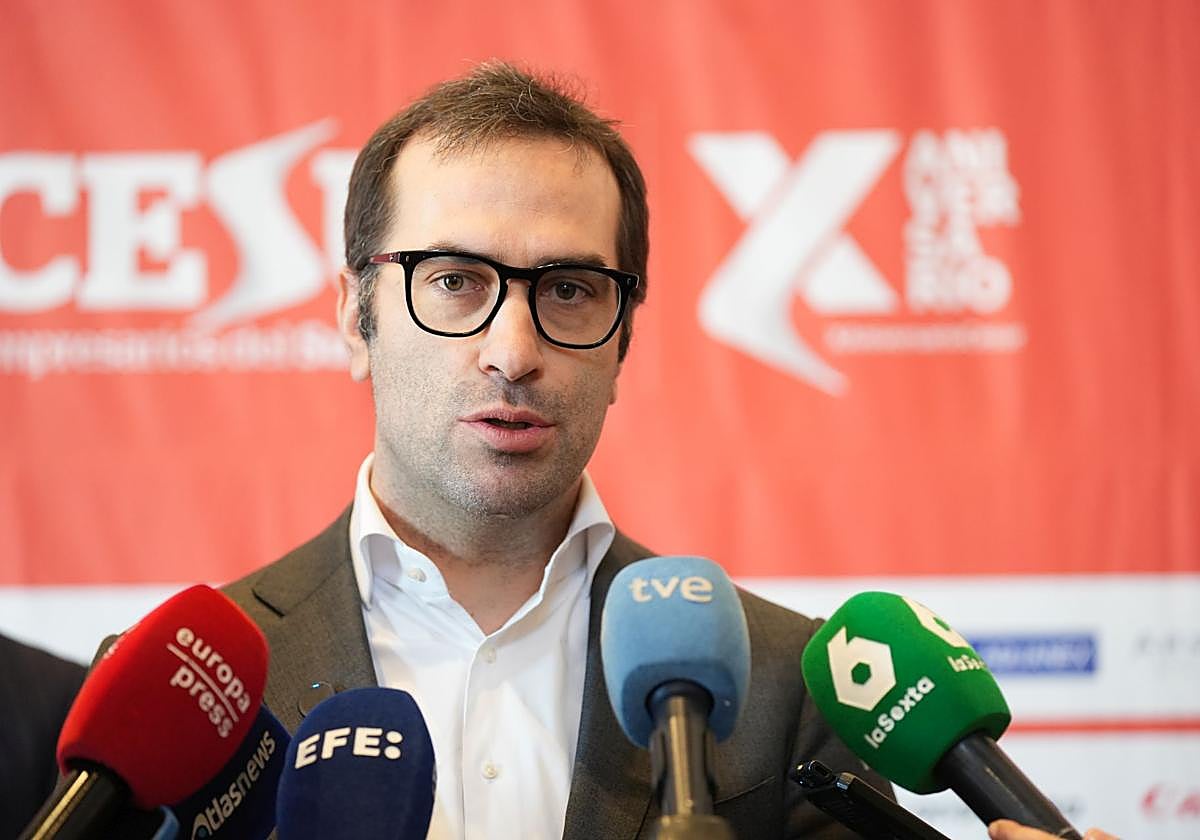
Spain's economy minister Carlos Cuerpo might have a second shot at becoming president of the Eurogroup (the 20 nations that use the euro), after Paschal Donohoe's resignation on Tuesday. The Irish finance minister had held the position since 2020 and won re-election in July, after Cuerpo and his Lithuanian counterpart Rimantas Šadžius backed down; but his move to a senior role at the Washington-based World Bank leaves open the most influential post in the eurozone - one that Spain has failed to secure on three occasions.
Three other major positions are also up for renewal within the next two years, all of them at the European Central Bank (ECB). These are: the presidency, currently held by France's Christine Lagarde; the vice-presidency, occupied by former Spanish finance minister Luis de Guindos; and chief economist, a role held by Ireland's Philip Lane since 2019. Amidst the delicate diplomacy of who-backs-who for which job, Madrid might have a difficult choice to make: Cuerpo for Eurogroup chief or former Bank of Spain governor Pablo Hernández de Cos as the next vice-president of the ECB.
Cuerpo's ascension to president of the Eurogroup would be the bigger win for Spain. Pedro Sánchez's former economy minister and first deputy prime minister Nadia Calviño is already installed as president of the European Investment Bank, a post she will hold until at least 2030. Having de Cos in the Number Two job at the ECB would be too much of a duplication. If Cuerpo were to succeed Paschal, however, he would become the first Spanish president of the Eurogroup since the position was created twenty years ago. De Guindos and Calviño ran for the presidency in 2015 and 2020, respectively, but both failed.
The outgoing Eurogroup president was seen as fiscally conservative by many eurozone finance ministers. After Donohoe's re-election this summer, Šadžius said he would face "big pressure from all sides to be more dynamic and focused". The group would have the same expectations of Cuerpo, who would no doubt use the role to push for greater fiscal integration - an issue that's also being explored in the newly formed European Competitiveness Laboratory (ECL).
Proposed by Spain and launched in March, the ECL aims to "mobilise private financing to promote European priorities". It gives the eurozone's finance ministers a space in which to tinker and innovate, before rolling investment schemes out across the bloc.
One wonders, however, whether Cuerpo would be able to complete his two-and-a-half year term as chief scientist in this bubbling, fizzing fiscal lab. With the next Spanish general election due before August 2027, and the recent breakdown of Sánchez's confidence-and-supply arrangement with Catalan separatists, that's far from certain. Still, he's regained an opportunity he thought he had lost in July. Madrid can't afford to lose this race a fourth time.
![[]](http://static.vocstatic.com/voc26/latest/assets/images/favicon/surinenglish/apple-touch-icon-57x57.png)