
The Euro Zone - opinion
Money for nothing
Is Sánchez right to say, as he did back in April, that the country is no longer the "European exception that left aside those who fall into a situation of vulnerability"?
Mark Nayler
Afriend of mine from Granada recently praised Pedro Sánchez for giving him money for doing nothing. An unemployed trainee carpenter (and committed lefty), he is a beneficiary of the government's minimum basic income (IMV) scheme, introduced at the start of the pandemic to counter the economic effects of lockdown. My friend thus triggered a conversation, fuelled by many glasses of vino tinto, about whether Spain is better off as a result of the Socialists' welfare policies. Is Sánchez right to say, as he did back in April, that the country is no longer the "European exception that left aside those who fall into a situation of vulnerability"?
It's easy to find statistics to support the claim. Since its introduction five years ago, Spain's IMV scheme has been received by almost three million. In the last twelve months, the number of recipients surged by 30%. According to government sources, the real income of the bottom 10% of the population has risen by 16.4% since 2018 - the year Sánchez came to power. Income inequality, as measured by the Gini index, was 31.2 in 2024, down from 33 seven years ago; and according to official national statistics, Spain's poverty rate dropped from 26.5% in 2023 to 25.8% last year (but not, as claimed by Moncloa, to 19.7%).
And yet.... According to the most recent Eurostat data, Spain ranks fifth in the EU for severe material and social deprivation, a position that has not changed since 2023. Around 8% of the population, or just under four million people, cannot afford at least seven of thirteen items deemed essential, such as household bills - almost two percentage points higher than the EU average of 6.4% and significantly more than Spain's neighbours, Italy (4.6%) and Portugal (4.3%). Statista describes Spain as "one of the most unequal nations in Europe", with income equality set to remain "identical" for the foreseeable future.
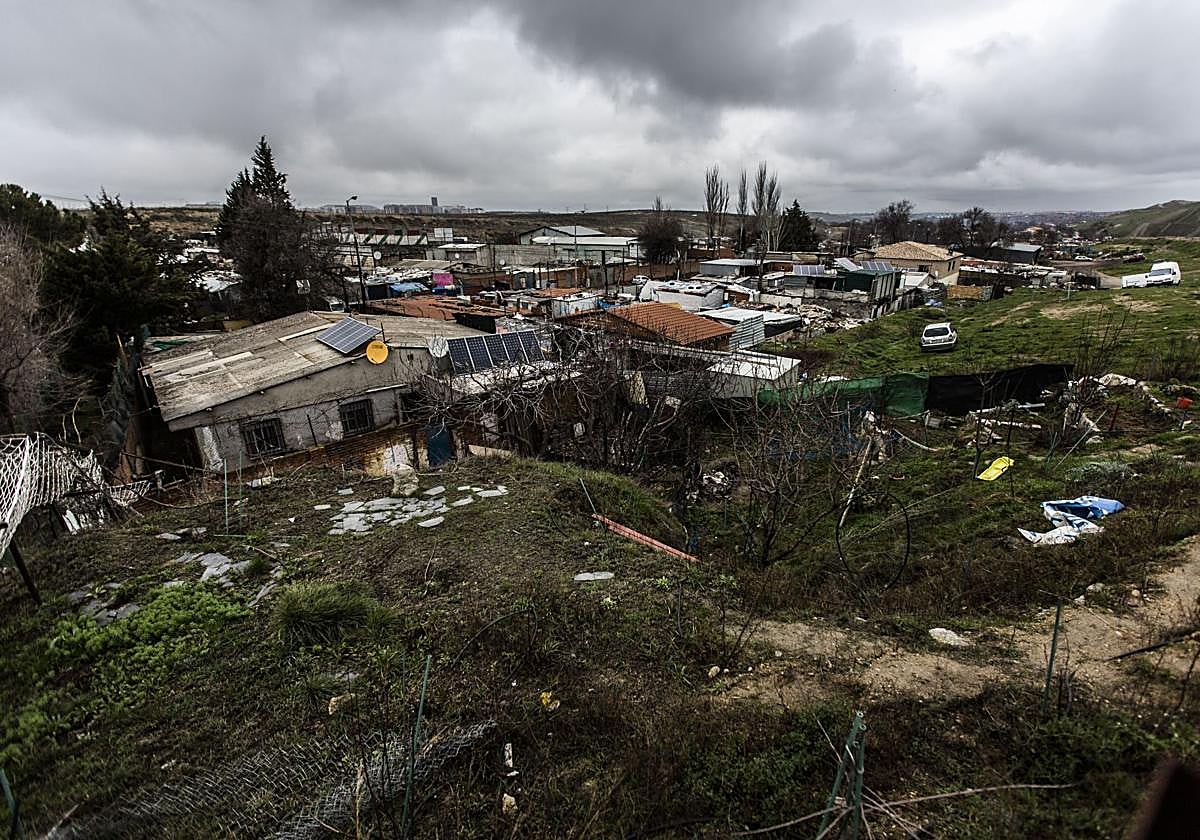
Things certainly haven't improved for the 8,000 residents of Madrid's Cañada Real, Europe's largest shanty town. Since late 2020, around half of this 15-kilometre-long settlement has been without power, in what was described by a 2023 report as "a collective disconnection event of an unprecedented magnitude in an EU context". In February, the Council of Europe's Committee of Social Rights found that Spain is violating the European Social Charter and its own constitution by denying power and adequate housing to the residents of Cañada Real.
Spain's poverty level, though slightly improved, is still way above the EU average of 16.2%. Unemployment, including among young people, remains the highest in the bloc - and one of the most compelling criticisms of basic income schemes is that they incentivise joblessness. To quote the great Mark Knopfler of Dire Straits, who wouldn't want their money for nothing?
![[]](http://static.vocstatic.com/voc26/latest/assets/images/favicon/surinenglish/apple-touch-icon-57x57.png)