
The Euro Zone
A hard 'No'
Columnist Mark Nayler examines Sánchez's defiance of Trump against a backdrop of hollow EU promises, restricted tariff powers and a president who considers himself above the law
Mark Nayler
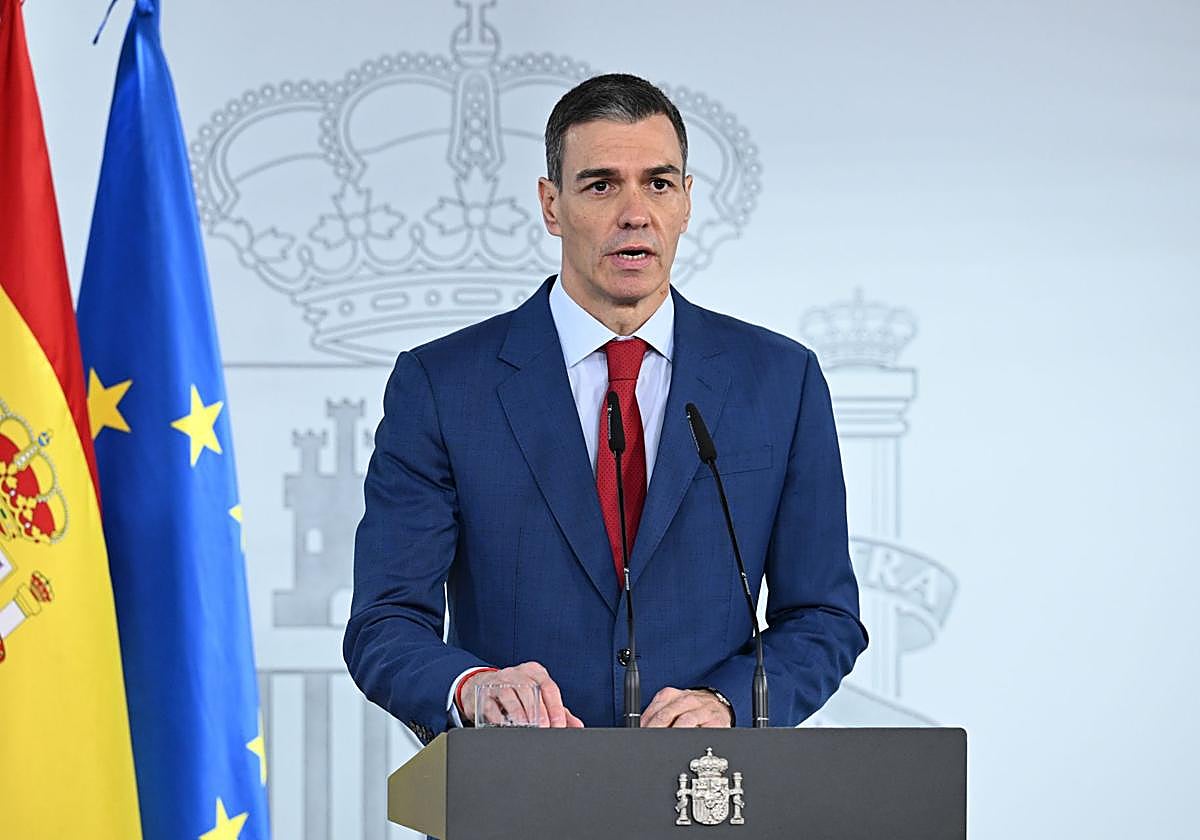
The slogan of this week has been "No a la guerra", repeated with such hypnotic frequency in the media that it has lost almost all meaning (like when you say a word out loud over and over). Pedro Sánchez's stance on Iran was almost guaranteed approval among Spaniards, the majority of whom are anti-war and loathe Donald Trump - hence his reference on Wednesday to the "Azores Trio" of 2003, when then-PP president José María Aznar made the hugely unpopular decision to back Tony Blair and George Bush in their invasion of Iraq. But how risky is Sánchez's latest act of defiance against Trump when viewed in the context of transatlantic trade relations?
In one sense, not very. Sánchez will surely have had last month's US Supreme Court ruling in mind, according to which Trump's weaponised tariffs are unconstitutional. Though "Tariff Man", as Trump once referred to himself, has other means at his disposal to impose trade sanctions, his capacity in this respect has been restricted. He won't be able to fulfil his threat to cut all ties with Spain - at least not anytime soon - and Sánchez knew this ahead of condemning his strikes on Iran.
Trump said that he was "absolutely ashamed" of the six judges who ruled against his tariffs. "But", he added ominously, "it doesn't matter because we have very powerful alternatives."
That remark highlights the most dangerous aspect of Trump's administration - namely, his apparent belief in his own omnipotence. On Tuesday, he announced that the US didn't need Spain's permission to use the airbases in Andalucia it jointly controls with Madrid, because it could just "fly in" and use them anyway. Supreme Court rulings, sovereignty issues, international diplomacy - they're all just tiresome irritations for Trump.
Secondly, Spain is to a large extent protected by the EU, which operates as a united block for trading purposes. It would be difficult, though not impossible, for Trump to single out Madrid for punishment - and even then, the US would probably suffer most from a total trade embargo. The US accounts for only 5% of Spanish exports, or 1.3% of its GDP, significantly lower than the EU average of 3.1% (although there is marked variation between industries).
However, despite the theoretical protection offered to Spain by the EU, there's good reason to doubt its practical value. "The EU will always ensure that the interests of its member states are fully protected," said EU Council president Anontio Costa, after Trump threatened to isolate Spain. But that didn't prevent Brussels from signing a hopelessly one-sided trade deal with Washington last summer.
The EU's word in trade disputes has come to mean almost as little as Trump's does about - well, anything. Sánchez's consistent opposition to war stands in sharp contrast to both.
![[]](http://static.vocstatic.com/voc26/latest/assets/images/favicon/surinenglish/apple-touch-icon-57x57.png)