
The Euro Zone
Borderline case
Columnist Mark Nayler looks at the result of the election last weekend in Aragón
Mark Nayler
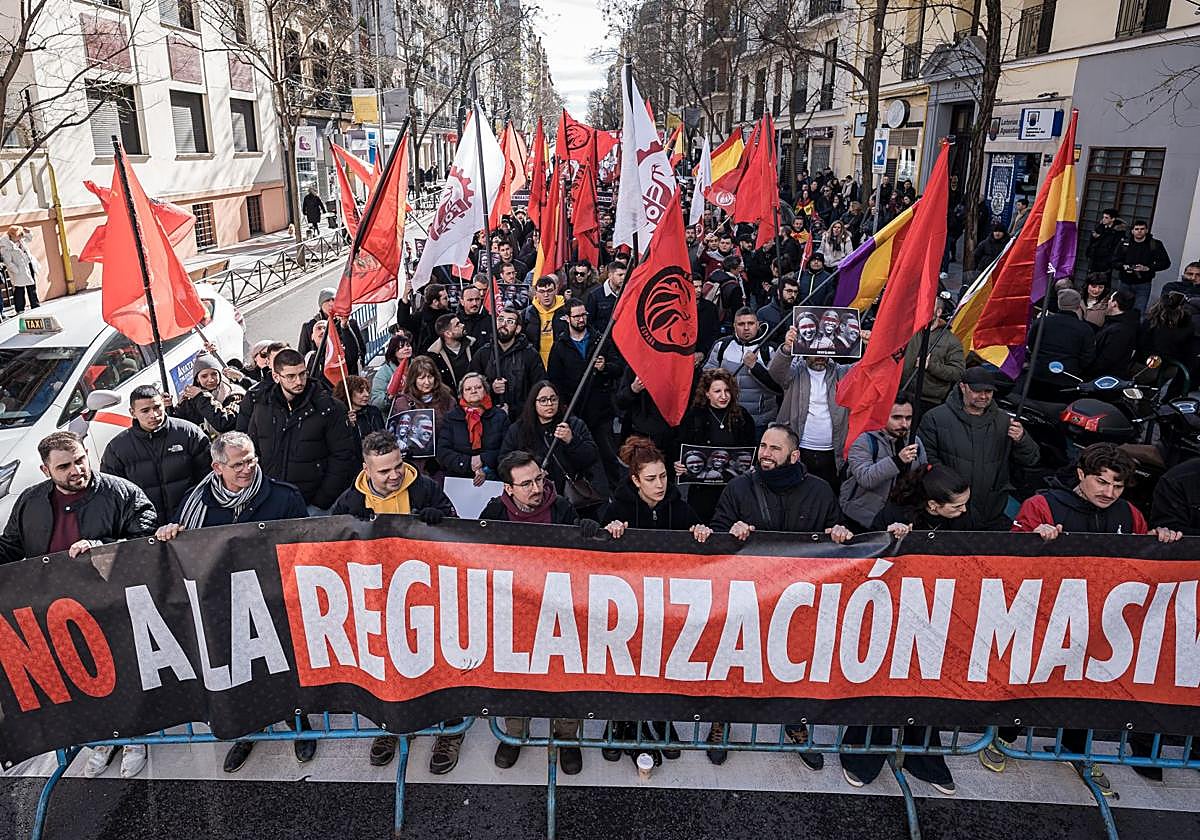
Though predictably opposed to Pedro Sánchez's regularisation of half a million undocumented migrants, Vox must now be revelling in gratitude. The result of last weekend's election in Aragón, in which the right wing party doubled its seats and the Socialists lost two, indicates that Sánchez's stance on migration is fuelling a populist surge in Spain - as has happened elsewhere in Europe.
In September 2015, then-German Chancellor Angela Merkel announced that Germany's borders were open, in response to the huge numbers of refugees fleeing to Europe from Syria, Afghanistan and Iraq. Drawn by her announcement of "Wir schaffen das" ("We can do it"), over one million migrants entered Germany that year. "The fundamental right to asylum for victims of political oppression," Merkel told a German newspaper, "has no upper limit."
Merkel faced severe criticism for opening Germany up. Horst Seehofer, at the time the Conservative president of Bavaria, claimed that she had made "a mistake that will keep us busy for a long time." Popular anger at the Chancellor's open-border policy fuelled the ascent of right wing Alternative für Deutschland (AfD), the German equivalent of Vox.
AfD went from having no national presence in 2013, the year of its formation, to securing 94 seats in the Bundestag in 2017. It now occupies 151 seats in the German parliament and is the country's largest opposition party. With a general election in Spain due next year, Vox will be hoping to emulate that success, and bump PP off the second spot in congress. The Aragón result suggests that Sánchez's pro-migration stance might help it do so.
The EU has echoed the Spanish right's disapproval of the regularisation programme, claiming that it contradicts Brussels' stricter message to asylum-seekers. It's concerned about the so-called "pull effect" - the hypothesis that one-off regularisation policies permanently advertise a country as migrant-friendly, thus straining its resources (and that, in this case, Spain's newly regularised migrants will be free to move throughout the Schengen Zone.)
But evidence for the pull effect is mixed. One report, published in the European Journal of Political Research in March 2024, found that Merkel's 2015 announcement "neither attracted sustained subsequent migration flows nor measurably raised aspirations to migrate to Germany in origin countries worldwide." As a one-off policy, it seems to have worked: as of 2022, 64 per cent of the refugees who arrived in Germany in 2015 were employed (although that figure was much higher among men than women - 75 per cent, compared to 31 per cent).
Merkel's open-door policy had double-edged consequences. Rather than placing an unsustainable burden on Germany's welfare state, it integrated hundreds of thousands of migrants into the workforce. At the same time, it boosted the ascent of her opponents. Early signs suggest that Sánchez's regularisation plan is set on a similar trajectory - that of being an economic and humanitarian success as well as a political mistake.
![[]](http://static.vocstatic.com/voc26/latest/assets/images/favicon/surinenglish/apple-touch-icon-57x57.png)