
The Bottom Line- opinion
The 'Pipitren'
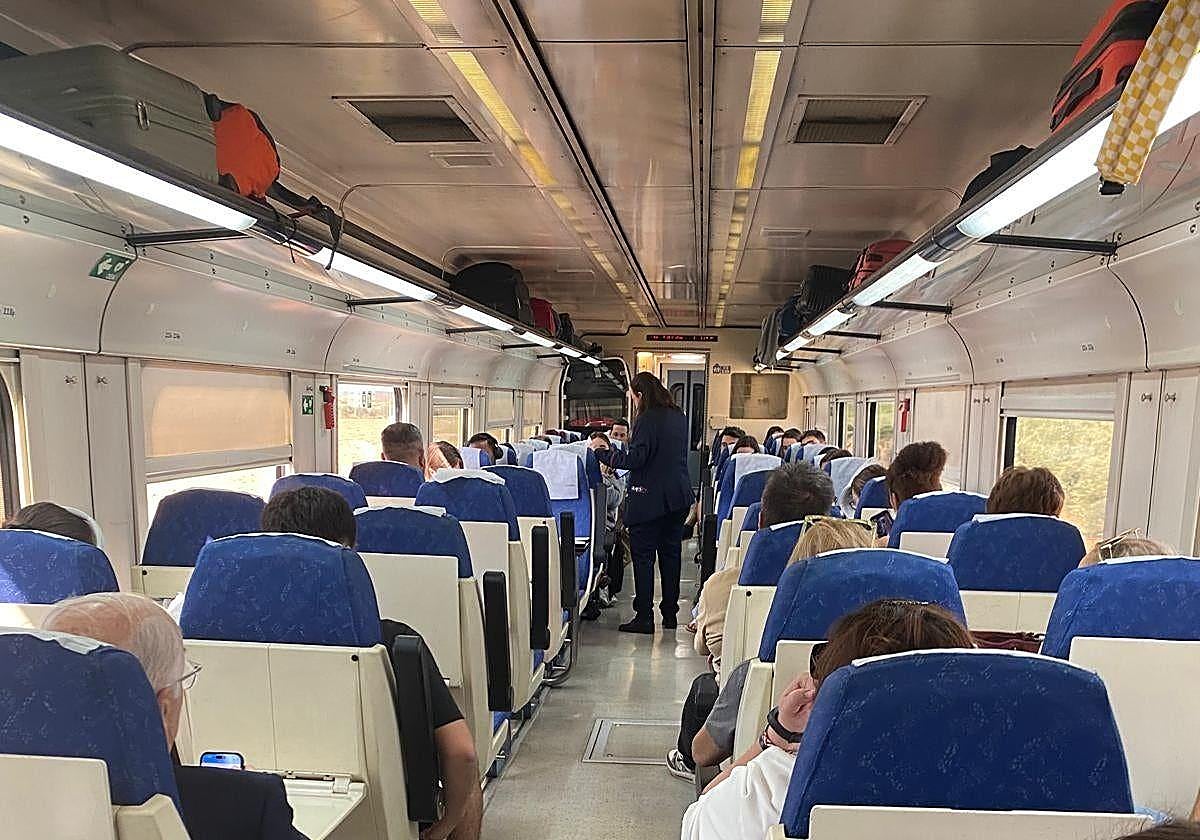
A medium-distance train from Malaga to Seville, taking the old route, had to make two long stops so passengers could get off at intermediate stations to relieve themselves, since the train's toilets were out of order
Ignacio Lillo
When they were telling me about it over the phone, speaking with one of the affected passengers, I was literally wetting myself with laughter - quite fitting, given the background of the story. You may have already heard it: a medium-distance train from Malaga to Seville, taking the old route, had to make two long stops so passengers could get off at intermediate stations to relieve themselves, since the train's toilets were out of order.
The train has since been nicknamed the "Pipitren" or the "pee train". Jokes aside, the lines for the restrooms during those forced stops caused a 44-minute delay on the journey - something that certainly didn't amuse those who had already "taken care of business" before leaving home.
In this case, the public operator Renfe acted in good faith: better to arrive late but with a laugh than to cancel the trip and leave a trainload of passengers stranded.
The thing is, scenes like this remind me of another era, when trains were nothing like they are today. Veteran railway workers used to tell me about travelling "by sight" at night and often hitting a rabbit or some other animal. Back then, it was common to stop the locomotive to pick up the catch - it would make a fine dinner upon reaching the next village...
Back to the present, it's clear that services like this one aren't being given the attention they deserve.
There's a parallel Avant high-speed service that takes much less time - and will take even less once the Almodóvar bypass opens. But the old route, the one we're talking about here, still serves major population centres in the interior of Malaga and, above all, Seville.
So if it offered a decent level of quality, demand would surely increase - and, more importantly, it would help to connect and sustain a region that might otherwise face depopulation.
The opening-up to competition of Spain's national high-speed rail network - despite its drawbacks, which certainly exist - has been a notable success for cities like Malaga.
It has lowered prices and multiplied the number of services and available seats.
That's why the time has come to open secondary routes to competition as well, so private operators can offer trains to Antequera and Ronda, to Seville and Granada, and to any Andalusian town along the rails.
Few modes of transport do more to knit a region together - and here, we're making far too little of that potential.
![[]](http://static.vocstatic.com/voc26/latest/assets/images/favicon/surinenglish/apple-touch-icon-57x57.png)