
Traditions
Malaga's traditional folk music and dance festival: dampened by the storm, but still as lively as ever
The heavens opened, but then the skies cleared, allowing the 'verdiales' groups an opportunity to shine before an audience of all ages

Malaga
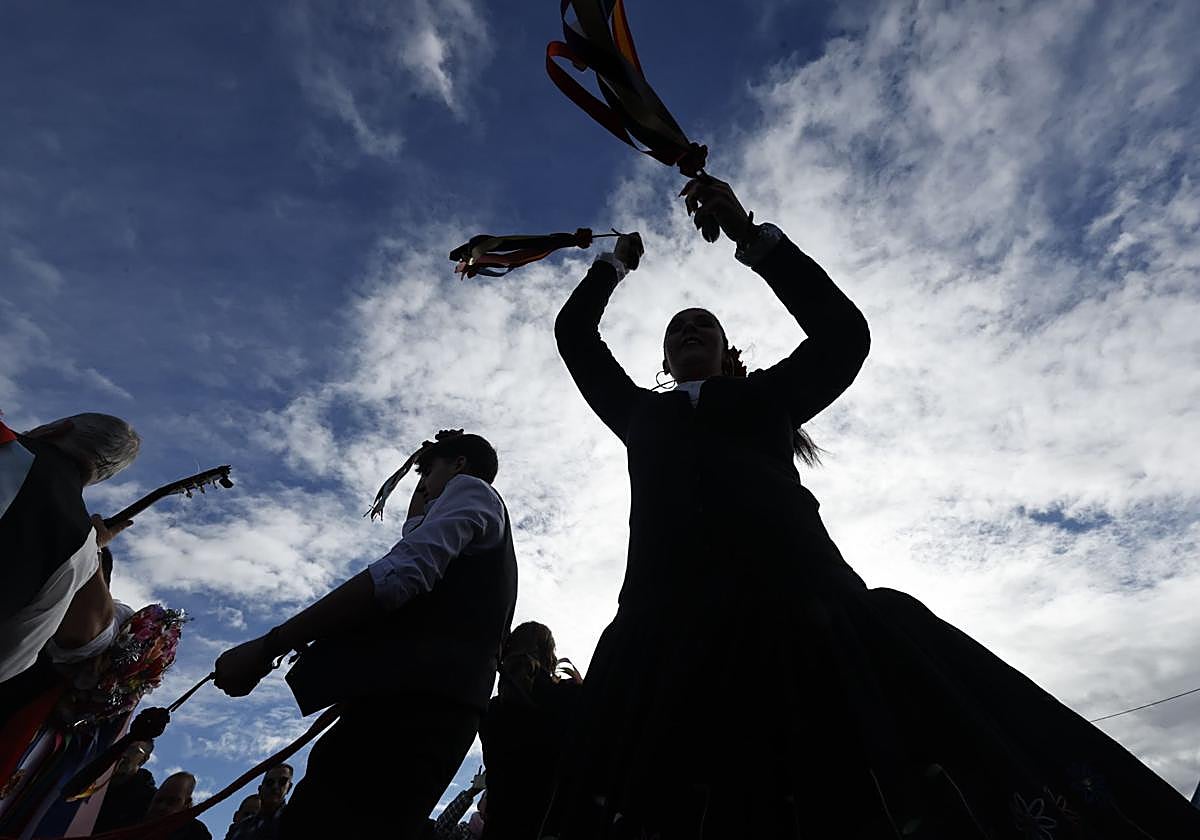
Thankfully, on Sunday the skies cleared after torrential rain came down on Saturday night, allowing for the Fiesta Mayor de Verdiales to be celebrated in the Andrés Jiménez Díaz park in Puerto de la Torre, as it does every 28 December.
Indeed, by midday on Sunday, the sun was shining and the temperature quite pleasant. However, regulars of this major gathering of Malaga folklore did note that this year's visitor turnout was lower due to the earlier rains, as also evidenced by the muddy grounds of the park. In fact, some of the troupes ('pandas' in Spanish) were unable to travel to the Costa del Sol capital to compete, as was the case of two groups from the Comares style (explained below) due to the amber weather alert for heavy rain in the Axarquia area. Still, despite this year's weather-related setback, the passion for this style of singing, dancing and traditional attire and, in general, the overwhelming enthusiasm for this ancestral, musical type of group, are most certainly not on the wane. Quite the contrary, it's growing.
Related story
.jpeg)
As proof of this: Yolanda Rico, 31, is the person in charge of a verdiales group, La Cepa, that formed just two years ago. Women leading these organisations with the mission of directing the singing and dancing are still an exception. "The festival is alive, it's passed down from parents to children. Here we have three generations of 'carrascos' [a term of endearment for the Verdiales family], from the 70-year-old grandfather to the grandchildren aged seven and 12," said Rico. "We're young folk here, with an average age between 30 and 40. Verdiales are the oldest expression of folklore in Spain. Here, each instrument and each style (there are three styles: Montes, Comares and Almogía) has its own unique touch. And the themes of the lyrics are love, heartbreak, the countryside, some 'cachondeo' [joking around], Malaga itself, and there are also more mischievous or 'green' songs, although they are the least of it all, added Cristina Fernández, a 39-year-old dancer and flamenco singer ('cantaora'), who is also a member of the same panda.
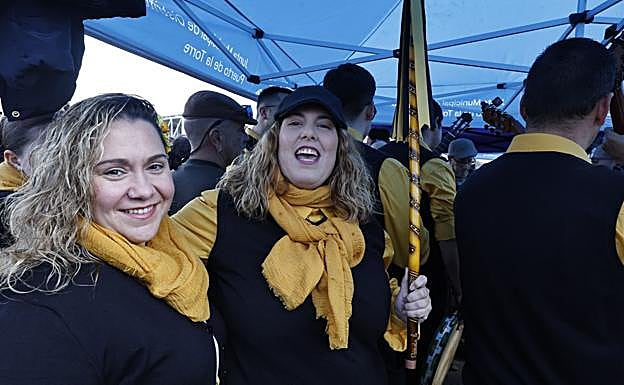
The children not only participate in the pandas, but also attend as spectators. Elisa and Adela were with their mother, Yaiza García, as well as their aunt and grandmother - three generations together - strolling around the festival grounds and enjoying the different groups in rehearsals before the start of the contest. They are from Malaga, but now live in France, near Lyon, so, when they return to spend Christmas on the Costa del Sol, they never miss this festival, which appears to take place at this time of year because of its coincidence with winter solstice. This event has been important throughout history for agrarian civilisations and its celebration has been overlapped with, or reinterpreted by, different religions. The origin of the verdiales is still not fully known, just as the beautiful hats, adorned with flowers, mirrors and trailing ribbons worn by the men are a mystery subject to several interpretations and legends. For instance, are the hanging ribbons meant to ward off evil spirits or do they reflect their beloved woman? Antonio Santiago, 74, wore one of the most luminous verdiales hats of the festival and yet he didn't have much of a clue as to their origin, but he did confess that he has always liked them and that he took advantage of his retirement to get more involved.
Yaiza García said she wants to preserve the tradition, which is why she brings her girls to Puerto de la Torre from France every year. The Osorio sisters, who came with their friend Inma Castillo and their children, also cite local customs as their reasons for being here: "Our parents also came to celebrate the rich cultural heritage of our region." However, despite the uniqueness of this expression of folk art, they lament its lack of recognition, even among the people of Malaga themselves. "There are many people who, when we say that we come here, ask us what this is and what festival it is, although the verdiales are even less known outside Malaga, it's very much a niche tradition," they commented. Still, having participated in many of these types of festivals, they believe that the average age of those attending has lowered in recent years. Indeed, the esplanade was filled with entire families with children and groups of trendy-looking friends, all eating migas - much like the group Carmen Morillas and Belén Sánchez were part of: "It's a really fun party, this is a very particular singing style from Malaga. It's a bit techno (because of the frenetic rhythm of the music). It's a bit of a rave, an analogue rave that connects with the ancestral. We like the mix of people, of hipsters with older folk; there's a generational interaction." There are even some celebrity appearances: actor Salva Reina was there with some friends.
Having already met a verdiales group leader who was only 31 years old and a woman, we then came across Francisco Martín González, a panda leader (known as a 'mayor' in the verdiales terminology) who has been in office for around a quarter of a century and is 81 years old. Malaga's mayor, Francisco de la Torre, had his photo taken with him and, as they posed for the cameras, they joked that they both held the same post of mayor, "although it seems that one of them is more in charge than the other" someone in the circle surrounding them was heard saying. Still, on this 28 December, among those who sang and danced, the top official, while named Francisco, did not have De la Torre as his surname.
![[]](http://static.vocstatic.com/voc26/latest/assets/images/favicon/surinenglish/apple-touch-icon-57x57.png)