
Transport
Malaga road surface concerns: tyre sales soar by 80 per cent after storms
Workshops and roadside assistance services report a surge in demand as potholes and sinkholes worsen

Málaga
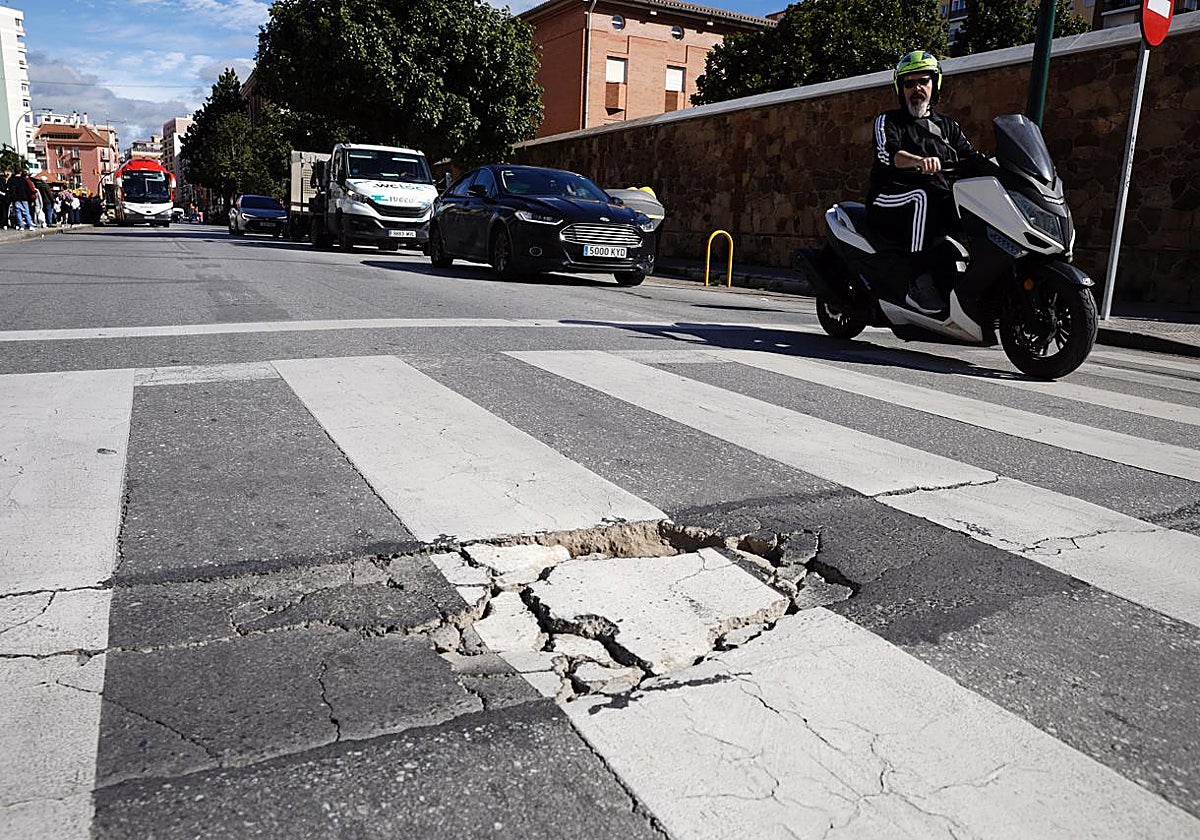
The virulent storms that have hit Andalucía so far this year have exposed the poor state of the road network in Malaga province.
One phenomenon attesting to this is the sudden spike in tyre sales, which rose by almost 82 per cent in the fortnight following the heavy rainfall.
A chronic lack of investment in road maintenance, combined with record rainfall, has led to a rapid deterioration of road surfaces.
Potholes, cracks, and sinkholes have multiplied, leaving drivers to navigate what feels like a minefield - and providing an unexpected boost for tyre companies.
According to a study by online shop Muchoneumatico.com, there is a marked increase in the sale of tyres due to bursts. The same observation comes from the employers' association of automotive workshops and roadside assistance companies.
"The rainfall recorded at the beginning of 2026 has acted as a catalyst in an already weakened road network," Muchoneumático.com sources say.
"The water infiltrates pre-existing cracks in the asphalt. The pressure exerted by constant traffic causes a hydraulic hammer effect that fractures the pavement from the inside, creating sudden undercuts," the online shop explains.
Cordoba, Seville and Granada recorded increases of more than 120 per cent during the first week of February, compared to the same time last year. In Malaga, growth in tyre purchases that week was more moderate, at around 21 per cent.
What is important to monitor, however, is the "delayed impact" of the rains by comparing the two weeks before the storms with the two weeks after. This is where Malaga stands out: the province recorded a sustained 81.8 per cent increase in average daily orders.
"This delayed demand is as important as the initial peak, as it shows that the consequences of poor infrastructure are spread over time, affecting safety and drivers' pockets weeks after the event," the study says.
Drivers speak out
Javier López lives in Rincón de la Victoria and works in Malaga. He has already suffered two punctures in the last few months on the way to and from work. In his case, it was the rains of the Christmas period that caused him headaches, not the most recent storms.
"In the workshop they told me that whenever it rains heavily there are more incidents because nails, screws and other detached pieces stuck in the ground come to the surface," he told SUR.
"The road is in a terrible state: it is full of potholes (...) how is it possible that they do nothing about the pool of water that always appears near the cement factory?" he asked.
Just a few days ago, another driver, Diego Alcaide, also suffered a broken tyre on the A7 on his way to Marbella. "The worst stretch is the Malaga ring road as it passes by the Martín Carpena stadium," he said.
25% more calls for roadside assistance
Cases like these have been trickling into workshops in recent weeks. According to President of Fedama (employers' organisation for car dealership and workshops) Antonio Martí, there has been "a ten per cent increase in services after the storm".
"We're not talking about simple punctures, which are usually fixed on the spot. These are tyre blowouts, damage to wheel rims and faults linked to the suspension, which takes a heavy toll from potholes," he said.
"Road maintenance was already very limited and the latest storms have worsened road conditions. There are many sinkholes. On top of that, car use has increased because of ongoing problems with rail services. The result: more breakdowns and incidents," Martí said.
Roadside assistance services also confirm this spate of tyre breakages. Juan Antonio Caballero is the owner of Grúas y Talleres Maese, a company that provides towing services for insurance company Mapfre in the province of Malaga. "Calls about tyre problems have risen by 25 or 30 per cent. Today, for example, we have seen three vehicles with blowouts and all the drivers were saying the same thing: it was because of a pothole," he said.
"The state of the roads in Malaga is bad, except for the newer roads such as the AP-46. The worst is in the industrial areas, because they have to sustain heavy traffic, and the N-340 in Marbella is also terrible," he stated.
Outstanding investments
Both the regional government of Andalucía and the provincial authority of Malaga have already announced the first allocations for the repair of roads damaged by the storm in the province. Of the 255 million euros that Malaga will receive from the reconstruction plan, roads will benefit from 65 million.
The provincial authority has also announced an allocation of 15 million euros for the first repairs to the roads under its jurisdiction. The priority for these actions will, logically, be on the roads that have suffered serious damage.
Whether the central government will take any action on state roads any time soon remains unknown. The opposition is blaming the government for neglecting Malaga's main roads and, by doing this, creating dangerous conditions for drivers.
Some Costa del Sol mayors have written to the Ministry of Transport to demand that these defects, which particularly affect sections of the Mediterranean dual carriageway (A-7) on the west coast, be fixed.
Civil engineers estimate that the investment deficit in Andalucía is at least 1.5 billion euros
Dean of the College of Civil Engineers of Andalucía Juan Manuel Medina Torres told SUR that the state of the roads is one of the most urgent areas of repair in the region. "We were already suffering from a high level of deterioration due to the lack of investment," he said after describing the damage caused by the rains.
Civil engineers in the region believe that the Andalusian road network requires at least 1.5 billion euros for repairs and maintenance, three times less that what authorities are earmarking.
![[]](http://static.vocstatic.com/voc26/latest/assets/images/favicon/surinenglish/apple-touch-icon-57x57.png)