
Adamuz train crash 2026
Trains between Malaga and Madrid will not run until end of this week
State railway operator Renfe is considering an alternative bus plan between Cordoba and Villanueva to bypass the section affected by the accident, which led to the cancellation of 23 train services between Madrid and Malaga on Monday
Ignacio Lillo and Chus Heredia
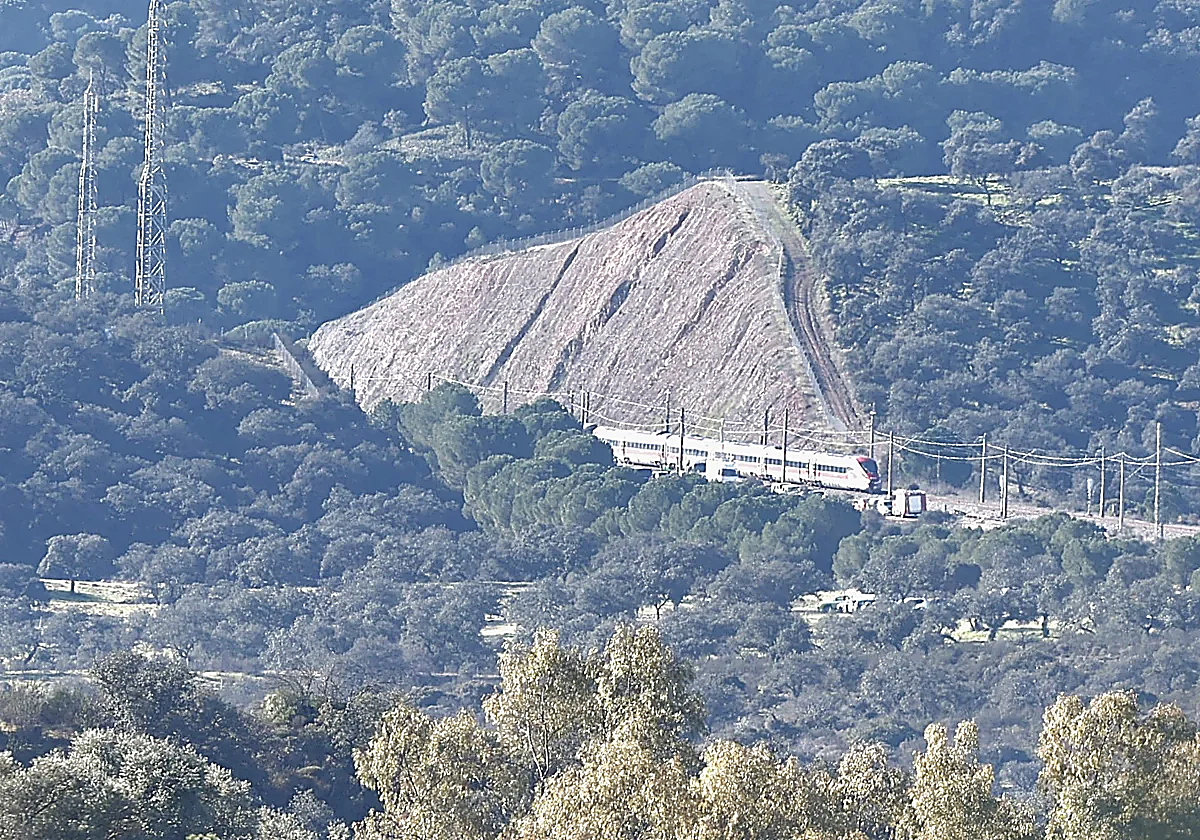
The return to normal on the high-speed line between Malaga and Madrid following the fatal train crash near Adamuz is not imminent. Initial estimates from state rail infrastructure company Adif indicate that rail traffic will not be restored until at least the end of this week (Thursday or Friday). It must be noted, however, that this is the best-case scenario.
On Monday, 23 services between Malaga and Madrid, outbound and inbound, were cancelled. The total number of trains suspended, taking into account other Andalusian connections, is around a hundred.
The first phase to be completed is the recovery of the victims' bodies and the corresponding investigation by the judicial police. Subsequently, experts from the railway accident investigation commission will take samples and gather impressions for the future official report, which will determine the causes, responsibilities, etc., and clarify what happened.
Then, work to clear the tracks will begin, with the most damaged material removed first. This will require the use of heavy-duty lorries and cranes. Fortunately, passenger carriages do not weigh as much as freight carriages, but it will still be no easy task.
REPAIRING THE DAMAGE
Finally, Adif technicians will finish assessing the damage and repair the tracks. In addition to the loss of the section of track where the derailment occurred, the accident has also destroyed hundreds of metres of catenary and its corresponding posts, among other damage. "Now a kind of relay race begins, with clear priorities," the sources said, adding that "it will take several days before normal service can be restored".
SUR has learned that state railway operator Renfe is studying an alternative transport plan to restore normality as soon as possible. The operation being evaluated is to take trains from Malaga to Cordoba, where passengers would transfer to buses to the Villanueva de Cordoba station. From there, they would continue by train. The intermediate route would follow the N-432, N-502 and A-435 roads, with an additional journey time of one hour and 17 minutes to cover 71 kilometres (the train journey takes 22 minutes).
However, this operation will only allow some of the services currently provided between María Zambrano and Atocha to be offered, with fewer seats, given the large number of buses required. It would, however, alleviate the transport deficit that has been created.
THE INVESTIGATION FACES CHALLENGES
All railway experts have been shocked by the nature of the accident that happened on a straight stretch of track, with good visibility and calm weather conditions. "It's going to be a challenge for investigators," they said. However, human error cannot be a factor on this stretch, so the fault lies either with the infrastructure or the train.
RENOVATED TRACK
The track was completely renovated in May as part of a comprehensive 780-million-euro plan implemented by Adif. This makes it difficult to imagine that there could have been a problem with the track. Nevertheless, nothing has been ruled out, as a more rigorous assessment cannot be made until the wrecked trains have been removed. In theory, the condition of the track is frequently checked by inspection trains during the maintenance window, which takes place at night when there is no traffic.
Another factor under examination is the condition of the Iryo train's wheel bearings, one of several hypotheses currently being considered.
EXCESSIVE SPEED
Excessive speed is not normally a factor due to the LZB system (in German: Linienzugbeeinflussung, meaning linear influence on the train) - a fibre optic cable that runs along the sleepers and is read by the train. If there is excessive speed, the train brakes. Another possibility is that even a lower speed limit should have been activated for some reason due to the circumstances of the track.
The Iryo and Renfe trains that were involved in the fatal accident in Adamuz (Cordoba) on Sunday afternoon were travelling at 210 and 205 kilometres per hour, respectively, at the time of the collision, below the maximum speed limit of 250km/h for that section.
STATEMENT FROM TRAIN DRIVERS IN AUGUST
In August last year, the biggest train drivers' union, Semaf, urged Adif and the state railway safety agency (AESF) to reduce the maximum speed of trains on the lines connecting Madrid with Seville, Malaga, Valencia and Barcelona, asking for it to go from 300 kilometres per hour to 250. Train drivers were complaining about the accumulation of faults in the tracks, which cause the trains to "vibrate a lot".
According to Semaf, the increase in the number of high-speed trains and the greater weight that all trains have on the same tracks has been causing a greater number of infrastructure failures. In a letter sent to transport minister Puente, the union warned of the deterioration that was causing "profound and accelerated degradation" of rolling stock.
GENERAL DAMAGE
What is certain, when the infrastructure is thoroughly inspected, is that hundreds of metres of track, platform, sleepers and catenary will be affected and that the replacement work will be complex.
![[]](http://static.vocstatic.com/voc26/latest/assets/images/favicon/surinenglish/apple-touch-icon-57x57.png)