
Tourism
Why is the Costa del Sol experiencing its first decline in tourism since the Covid-19 pandemic?
The trend noted during the first half of the year has not improved with the latest projections for the peak summer holiday season. However, passenger numbers at Malaga Airport are unaffected by the decline
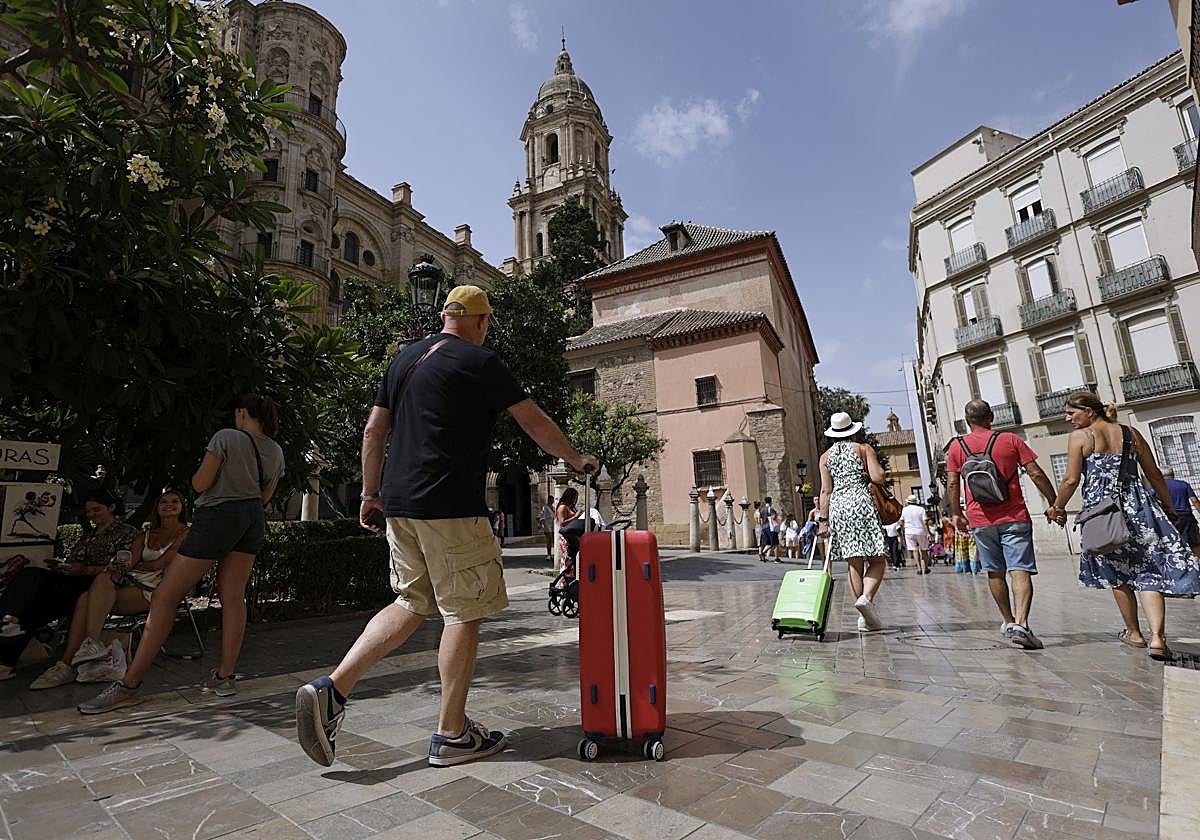

Malaga
It's a fact: the Costa del Sol is receiving fewer tourists this year. The figures collated until May are red and this is the last month for which official data has been made available so far. Even international tourism has not been able to combat the cooling of the national sector and the pace of arrivals to this popular destination has slowed down.
The holiday rental sector has experienced a drop of 2.2% in the first half of the year, more pronounced and consistent since March, when the lowest figure was recorded - 57%. Given that this is tourism's first decline since the Covid-19 pandemic, the current situation is causing concern.
The strong summer months do not offer relief, as the downward trend continues to appear in forecasts. This July, bookings have dropped by 11.7% compared to the same month last year.
Decline in international tourism
The drop in numbers in Malaga province's main tourist hotspots has contributed to an overall decline in visitors and overnight stays across all types of tourist accommodation from January to May. These figures are mainly due to a sharp decline in Spanish tourists, which maintains itself as a trend. However, there has also been a slight drop in international tourism. In fact, national tourism now accounts for only 25% of all visitors, which means that 75% must be supplied by foreign tourists.
While accommodation prices continue rising, the average number of nights booked between January and June this year went down. This is a symptom of the cooling of international tourism, which has started to be noticed. President of the association of hotel and business owners of the Costa del Sol (Aehcos) José Luque confirms that there is "some concern" in the hotel sector and says that the current forecasts for the whole of July are lower than figures recorded last year.
The national market is not picking up
According to a Turismo Costa del Sol report, several international markets are experiencing a decline in addition to the domestic market, which has dropped by 15.6% in the first five months of the year: Germany, down 3.5%; France, down 7.4%; the US, down 7%; Poland, with a 5.9% drop in visitors; Sweden, down 16.9%; Finland, down 0.3%; Denmark, down 2.3%; and Norway, with a 3.9% decrease.
These figures stand in contrast to the same period last year, when only tourist arrivals from Denmark were negative. According to the report, eight of the main international markets are on a downward curve.
Geopolitical instability
One of the main factors that contribute to this downward trend in international tourism is the global geopolitical instability. The decisions made by Trump's administration can explain the cooling of the US market, but it would be more difficult to find a justification for the decrease in arrivals from Poland and Sweden, for example.
As hotel managers state, "uncertainty is the worst travelling companion" and there are multiple factors at the moment capable of destabilising people when it comes to making decisions: Trump's tariff war threats, the escalation of armed conflicts in Ukraine and Gaza, as well as Spain's own political instability.
Household economy
In addition, travel is a priority, but not an essential consumer good, which means that it depends very much on each family's economy. Saving is more important than spending for many people this year. Given that tourist accommodation prices have not stopped rising, it is not surprising that the sector would be suffering, even though the latest price increases have been minimal.
According to a study by Cuaderno de Información Económica de Funcas, one in three Spanish households report that their economic situation has worsened since 2019.
Increasing supply with weakening demand
Another key element that is taking a toll is the strong increase in tourist supply on the coast when demand is showing signs of weakness. Up to May, the volume of accommodation places in the Andalusian tourism register (RTA), had increased by 12.4%, bringing the province's tourist capacity to 685,425.
This population increase is further highlighting the province's infrastructure problems, which are evident in frequent traffic jams across many parts of the road network, also worsened by the high cost of motorway tolls during the summer.
Malaga Airport - unaffected by the decline
The abovementioned figures are reflected in the drop in passengers on flights between Spanish destinations and, to point to just one example, from and to Sweden. In addition, not all passengers are tourists: there are residents with two homes, workers facilitated by remote employment conditions, digital nomads, etc.
Despite the decline of tourism, Malaga Airport sets record after record. June hit 2.6 million passengers, 8.2% more than in 2024. The daily average of flights last month was a record 601.
![[]](http://static.vocstatic.com/voc26/latest/assets/images/favicon/surinenglish/apple-touch-icon-57x57.png)