
Rail transport
Malaga faces third day of rail strikes and short-distance cancellations
The cancellation of 85 out of 132 trains on Tuesday makes it the most heavily impacted province in Andalucía

Málaga
Malaga province enters the third day of rail strikes, now exclusively organised by minority unions CGT and Sindicato Ferroviario (SF).
Since the government lifted the decree of minimum services on Monday, all train drivers can participate in the strike, which can lead to most services getting cancelled.
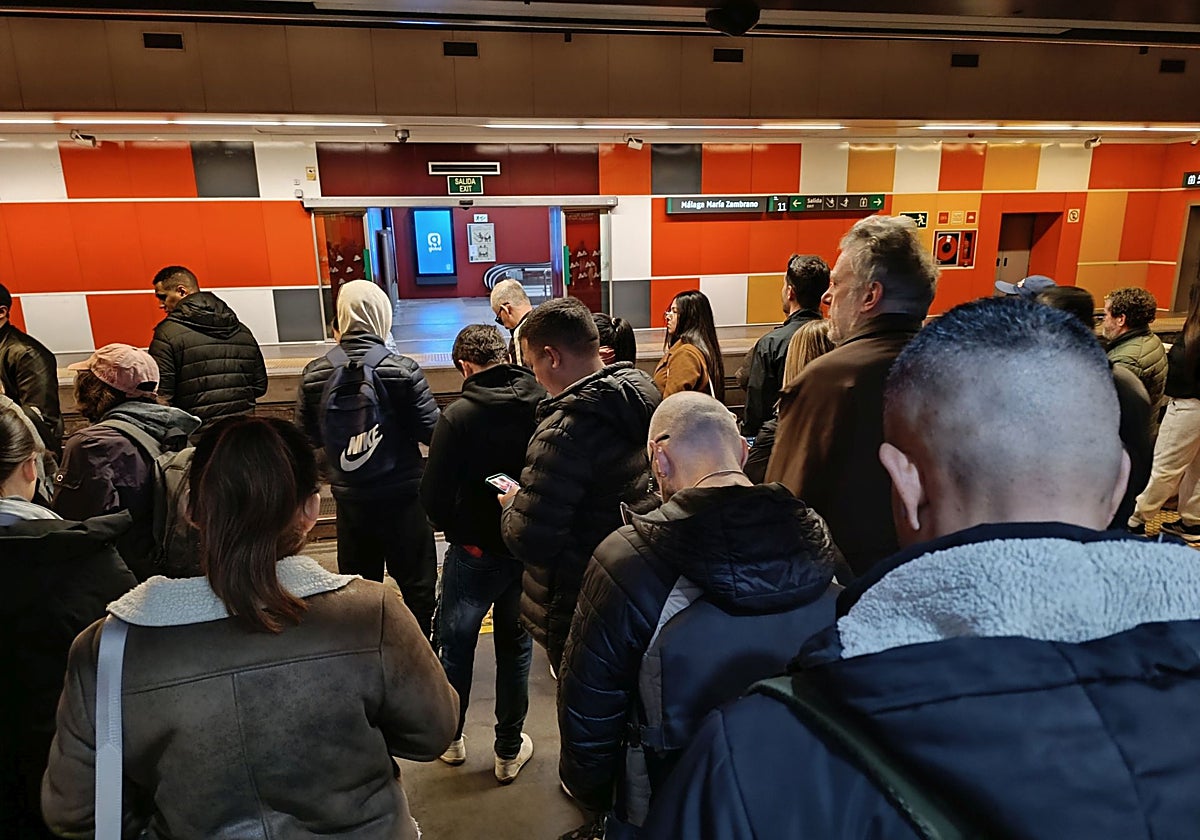
On Tuesday, out of the 132 C1 and C2 short-distance (Cercanías) services in Malaga province, only 85 ran. Thousands of passengers waited on the platforms in Malaga city and other towns for trains that never arrived.
Most services at the height of today's rush hour have been cancelled due to union strikes
The likelihood of Wednesday (the last day of the strike) suffering a number of cancellations is high. A review of the situation shows that Malaga is the province that has borne the brunt of the strike in Andalucía.
Unsatisfactory agreement
The strike started as a protest demanding stronger safety conditions in Spain's railway system, with practically all unions participating. On Monday, the Ministry of Transport reached an agreement with the majority unions, which "officially" called off the strike.
The CGT and SF, however, refused to join and announced that they would maintain the strike until 11 February. According to state railway operator Renfe, the protest is hardly impacting other provinces, which proves the greater convening power of Malaga's train drivers.
Minimum services
In times of official strikes, the decree of minimum services comes into force. This means that 75% of trains should continue running during rush hours and 50% the rest of the day. In Malaga, however, the second day of the strike saw the cancellation of almost 65% services after the lifting of the decree.
According to head of the CGT union Miguel Montenegro, Malaga will experience a third day of chaos on 11 February. He blames the ministry's "arrogance" for the inconvenience passengers are suffering.
"The rail workforce is giving Puente and his puppet unions a much-needed reality check," Montenegro said. He is almost single-handedly leading this high-profile protest action over what he calls the "abandonment" of Spain's railways.
Montenegro accuses minister Puente of dismissing minority unions. "The dignity of the workforce and the defence of their safety at work and that of passengers are above arrogance, contempt and attempts to belittle the growing strength of the increasingly loud voice of railway workers, who do not feel represented by yellow unions or establishment unions."
Replacement buses
To alleviate the situation, Renfe offered passengers on the Cercanías de Álora an alternative bus service on Tuesday. Montenegro opposed this decision, describing it as "a direct attack on the right to strike".
He urged workers to maintain the strike on the last day and show that they demand greater safety at work and regulations that benefit trade unions rather than third-party private companies and employers.
![[]](http://static.vocstatic.com/voc26/latest/assets/images/favicon/surinenglish/apple-touch-icon-57x57.png)