
Nature
Here's why there are jellyfish in the Costa del Sol's waters this August
In the last two weeks the number of sightings of these invertebrates and reports of bathers being stung has increased, with Pelagia noctiluca being the most common species on the Malaga coastline

Malaga
This summer started without a jellyfish in sight on the Costa del Sol. However, in the last two weeks, specifically the last few days of July and the first few of August, the sightings of these invertebrates (and their stings) have increased, forcing the municipal authorities to raise the yellow flag on some beaches to advise bathers to swim with caution.
So, why have the jellyfish returned once more to Malaga? What are the reasons for their presence now? Which are their most frequented locations? Which are the most common species to be seen along Malaga's coastline? We address these and other concerns about these somewhat unwelcome visitors to our summer shores.
From the outset, Juan Antonio López (president of Malaga's Aula del Mar, a local foundation for marine studies and conservation), is keen to debunk a deeply-held belief among the public: the presence of jellyfish has nothing directly to do with how warm is the water temperature, as these marine species "can survive both in cold and warm waters."
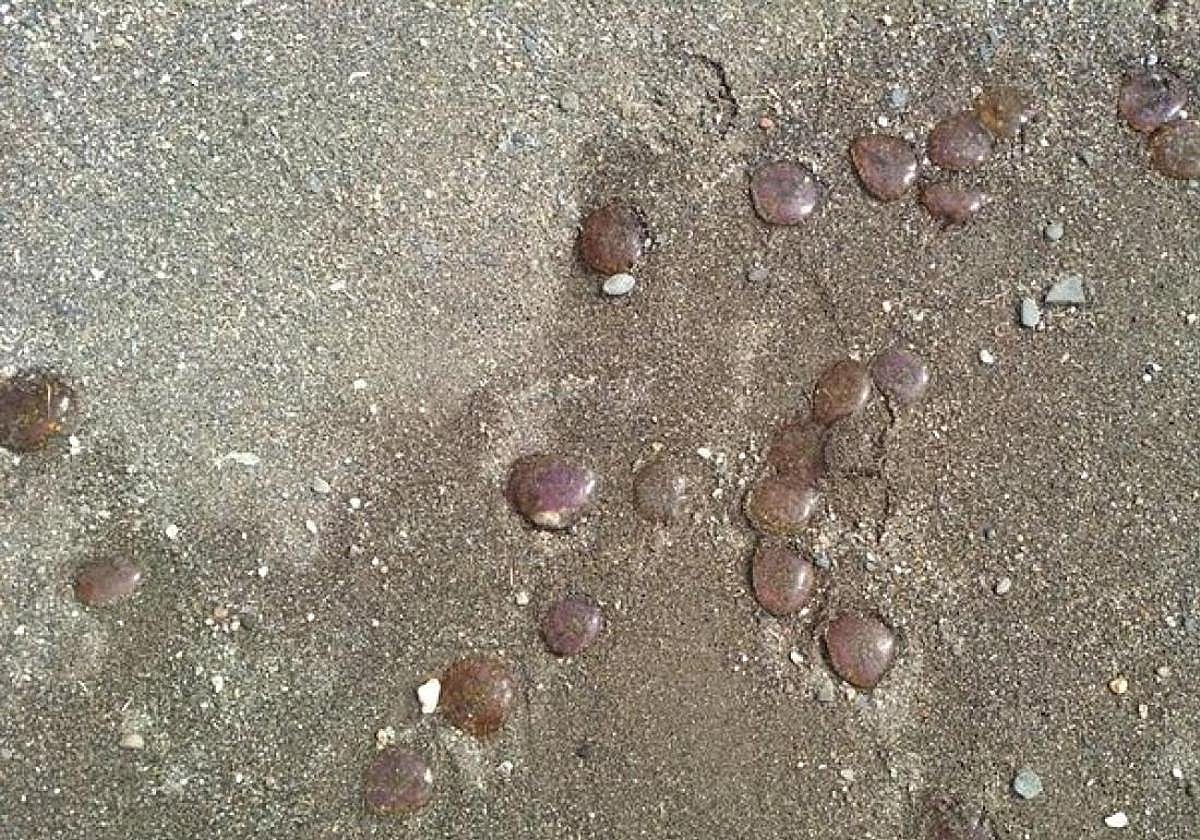
He explains that their appearance is closely related to the Levante wind that often strikes the province. This is the main culprit behind the arrival of, for example, Pelagia noctiluca (commonly known in English as the mauve or purple stinger), one of the most common jellyfish on the coast of Malaga and it stings a lot of people.
This species, which is also known as the carnation or luminescent jellyfish, can measure more than 20 centimetres in diameter. It is unusual in that the entire surface of its umbrella, the oral arms around its mouth and its tentacles are covered with warts that contain nematocysts (stinging cells). "It has a pinkish-reddish colour that sets it apart," explains the Aula del Mar website.
Ocean currents also play an important role in the sighting of jellyfish, as they can carry them towards the shoreline. These currents also move nutrients about in the sea. Jellyfish, being planktotrophic organisms, concentrate in areas rich in plankton. A greater availability of these resources can lead to an increase in the jellyfish population, known as a 'bloom'.
According to López, in the last few days there have been specific days in which "jellyfish have accumulated in significant groups, but dispersed along the coast." He also points out that the rising tide always increases the incidence of jellyfish.
For its part, the Spanish government's ministry for ecological transition and the demographic challenge (Miteco) links their presence on beaches, as well as their abundance, to certain meteorological conditions (rainfall, winds, marine currents). Among the influencing factors, the ministry highlights climatology, hydrocarbon pollution and overfishing, since any decrease in other species competing for the same food favours the development of larger populations of jellyfish.
Other common types of jellyfish in Malaga
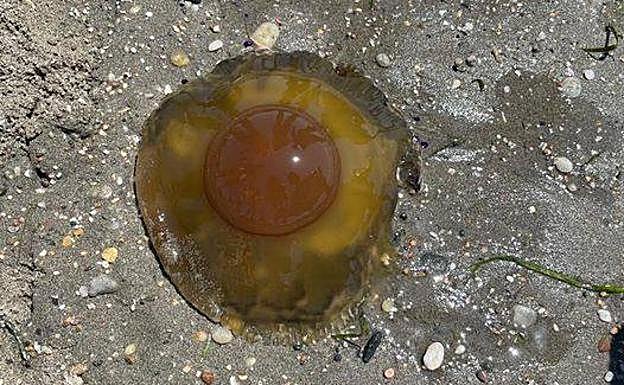
Moving on from these two jellyfish, the marine life expert draws our attention to two more species that are also being seen this year in Malaga waters: the ones popularly known as the giant barrel jellyfish and the fried egg jellyfish.
The first one, Rhizostoma luteum, is one of the largest jellyfish to be found in the Mediterranean as its umbrella can reach 55-77cm in diameter. They usually appear in isolation or in small groups, although sometimes they have been seen in swarms. "It does not pose any danger as it has a medium level of stinging poison. That is why we always ask bathers and beach users not to touch them or take them out of the water."
The second, Cotylorhiza tuberculata, which resembles a fried egg, is a coastal species regarded as endemic to the Mediterranean, although it is also found in the Red Sea and the Canary Islands. They are usually small in size, but some specimens can reach 20-35 cm in diameter. "It is harmless to people and rarely causes injury because of its very low stinging capacity," states Aula del Mar on its website.
![[]](http://static.vocstatic.com/voc26/latest/assets/images/favicon/surinenglish/apple-touch-icon-57x57.png)