
Tourism
Andalusian tourism experts at Berlin fair announce growth expectations despite Persian Gulf conflict
Andalucía, the Costa del Sol and Malaga expect to attract more than five per cent more German tourists this year

Enviada especial Berlín
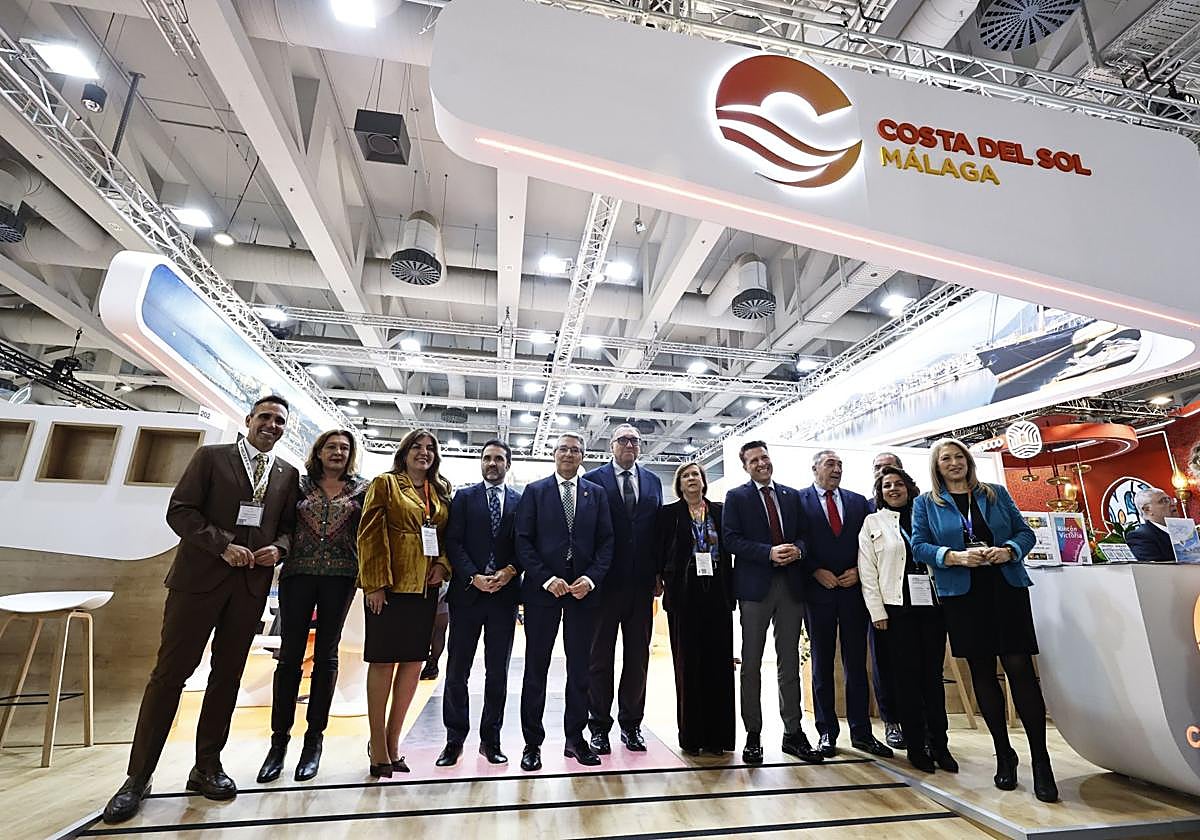
The representatives of Andalucía, the Costa del Sol and Malaga city at the ITB tourism fair in Berlin are confident that these destinations will increase the number of German tourists this year.
The escalating war in the Middle East looms over these high expectations. The conflict's greatest threat in the short term is that it has increased the price of petrol and, therefore, of tourist packages. In addition, many people might postpone their travels in fear of uncertainty.
In fact, the fair, which started just a couple of days after the US and Israel started bombing Iran, reflects this global state of uncertainty. The exhibition centre in Berlin has many empty stands where professionals who have been unable to travel due to the airspace closure were supposed to present their offers.
The attendees who have managed to get to the German capital share daily concerns and often check their mobile phones. The southern Spanish representatives, however, have chosen hope for their industry, despite the cancellation of key flights.
No fear for the German market despite the conflict
According to regional minister of tourism Arturo Bernal, head ot Turismo Costa del Sol Francisco Salado and Malaga's tourism councillor Jacobo Florido, the conflict in the Middle East will not directly impact the German market.
They expect that their offers will attract five per cent more German tourists this year, reaching a record of 1.3 million. Bernal believes that German visitors will also contribute 1.8 billion euros to the local economy.
The Andalusian representatives at the ITB are aware that "any armed conflict is detrimental" and the worst travelling companion for tourism. Due to the current situation, Malaga has lost key connections to and from Doha, Kuwait, Abu Dhabi, Bahrain and Riyadh.
What Bernal also wants to highlight in Berlin is that Andalucía is a safe destination. The regional minister said that now is the time to "rise to the occasion, attend to the Andalusians trapped in the area and trust that, as in other crises, tourism will remain resilient".
Salado also expressed an optimistic view. The head of Turismo Costa del Sol highlighted the commitment of airlines to improve connections between Malaga and Germany. The schedule between March and June is proof of that, with 7.2 per cent more seats compared to the same period last year.
Six airlines will connect Malaga with 14 German cities. Turismo CDS's plan is to invest one million euros to consolidate the leadership of the German market, despite the impact of the war.
"This war is not good news for anyone. It generates great uncertainty and is going to trigger an increase in the price of oil and, with it, of tourist packages," Florido said. "If it were in our hands, we would take peace over an increase in tourists," he stated.
Salado said that they are more concerned about the delayed reopening of the high-speed rail service in Malaga province. "Hopefully the 23 March deadline will be met, although the damage to Easter Week is already irreparable. Last-minute bookings will not be able to compensate for the 30 per cent drop. We call for speed, efficiency and commitment from the government to restore the rail network as soon as possible," he said.
At Malaga city's stand, Jacobo Florido said that he is confident that the Costa del Sol capital can achieve an eight per cent increase in German visitors this year. He highlighted the importance of tourists from this country, which comes for their longer stay and higher purchasing power.
Florido, however, is also realistic about the impact of the war, stating that "there is a risk that people might decide not to travel". Spanish Minister of Industry and Tourism Jordi Hereu agreed that there could be short-term consequences in tourism, "although it is too early to assess them".
According to Hereu, 2026 tourism forecasts should be met as long as the conflict does not extend over time. "We call for ceasefire and we are confident that tourism is one of the most resilient industries," he said. The minister made it clear that "Spain is a country that defends peace".
Nobody can answer what will happen next with certainty. The events of the next few days will be key in weighing up factors such as the instability in the Gulf, which is putting competitors Turkey and Egypt in check.
On the other hand, this puts at the forefront destinations known for their security such as Andalucía, which could attract more German tourists. Time will tell.
![[]](http://static.vocstatic.com/voc26/latest/assets/images/favicon/surinenglish/apple-touch-icon-57x57.png)