
Railway network
Costa del Sol railway line marks half-century milestone amid challenge to increase train capacity and frequencies
Half a century after the line from Malaga to Fuengirola was inaugurated (31 July 1975), Spain's central government resumes studies to take the railway to new destinations
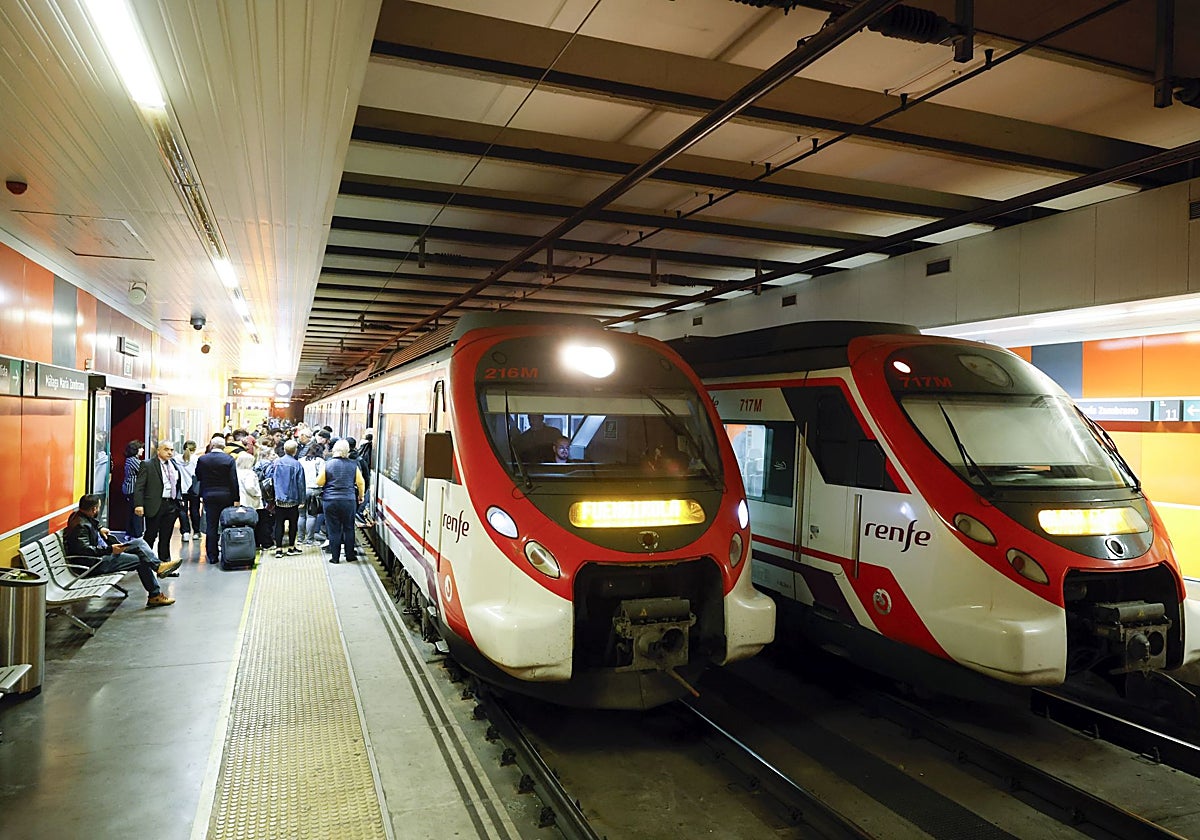

Malaga
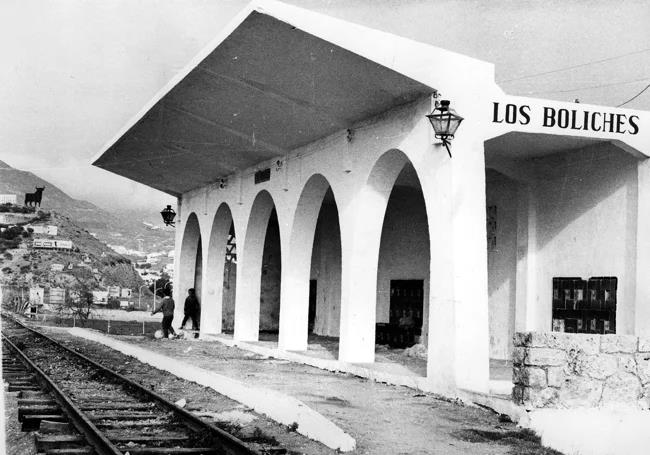
The original train line along the Costa del Sol was opened all the way back in 1926, but the current connection from Malaga to Fuengirola took shape in the eary 1970s, when Spain’s state railway operator (Renfe) carried out work to upgrade the service.
Today's local Cercanías line and the service it provides to the people of the Costa del Sol are the result of the efforts of Jesús Santos Rein, who was appointed president of Ferrocarriles de Vía Estrecha, the then public operator for the tracks, in 1968.
It was under his supervision that the line was adapted to the Spanish gauge and tunnels were built to take it underground through built-up areas such as Torremolinos as well as connections with the María Zambrano station in Malaga and with the airport.
His goal was to reach Marbella, but, as he recounted years later, the ministry of transport's budget was monopolised by the construction of the Barcelona metro.
Half a century of travel
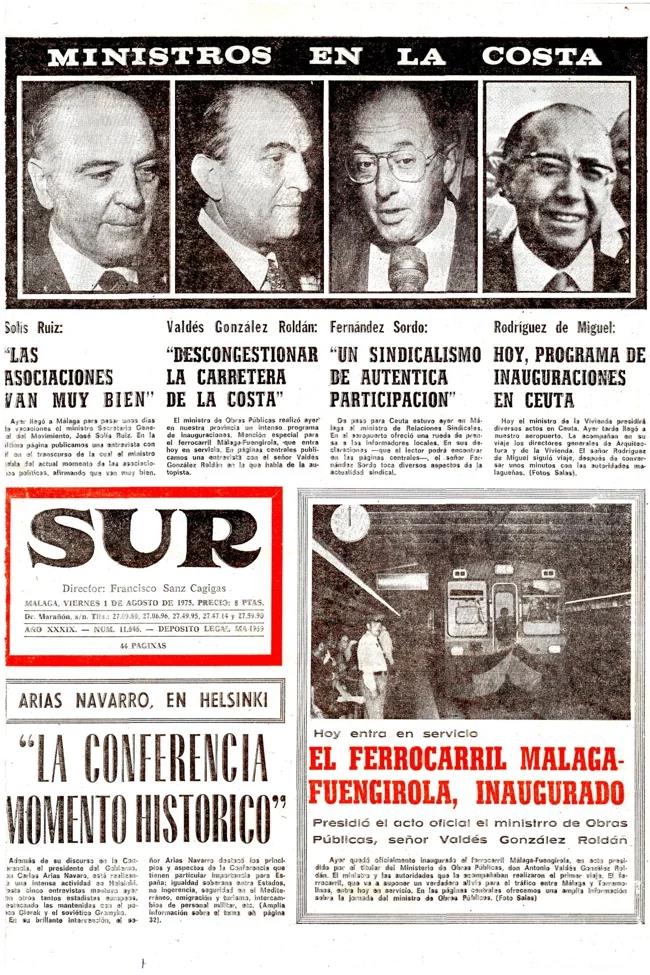
The 30.7-kilometre C1 line was inaugurated on 31 July 1975. Trains ran every 30 minutes, stopping at seven stations at the time. The journey took just over 40 minutes. It cost between 13 and 33 pesetas for single journeys and between 20 and 58 pesetas for return journeys. In euros: between 8 and 35 cents.
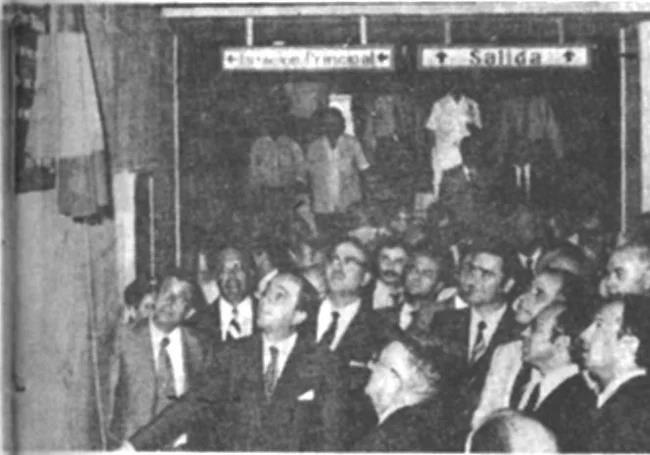
The line has more than fulfilled the objectives set when it was built, but is now overtaken by its own limitations in the Costa del Sol
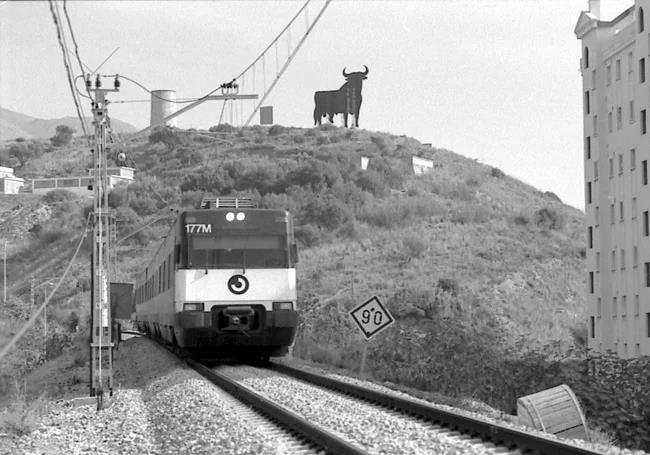
Originally, the Costa del Sol Cercanías was a single-track line. From 1999 onwards, projects began to improve capacity, including the new access to Malaga Airport, with a 3.9-kilometre tunnel under the Guadalhorce river.
A double track was introduced on the following sections between 2000 and 2007: Campamento Benítez-La Colina; Montemar Alto-Benalmádena and Torremuelle-Torreblanca. With this, the frequency between trains was reduced to 20 minutes.
In addition, state railway infrastructure company Adif currently has plans to double the line on the section between Malaga Airport and Campamento Benítez within three years. However, there are three other complex single-track sections in densely urbanised areas whose doubling is considered "hardly viable or requiring a large investment", as is the case of the end of the line between Torreblanca and Fuengirola.
The track between Centro Alameda and María Zambrano station has already been doubled - an action that required the complete renovation of the old Guadalmedina station, although only one line still goes into the station where there is only one platform.
Despite its limitations, the line exceeded 16.15 million passengers in 2024. Subsidies from the ministry of transport, which made passes for regular users free of charge, contributed to the record figures.
Limitations
Although there have been several major improvements over the years, at present 45% of the current route is still single-track. According to ministry technicians, "the existing infrastructure does not meet the mobility needs of the population" of a "densely urbanised area" that experiences higher volumes of passengers at peak tourist season. There are only three trains per hour - too few to serve everybody.
To find a solution, Adif is studying the possibility of extending platforms to accommodate 100-metre-long trains and making more sections double track. According to minister of transport Óscar Puente at an event organised by SUR last week, this will facilitate the improvement of frequencies to one train every 15 minutes.
Going further
Given the growing mobility challenges, plans to create a railway line along the entire coast have resurfaced. The central government has recently awarded a one-million-euro contract to draw up a feasibility study. The analysis covers the entire Costa del Sol and the Campo de Gibraltar, between Nerja and Algeciras. Although the total execution period is 18 months, the initial study of alternatives will take place around January or February 2026, which will bring more clarity.
Veteran engineer José Alba and his consultancy firm (ARCS) carried out the main study on the extension of the line. According to him, the solution cannot be to extend the current line, but to build a new line in accordance with the new needs (although the C1 line must be maintained). In his view, the first step would be to reach Marbella and san Pedro, where demand is the highest.
Alba believes that Spain alone cannot provide all the financing, which implies that the government should seek European funds. "For large infrastructure, there will hardly be any money from the state coffers in the coming years. Therefore, we have to go for private funding," he says.
What everybody can agree on is that the Costa del Sol's growth and ability to meet the needs of an increasing population go hand in hand with providing excellent train services. As Ángel García Vidal of the Malaga School of Civil Engineers pointed out, Malaga was the first province in Spain to connect the railway to the airport and it has the potential to continue marking milestones.
García Vidal added that while the objectives of 50 years ago were met, the line has numerous shortcomings now. Apart from maintaining and improving the existing line, he believes that a new line is needed between Malaga and Marbella, "along a route designed with the next 50 years in mind. It should be high speed and stop at the airport, serving residents in Marbella, Estepona and Algeciras, which would have many passengers."
![[]](http://static.vocstatic.com/voc26/latest/assets/images/favicon/surinenglish/apple-touch-icon-57x57.png)