
Weather
Storm Emilia says goodbye to coastal Malaga: yellow warning for torrential rain early on Tuesday
State meteorological agency Aemet keeps the warning active along the coast, in Malaga city and the Guadalhorce Valley until the early hours of Tuesday
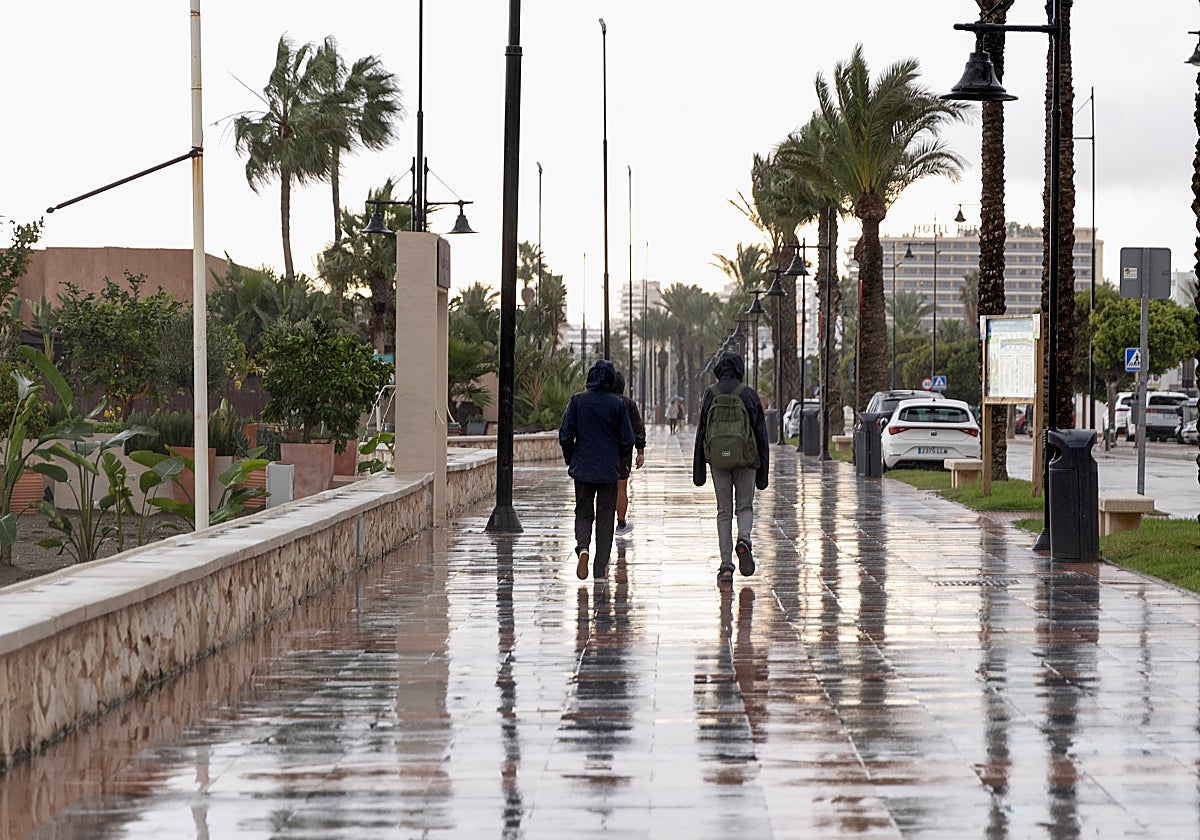

The last stages of storm Emilia, which has been sweeping across much of Spain since the weekend, will be felt until midday on Tuesday in the province of Malaga. The state meteorological agency (Aemet) has activated the yellow warning for the possibility of heavy rain and storms along the entire coastline of the province.
Related story
Both the western Costa del Sol and Malaga city and the Guadalhorce Valley and the Axarquia district will foreseeably receive significant rainfall from midnight on Tuesday, with the possibility of concentrated rainfall of up to 15mm in one hour. The peak of the phenomenon is expected to be between 2am and 3am on Tuesday. The probability of early morning rain is 100% and the risk of thunderstorms is 70%.
Temperature and rainfall forecasts
The yellow alert will remain active until 7am on Tuesday. From midday onwards, skies will remain cloudy but the risk of precipitation will be reduced to a minimum. Temperatures will remain in a narrow range between a minimum of 12C and a maximum of 16C in Malaga city. Winds will be westerly/north-westerly. No significant rainfall is expected during the rest of the week.
Reservoir levels
During the early hours of Sunday to Monday, rainfall was recorded in a large part of the province. The most notable accumulations, according to data from the Hidrosur network, were measured in Los Reales (Cortes de la Frontera), with 12mm and around 9mm in the watercourses in addition to the Verde in the La Concepción reservoir (Guadalmina, Guadaiza and Guadalmansa).
For the moment, the rains of the last few days have passed over the province's reservoirs, which have barely gained more than half a million cubic metres. They have more than 278 million cubic metres in storage, which is 46% of their full capacity. Guadalteba, with 79, and Viñuela, with 70, are the two with the most water.
The watercourses, on the other hand, flow down with low or moderate flows, without any risk, according to Hidrosur.
![[]](http://static.vocstatic.com/voc26/latest/assets/images/favicon/surinenglish/apple-touch-icon-57x57.png)