
Hiking in Malaga
Spectacular springs and waterfalls worth visiting in Malaga after the recent rains
From the Guadiaro valley to the Maro cliffs, here are some thrilling walks to see springs and waterfalls at their very best, in full flow
-kZiG-U46807757641PKs-1200x840@Diario%20Sur.jpg)

Malaga
The rains of recent weeks have brought water back into the limelight in many inland areas of Malaga province.
Springs and waterfalls are bursting back into life, transforming the landscape to offer sights rarely seen in drier seasons.
From the Serranía de Ronda to the Axarquía, passing through the Sierra de las Nieves and the Guadalhorce valley, this collection of must-sees encompasses some of the most spectacular water features in Malaga, accessible on foot, linked to hiking trails or even some that lead to the sea.
Most of these locations are easily accessible, although some require a bit of a hike.
Serranía de Ronda
-
1
Benaoján spring
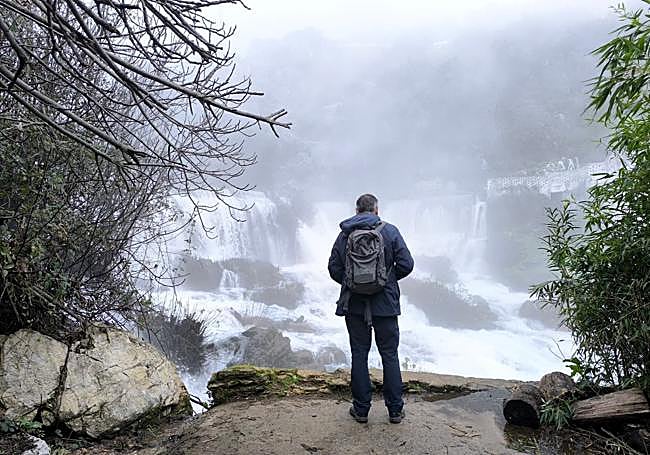
This is one of the most spectacular waterfalls in Malaga province and appears after heavy rains. It is a semicircular waterfall located in Estación de Benaoján, easily accessible on foot behind the Molino del Santo hotel. In winter, those who visit too early or too late in the day may encounter a thick mist over the water. Although some call it Los Cascajales, its correct name is the Nacimiento de Benaoján (Benaoján spring). Its waters flow directly into the Guadiaro river.
Related story
-
 Javier Almellones
-
Jimera de Líbar2
Las Artezuelas spring
-kZiG-U101575408896LxB-650x455@Diario%20Sur.jpg)
After abundant rain, this spring is at its best. The source is located in the municipality of Jimera de Líbar, next to the Guadiaro river and in the rural hamlet of Estación de Jimera. Reaching it requires a walk. First, take the MA-8307 road almost to the end. After crossing the bridge over the Guadiaro, before joining the road that connects Jimera with Cortes de la Frontera and Benaoján, turn right and look for parking in the area. Then walk west, keeping the river on your right. Initially, follow a lane through a residential area. Then, after passing one of the houses on a narrow path, you'll join a slightly wider path that runs parallel to the river until you reach the source of Las Artezuelas, located almost 1.5 kilometres from the starting point. Its waters flow directly into the Guadiaro.
-
Igualeja3
Source of the Genal river
-kZiG-U101575408896YGH-650x455@Diario%20Sur.jpg)
This is probably the most well-known water feature in the Serranía de Ronda and, while it's been practically dry some years, in recent weeks it has been truly spectacular. Even though this site, a natural monument of Andalucía, is called the 'Nacimiento del Genal' (Genal river source), it is by no means the only significant water source for this river. In fact, the Genal is formed by the confluence of several streams that flow between Júzcar, Parauta, Pujerra, Cartajima and Faraján. However, it is the most iconic place in the Alto Genal (upper Genal) area, as it is located at the entrance to the village of Igualeja and boasts a spacious recreational area that is especially beautiful for its grove of trees between autumn and spring. It is easily accessible by car.
-
Faraján4
Chorreras de Balastar waterfalls
-kZiG-U101575408896te-650x455@Diario%20Sur.jpg)
In the lower part of the village of Faraján you can see two striking waterfalls, known as the 'chorreras de Balastar', named after an ancient, long-gone Arab settlement. Both waterfalls are easily reached from the village itself, especially the first at just over half a kilometre away on foot. Occasionally, these waterfalls may appear to have dried up, but this is not due to a lack of water, rather that the flow has been temporarily diverted to irrigate the surrounding orchards.
* In this area you can also visit the 'Nacimiento de las Zúas' (another water source), the Sinaí waterfall and the Sima del Diablo (for canyoning), all of them in Júzcar, or the Guadalevín waterfalls under Ronda's Puente Nuevo (New Bridge).
Guadalteba, Vega de Antequera and Sierra Norte de Málaga
-
5
Cuevas del Becerro's waterfall (Salto del Cao) and spring
-kZiG-U1015754088961VF-650x455@Diario%20Sur.jpg)
In this village in the Guadalteba area, the Salto del Cao waterfall and the Nacimiento spring form part of a single, easy, circular walk. The trail starts at the Nacimiento itself, one of the springs that feed La Cueva river and which usually flows for most of the year. Moreover, after heavy rain, the locals describe it as 'breaking out', because the water emerges with great force. From there, the path leads into a pleasant riverside stretch until it reaches the old flour mill and the Cao waterfall that, after heavy rains, is particularly beautiful. It can even be seen from the A-367 road. Both sites are part of an easy walk, very close to the heart of the village.
-
Villanueva del Trabuco6
Fountain of the 100 spouts
-kZiG-U101575408896j6E-650x455@Diario%20Sur.jpg)
This well-known spring is once again at its best after the recent rains, with an abundant flow gushing forth from the aquifers of the Sierra de San Jorge. Located in the natural setting of the Sierra de Camarolos, this site is considered one of the province's major springs and viewed by many as the unofficial source of the Guadalhorce river (the official source is on the other side of the mountain range, in Granada province). In 1985, the spring was transformed into the current monumental fountain, made up of 100 - or maybe even 101- spouts. Declared a natural monument of Andalucía, it is also the starting point for several hiking trails and a very popular spot in winter and spring for the power and spectacle of this water feature.
-
Villanueva del Rosario7
Source of the Cerezo river
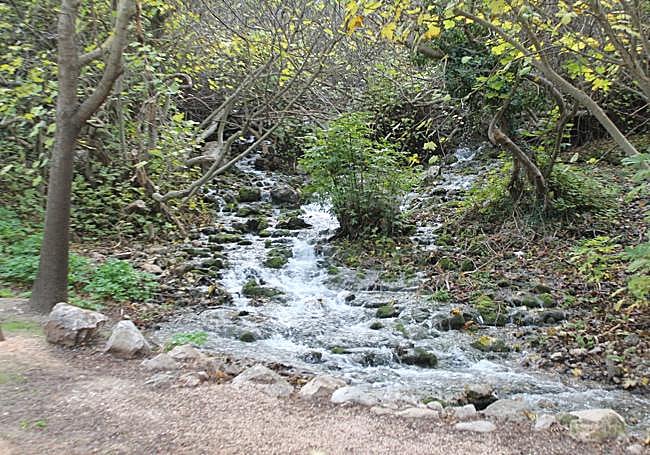
Also known as El Chorro, this spring is one of the most notable karst springs in the Sierra de Camarolos mountain range, within the municipality of Villanueva del Rosario. Water flows from its slopes, supplying the town and surrounding irrigated areas, and is distributed to various points depending on the aquifer's water table. This natural water discharge is best appreciated after periods of rain, when the flow is stronger and more visible. The site, accessible on foot via a track from the hermitage of El Rosario, is notable for its forested surroundings and its essential role in the local hydrology, making it a very attractive destination for hikers and nature lovers.
* In this area, you can also visit the source of the Río de la Villa, a river in Antequera.
Sierra de las Nieves and Guadalhorce valley
-
Tolox8
Salto de la Rejía (waterfall) and the Poza de la Virgen (pool)
-kZiG-U101575408896iEH-650x455@Diario%20Sur.jpg)
These two locations form one of the most spectacular series of waterfalls in the Sierra de las Nieves mountain range, within the municipality of Tolox. La Rejía, with 51-metre drop, is considered the highest waterfall in Malaga province and is at its most impressive between autumn and spring, after heavy rainfall. Nearby, on the banks of Los Caballos river, the Poza de la Virgen pool completes this stunningly beautiful riverside setting. Both can be viewed from the Sendero de las Cascadas (PR-A-282) waterfall trail, a route that allows you to enjoy the flowing water in one of the most unique landscapes in this national park.
-
Alozaina9
Caldera de Jorox waterfall
-kZiG-U101575408896TnC-650x455@Diario%20Sur.jpg)
Among the tributaries of the Río Grande is the Jorox, named after the village of Alozaina through which it flows. Along its course, this river features a spectacular waterfall, which has attracted canyoning enthusiasts for years. However, it's not necessary to engage in this exhilirating, outdoor activity to see this waterfall. Simply take a steep, descending path from the entrance of the aforementioned village. In just five minutes you can reach the base of this waterfall in the heart of the Sierra de las Nieves.
-
Coín10
Barranco Blanco
-kZiG-U101575408896LQH-650x455@Diario%20Sur.jpg)
This is one of the most unique river enclaves in the Guadalhorce valley and, right now, it's once again looking its best, thanks to the increased flow of the Alaminos river after the recent rains. This natural monument, protected as a 'Lugar de Interés Comunitario' (an important site in the region) and declared a 'rincón singular' (a unique landmark) by Malaga's provincial authority, combines waterfalls and pools nestled among limestone rocks and peridotite outcrops. Located at the confluence of Coín, Mijas and Alhaurín el Grande, access is only on foot, which helps to preserve an area of great geological and ecological value that is now regaining some of its natural splendour.
* Around the area you can also visit the sources, springs and waterfalls of the Turón and Fuensanta rivers in El Burgo or the river source of the Río Grande in Yunquera, among others.
Axarquía
-
Canillas de Aceituno11
Source of the Bermuza river
-kZiG-U101575408896D1B-650x455@Diario%20Sur.jpg)
It's one of the most striking water features in the Axarquía area when the rains have been plentiful, but also one of the most secluded. Reaching it is easier today, however, thanks to stage 8 of the Gran Senda de Málaga network of hiking trails. This spring gushes forth in the municipality of Canillas de Aceituno, on the southern slopes of the Sierra de Tejeda mountain range, and gives rise to a channel that flows down between limestone walls and riverside vegetation. After weather events like Storm Francis, the water surges forth, transforming the surroundings into a mini natural spectacle, closely linked to local trails and old hydraulic infrastructure that remind us of the historical importance of this river to the area.
-
Nerja12
Maro waterfall
-kZiG-U101575408896mxE-650x455@Diario%20Sur.jpg)
It is one of the most striking waterfalls on the eastern coast of Malaga after heavy rains. This spot, declared a unique landmark ('rincon singular') by Malaga's provincial authority, is located within the municipality of Nerja, very close to the town of Maro and forming part of the natural site of the Maro cliffs. The waterfall is formed by the natural drainage of several ravines and, after the most recent rains, it presents a powerful and continuous cascade of water that contrasts sharply with the steep cliffs. To see it up close, unlike other sites on this list, you don't need to look for a trail, but rather a kayak. It can also be seen from afar from various locations nearby within this protected area.
* In this area, you can also see the source of the Guaro river, in the municipality of Periana, when there's enough rainfall to make it gush forth, the waterfalls of the Alcázar stream (Alcaucín) or the Torrox river waterfall (popularly known as Patamalara).
![[]](http://static.vocstatic.com/voc26/latest/assets/images/favicon/surinenglish/apple-touch-icon-57x57.png)