
Sinatra
Sinatra, the ‘Gestapo’ and Fidel Castro in Malaga – the 1964 Pez Espada arrest and declassified files
Records reveal how Franco’s police used a Torremolinos bar brawl to settle a geopolitical score with Hollywood’s biggest star

Málaga
It has taken 62 years for the official details of Frank Sinatra’s infamous arrest at the Hotel Pez Espada in Torremolinos to finally see the light of day.
Following the recent declassification of the "23F" coup documents, the spotlight has turned to Saturday, 19 September 1964 - the day the Spanish police met Hollywood ego in a head-on collision.
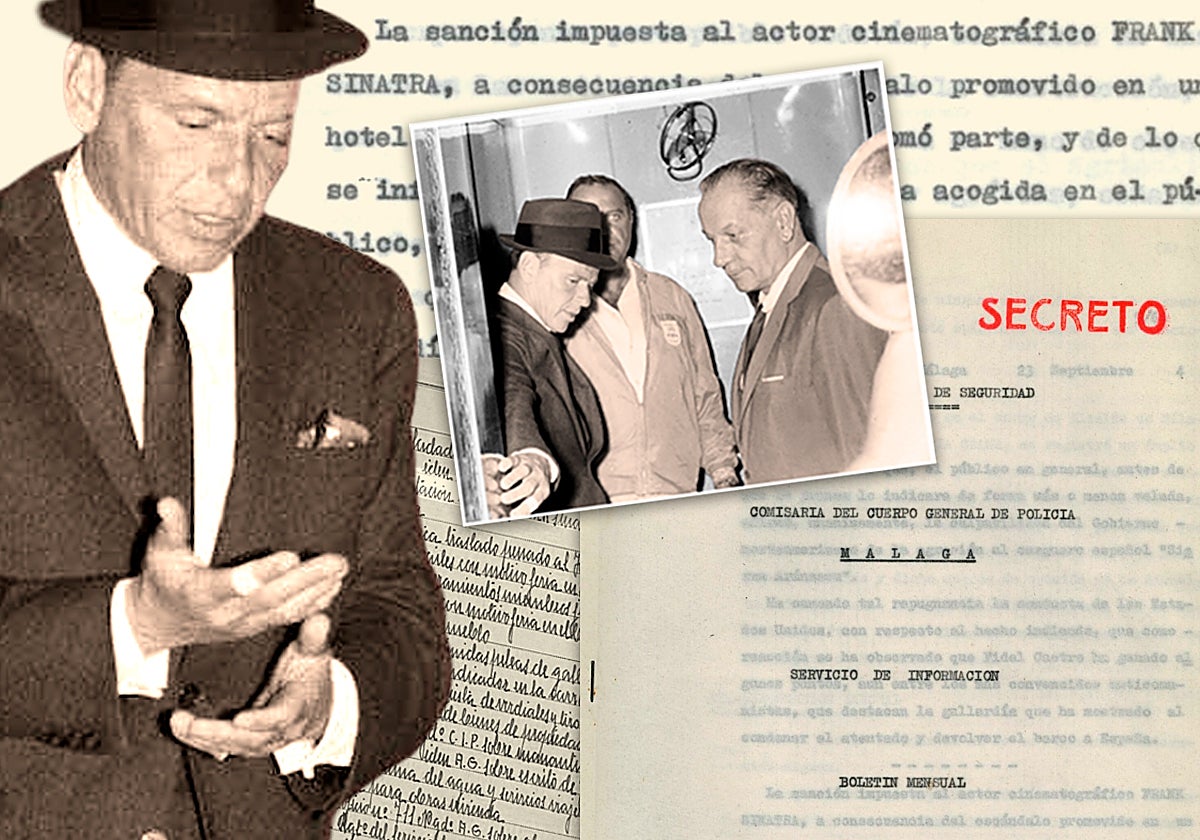
Newly released documents from the Provincial Historical Archive of Malaga (AHPM), once stamped with "Secret" in bold red ink, reveal that Sinatra’s arrest was far more than a simple case of a star behaving badly.
It was a calculated piece of political theatre, choreographed by a regime eager to project strength during a period of international friction.
Frank Sinatra arrested in Malaga in 1964
Sinatra was in town to film the war epic Von Ryan’s Express. While his production team set up shop at the grand Hotel Miramar, the singer preferred the mid-century cool of the Pez Espada in Torremolinos.
On the night of 17 September, the peace of the hotel’s terrace was shattered. A paparazzi, J. Francisco Avellaneda, allegedly conspired with Cuban actress Ondina Canibano to "trap" Sinatra in a photograph. When the flashbulb popped, the "Chairman of the Board" snapped.
Sinatra was in town to film the war epic Von Ryan’s Express. While his production team set up shop at the grand Hotel Miramar in Malaga city, the singer preferred the mid-century cool of the Pez Espada in Torremolinos.
On the night of 17 September, the peace of the hotel’s terrace was shattered. A paparazzi, J Francisco Avellaneda, allegedly conspired with Cuban actress Ondina Canibano to "trap" Sinatra in a photograph.
Related story
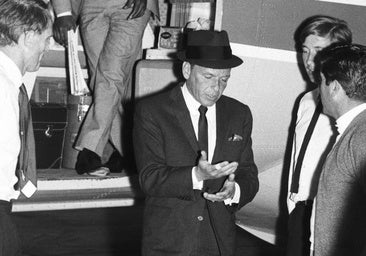
When the flashbulb popped, the "Chairman of the Board" snapped. The secret intelligence report describes a "scandal" involving flying glasses and smashed cameras. As armed police swarmed the hotel, Sinatra retreated to his suite, reportedly shouting insults at a portrait of General Franco and branding the local officers the "Gestapo".
This specific insult, recorded in the secret files, cut deep into the ego of the Francoist authorities, who prided themselves on their iron-fisted "order."
The civil governor of Malaga fined the actor 25,000 pesetas. The paradoxical thing is that the sanction was not for the event, but for contempt of authority
While the world’s press focused on the brawl, the declassified files show the regime had a different agenda. The Civil Governor, Ramón Castilla Pérez, didn't fine Sinatra for the fight itself. Instead, he slapped him with a 25,000-peseta penalty (four months' wages for an average worker) for "contempt of authority" - a punishment for refusing to speak to the guards and the "disrespectful" language used against the State.
The intelligence report, dated 23 September 1964, reveals a bizarre geopolitical justification. At the time, the US had recently attacked a Spanish merchant ship, the Sierra Aránzazu, near Cuba. The report claims the public "welcomed" Sinatra’s arrest because of a "climate of phobia" against Americans.
The confidential police document considers that Malaga residents supported Sinatra's fine because there was a "climate of anti-American phobia"
In a surreal twist, the staunchly anti-communist Francoist police even praised Fidel Castro in the files, noting he had "gained points" with locals for his "gallantry" in returning the Spanish ship.
War on a budget: The filming locations
-
The files also pull back the curtain on the production of Von Ryan’s Express. For a measly 1,000 pesetas (roughly £200 today), 20th Century Fox was granted access to some of Malaga’s most dramatic landscapes to stand in for the Italian Alps:
-
El Chorro & Caminito del Rey: The treacherous walkways and limestone cliffs provided the backdrop for the film’s high-stakes escape sequences.
-
- The Three Bridges: Fox specifically requested the use of the metallic railway bridges and tunnels near Alora. Incredibly, they even asked to halt the Malaga-Madrid express train for the shoot - a request the Spanish authorities flatly denied.
-
- The "Alpine" Tunnels: The dark railway tunnels of the Desfiladero de los Gaitanes were used to simulate the train's journey toward Switzerland.
Despite the detailed intelligence reports, the specific disciplinary file against Sinatra has vanished. Researcher Jose Bernardo Cobos Gambero suggests this "administrative silence" was a deliberate move to bury the PR nightmare.
Sinatra left Spain shortly after his release, reportedly vowing never to return. He left behind a world-class film location and a police report that proved, for one week in 1964, not even the King of Cool was bigger than the police.
![[]](http://static.vocstatic.com/voc26/latest/assets/images/favicon/surinenglish/apple-touch-icon-57x57.png)