
Investigation opened regarding the removal of protected flora in Sierra Bermeja
The probe focuses on a carob tree reforestation project led by the Regional Ministry of Sustainability and Environment in an area of high ecological value

Estepona
The Public Prosecutor's Office of the Málaga Provincial Court has opened an environmental investigation following a complaint from the Sierra Bermeja naturalist group, Grunsber. The complaint concerns reforestation work carried out in the Barranco de la Acedía ravine in Estepona, located within the Sierras Bermeja y Real Special Area of Conservation (SAC).
The reported actions could constitute an environmental offence under Article 332 of the Penal Code. The investigation centers on a reforestation project using carob trees carried out by the Andalusian Regional Government's Department of Sustainability and Environment. The project covers 2.07 hectares and was allegedly executed in an enclave of high ecological value.
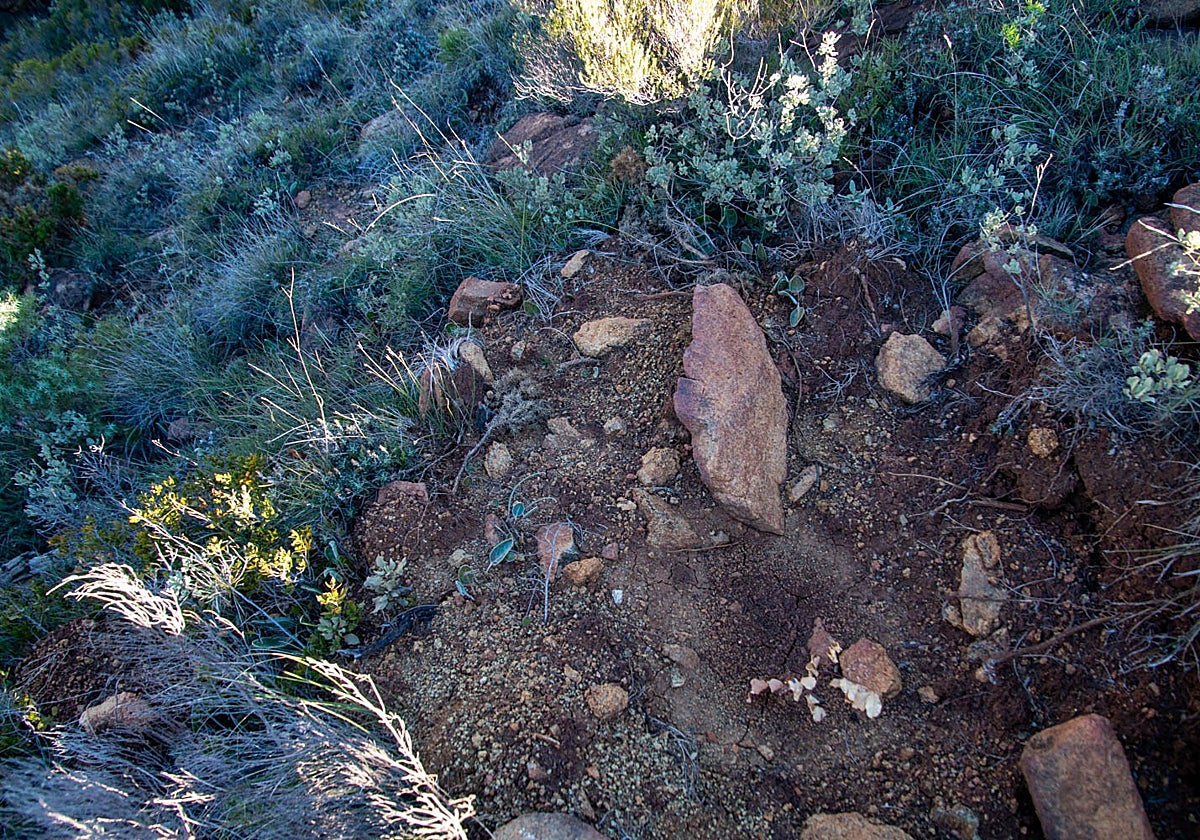
The complaint notes that the reforestation took place within the main known population of an endemic Sierra Bermeja plant considered a “Lazarus species,” having been thought extinct for decades. Although this species was officially de-listed in 2002, its recent rediscovery highlighted its uniqueness and vulnerability. According to Grunsber, “during the work, some specimens were allegedly removed to allow the trees to be planted.”
The affected area is also home to a species listed as 'vulnerable' in the Andalusian Catalogue of Threatened Species. Documentation from the Public Prosecutor's Office, accessed by SUR, states that “specimens of this species have been eliminated and its habitat is being transformed into a carob grove, which implies its disappearance from the area.” It also notes that other unique species of the Sierra Bermeja scrubland have been affected.
Consequently, the Public Prosecutor has agreed to carry out “as many investigations as necessary to clarify what happened, determine criminal liability, and identify those responsible.” To this end, a copy of the complaint and documentation has been sent to the Guardia Civil in Málaga, entrusting Seprona (the nature protection service) with the investigation.
In its written statement, Grunsber claims that “the reforestation, authorised by the Regional Ministry of Sustainability and Environment as part of a post-fire restoration project, involved planting approximately 1,500 carob trees at a density of 750 per hectare.” The association asserts that “digging pits for each tree involved removing around 1,200 square metres of soil and disrupting the natural habitat of thermophilic shrubland adapted to peridotite soils.”
The environmental organisation also notes that, “although the Junta de Andalucía acknowledges the project is underway, it denies that protected flora has been affected.” After on-site checks, Grunsber researchers confirmed “the destruction of specimens and the transformation of the ecosystem,” telling SUR that “only one of the planted carob trees appears to have survived.”
In addition to notifying the opening of proceedings, the Public Prosecutor's Office will continue the investigation to determine if a crime was committed, after which it will either refer the matter to a competent court or dismiss the case.
At the time of going to press, SUR was still awaiting a response from the Regional Ministry of Sustainability and Environment, which was requested several days ago.
![[]](http://static.vocstatic.com/voc26/latest/assets/images/favicon/surinenglish/apple-touch-icon-57x57.png)