
Traditional crafts
The Serranía de Ronda craftsman who carves wooden spoons from tree prunings and forest fire debris
For more than 30 years José Gómez has been giving a second life to the natural materials from his workshop in Benalauría - a village where the traditional skill is dying out

Malaga
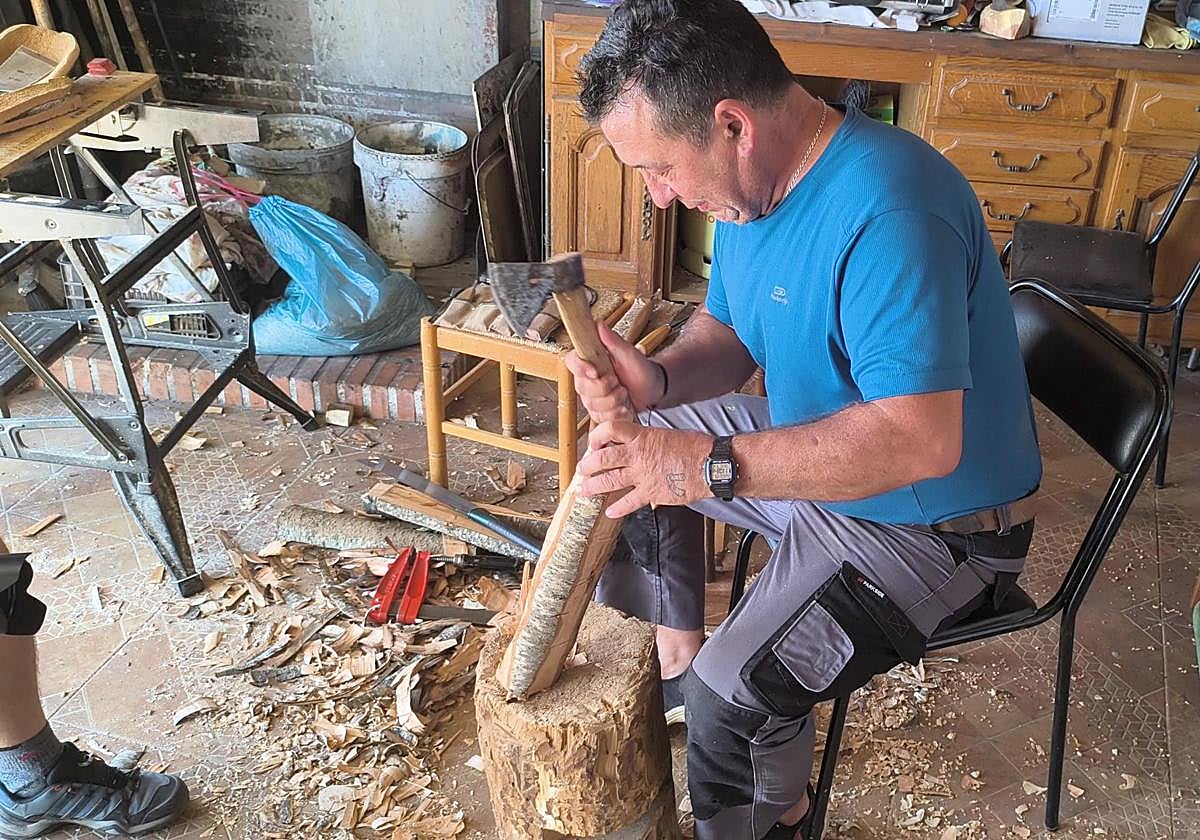
Sometimes José Gómez is brought offcuts from a logging operation or a large branch swept down by the river. He also receives wood salvaged from a forest fire. In his workshop in Benalauría, these scraps of wood that could so easily have ended up in a fireplace or a barbecue get a second life. Most often, they end up as spoons and sometimes even bowls.
Joselín, as he is better known in his village, has been making use of branches and trunks from trees native to the area for more than three decades. "I learned from my father and uncle, like other lads in the village," he explains. It is a hobby that relaxes him, but it also gives him plenty to do in the small workshop that he has set up in his home. Moreover, he usually makes good use of it all, as he gets to make and sell both spoons and bowls. Every first Saturday of the month, he usually sets up a stall at the Mercado Agro Artesanal (a food and crafts market) in the neighbouring village of Genalguacil. He can occasionally be seen in downtown Ronda too.
"They bring me brushwood or offcuts from pruning or coppicing, I give them the once-over and see what I can do with them", says this Benalauría resident. He usually works with a wide variety of woods, from apple to walnut: "They all have their good points." He admits that the toughest wood, without a doubt, is wild olive (azebuche), but it's worth the effort because "it has a very beautiful grain." The "most rewarding" are pear and walnut.
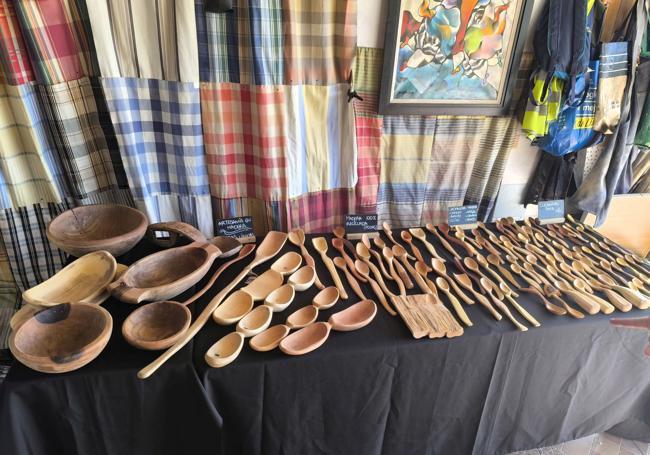
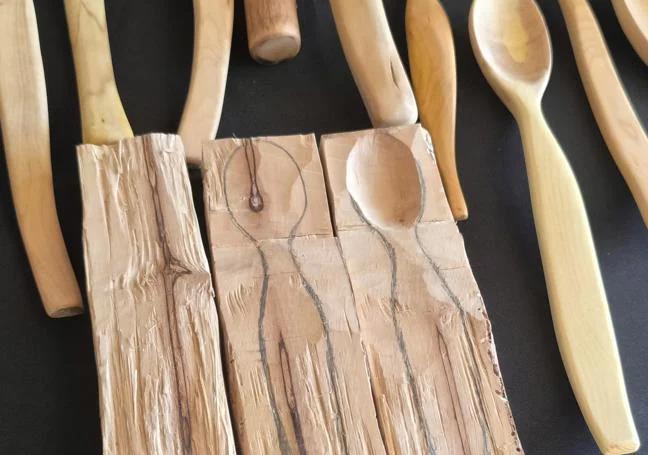
Joselín has dozens of tools to turn any tree branch into a handmade wooden spoon. "I usually make the most of the curves on the sticks brought to me", he says. He can even spend more than a day carving a particular piece. With patience and the right tools for all steps in the process, he shapes them into a desirable, useful object. Instead of varnishing them as is done with other woods, this artisan uses olive oil and beeswax.
Nowadays he makes everything from small honey spoons - the most popular - to spoons for other uses in the kitchen. There are also those who simply want them for decoration. Among all his creations, the one he is most proud of is the 'machacandero'. This name refers to a traditional spoon from the area, which was used as the pestle with a mortar for grinding food, sometimes also used for crushing or grinding food without a mortar. From a piece he found in an old house, he began to make his own 'machacanderos' (crushers) so that they would not vanish into oblivion. Joselín recalls that this wooden utensil was often carried by those who worked stripping the outer cork from cork oaks (an early summer harvest in the Serranía de Ronda): "They used to put it on their belts to keep it close at hand."
Benalauría is a village where wooden spoon-making was once much more common. Now, with the passing of the years, practically only Joselín remains as the guardian of this craft. Yes, there are also some artisans in Mijas Pueblo, but this rural tradition is at serious risk of being lost forever in the coming years. Despite this, José Gómez remains optimistic: "I am sure that more young people will emerge who want to continue with the craft."
![[]](http://static.vocstatic.com/voc26/latest/assets/images/favicon/surinenglish/apple-touch-icon-57x57.png)