
Storm Leonardo
Malaga weather: evacuation at Estación de Benaoján and alarm in Montejaque
Some 200 residents were evacuated on Friday evening due to the risk of the Montejaque dam overflowing
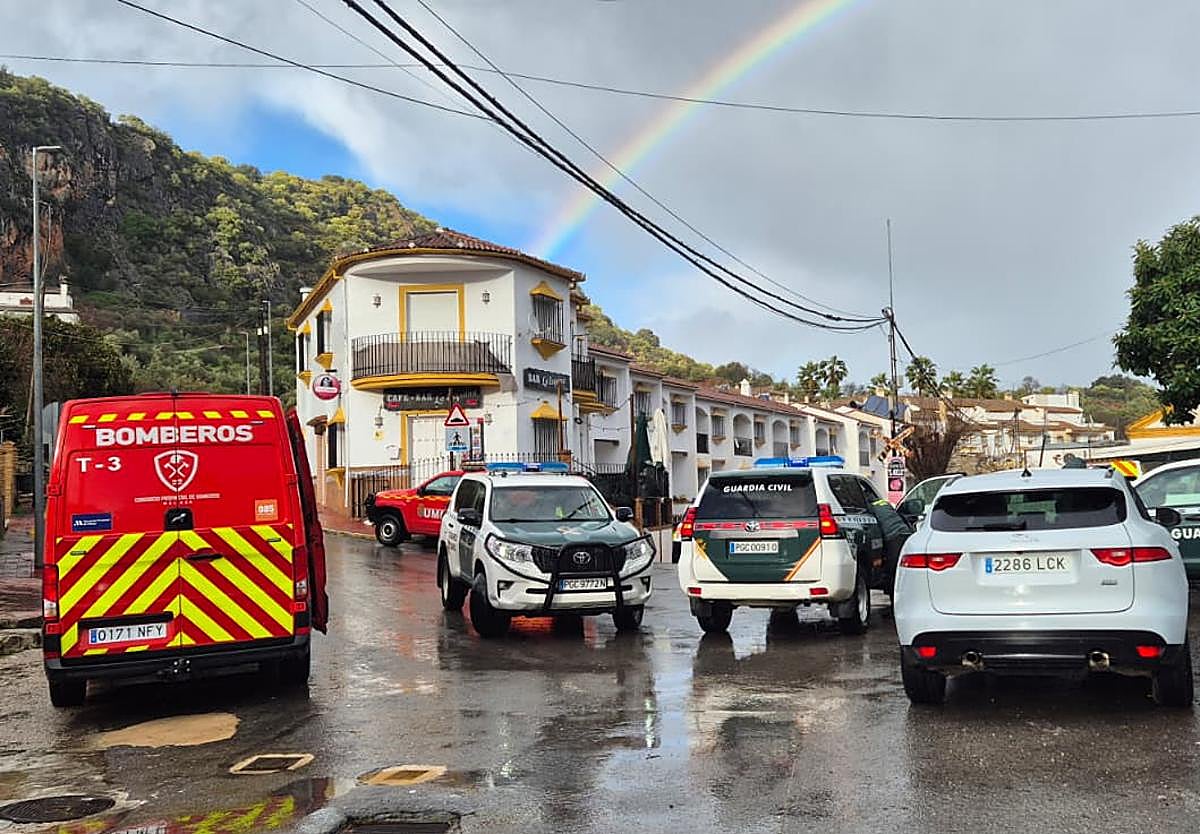

Some 200 residents of the area of La Estación de Benaoján, located next to the Nacimiento de los Cascajales, were being evacuated on Friday evening due to the risk of the Montejaque dam overflowing.
Most of the residents of La Estación have been rehoused with relatives and other residents in the centre of the village. Around a dozen were taken to the El Fuerte sports centre in Ronda (where residents of Grazalema were taken in on Thursday).
The mayor of Montejaque, Diego Sánchez, has said that technicians from the UME, Endesa (the owner of the dam) and the Junta de Andalucía are monitoring the situation of the dam at all times and that, given the risk, they have taken the decision to evacuate Estación de Benaoján as a precaution, as it would be the most affected area.
Despite the delicate situation, the government representative in Malaga, Javier Salas, conveyed a message of calm by assuring that there was no imminent danger that the water would start to overflow or that the reservoir would burst.
Montejaque experienced a tense Friday after "a strong tremor" was felt. It was shortly before seven o'clock in the evening when many people went out into the street in fright. After a meeting with experts, the municipal authorities appealed for calm
History of the Montejaque dam
In 1923, the Sociedad Hidroeléctrica del Guadiaro (Sevillana) was granted a concession to use 951 litres per second of the river Gaudares, which would be regulated by a reservoir located in the municipality of Montejaque with a capacity of 33 million cubic metres of which 30 would be usable. That company evolved into what is now Endesa. And, almost a century later, this concession has fallen by the wayside. And it has done so after producing nothing but headaches. Electricity, not even to light a light bulb.
A century has passed and the Los Caballeros reservoir is still standing, perfectly stable, but it has not been able to produce energy because it has never been able to hold water in a stable way. The soil is calcareous and filters the water. Only small reserves build up in winter. In spring and summer, the farmers in the area continue to work the land, which has the best characteristics for bearing fruit.
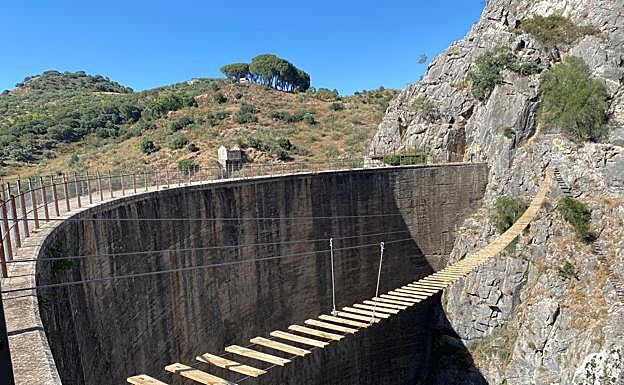
The construction of the reservoir flooded roads, the Roman bridge, the Rábita Alta and Rábita Baja farms and deprived livestock of water. The reservoir has now become a tourist attraction. It is a very popular area. There are even via ferrata climbing routes. Farming continues on the banks of the flooded area. And the land will be handed over to the local council of the mountain town. This is the intention expressed by Endesa.
In the last decade, there have been three-way contacts between the local council, the Junta and Endesa, which, logically, does not want to continue maintaining the costs of a 'sterile' dam. In 2018, the road connecting the two sides was built by the town hall, without any reason to do so.
The dam also becomes a Site of Cultural Interest in the category of Site of Industrial Interest. Another historic landmark of this infrastructure is that it was the first vault dam in Spain, designed and calculated by an engineer from Basel (Switzerland) for Sevillana de Electricidad. It was also built in record time, in about nine months, so it must have been 'in service' in 1925.
![[]](http://static.vocstatic.com/voc26/latest/assets/images/favicon/surinenglish/apple-touch-icon-57x57.png)