
Agriculture
Malaga province enjoys 'best season in living memory' for prickly pears
José Miguel Guzmána, a producer in the Guadalhorce valley, has managed to prolong the harvest and cultivate the 'chumbo' fruit almost all year round by following an ecological philosophy

Malaga
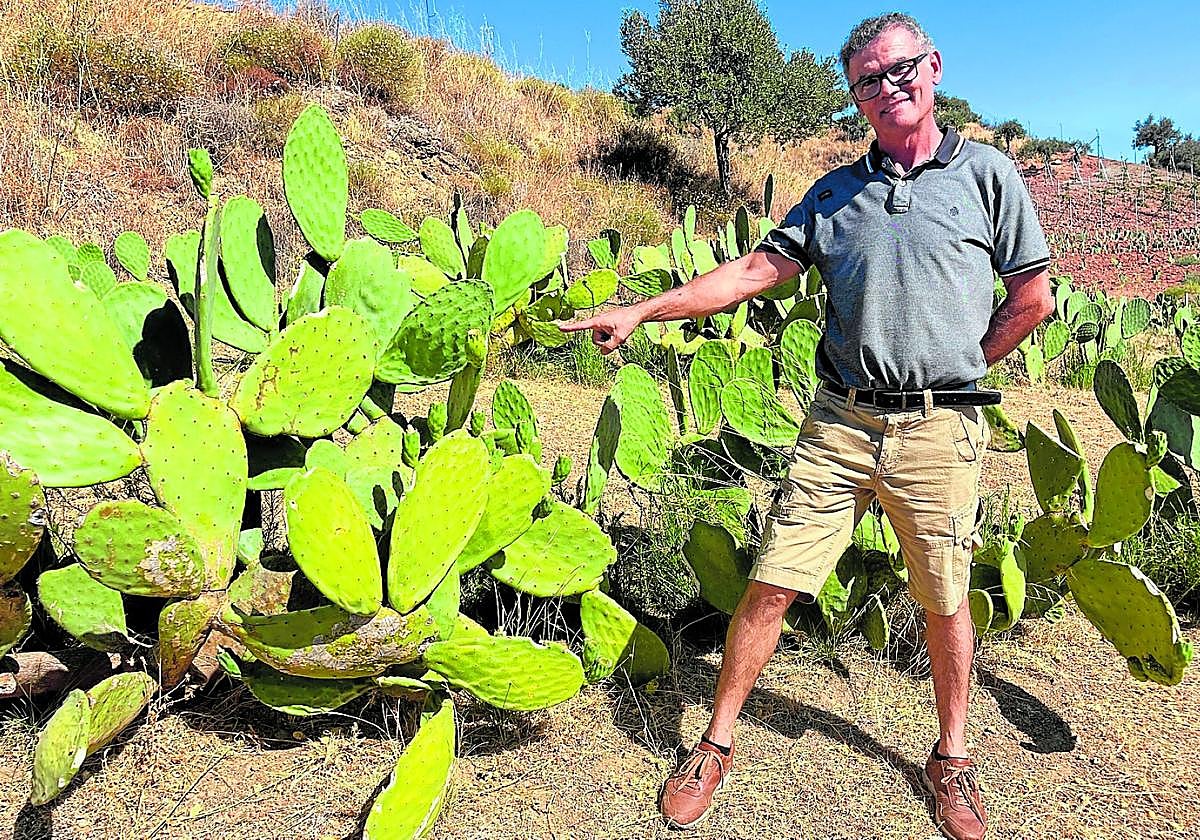
The prickly pear season in Malaga province, especially in Coín in the Guadalhorce valley, has been exceptional this year. Owner of the 'El Tío Lo Chumbo' estate José Miguel Guzmán, who is in charge of one of the main reference points in Andalucía, explains that the generous rains this year have allowed the crop to reach a level of vigour and sweetness that is difficult to match. The result has not only been an abundant production but also a longer than usual campaign - several weeks longer than last year.
"It has been the best year in recent times," Guzmán says with satisfaction, while proudly showing the prickly pear cacti full of fruit. The secret behind this harvest, he says, has been the combination of the climate, the richness of the soil and constant care. "The key is consistency and 20 years of experience. We are achieving what seemed impossible: to have prickly pears almost all year round," he says. At his farm, we can already see signs that there will be fresh fruit even in the middle of the winter.
Such regular production is a milestone for a traditionally summer crop. According to Guzmán, the soil in Coín, rich in iron, well-drained and south-facing, is fundamental to achieve this quality. The conditions mean that the roots do not rot and the plant retains its vitality. "The iron gives strength, the water runs and doesn't stagnate and all of this is noticeable in the flavour," the farmer states.
'We are managing to cultivate prickly pears almost all year round,' says Guzmán
Another pillar of his philosophy is respect for the environment. No chemical herbicides or insecticides are used at El Tío Lo Chumbo. The farm is managed in an ecological way, taking advantage of the natural grass to retain humidity and using solutions such as potassium soap, which acts as a natural insecticide and, at the same time, enhances the sweetness of the fruit. According to Guzmán, the prickly pear is a fruit that gets spoilt and "loses its essence" when chemicals and artificial enhancers are used, so healthy natural soil "is the basis for quality".
Guzmán has started to expand its production by testing another variety of the prickly pear on the market - the so-called 'tuna verdura', suitable for smoothies, as well as grilling and steaming. According to the farmer, the fruit has become a complement that opens up new business opportunities, as more and more people keep an eye out for it in shops. Tender, nutritious and rich in vitamins, it is conquering local markets and arousing curiosity among chefs and consumers.
As Guzmán explains, customers value not only the size and sweetness of the prickly pear but also the confidence in a product that has been looked after down to the last detail. "People tell me that since we started selling them, they have been looking for our prickly pears and not others. They might have to pay more, but they know it is guaranteed quality," he says. Unlike other growers, El Tío Lo Chumbo has sold everything it has taken from the fields, even falling short of demand.
The road has not been easy. Guzmán remembers that, years ago, the prickly pear used to be a marginal product, overlooked on the market. However, perseverance, hard work and media coverage have turned this perception around. "The first report that appeared on television was a turning point. Since then, people have realised what this fruit is worth," Guzmán says. Nowadays, even customers from other provinces such as Cadiz go to Coín in search of whole boxes, attracted by the uniqueness of a product that "triumphs, wherever it goes".
The future looks bright. With new plantations and accumulated experience, José Miguel Guzmán is confident that he can consolidate the presence of the Malaga prickly pear at markets all year round. "What is needed is faith and respect for the land. If you look after it, it will pay you back," he states both with humility and pride. The Malaga-born farmer invites people to go to Coín and see "nature in its purest form" - in the shape of a prickly pear.
![[]](http://static.vocstatic.com/voc26/latest/assets/images/favicon/surinenglish/apple-touch-icon-57x57.png)