
Housing crisis
High prices or limited supply: what's slowing down home sales in Malaga province?
Industry experts discuss the reasons why residential property deals on the Costa del Sol and across the province are growing at a slower rate than the average in Spain
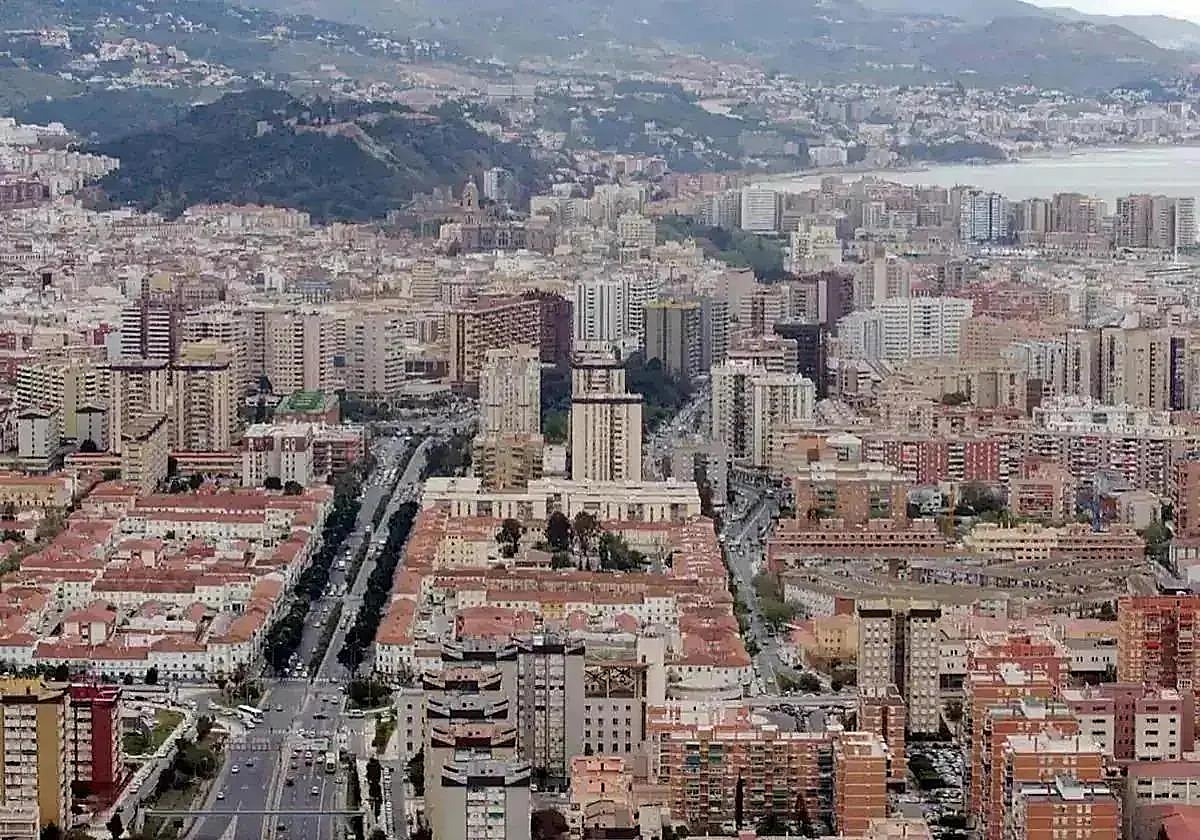

Malaga
As has begun to happen with the rental market, Malaga is no longer at the top of the rankings for buying a home in Spain . In the first half of the year, there were 18,815 real estate transactions in the province, representing an increase of 11.46%, somewhat below the 20% increase recorded for all Spain (357,533), as evidenced by data published this week by the Spain's INE national statistics institute. However, Malaga is not the only part of the country where real estate transactions are growing at a slower rate than the Spanish average. In fact, there are six places with worse results: for example, in Valencia the increase is only 11%, in Girona it is around 7% and in Las Palmas it is less than 1%. Furthermore, in Navarre, Lugo and Soria, house sales in the first half of this year are lower than those of the previous quarter.
Related story
-
 Cristina Vallejo
A closer look at the data by property type reveals that Malaga is definitely lagging behind. Between January and June, sales of new homes in the province totalled 6,050, 28.45% higher than in the same period last year. For Spain, the year-on-year increase is 30.5%. However, the real gap appears when looking at purchases of second-hand homes: in Malaga there were 12,765 such deals done between January and June, just 4.88% more than a year earlier, compared to an increase of nearly 17% across Spain as a whole.
Going into more detail: sales of non-subsidised housing rose 12% in Malaga and 20% in Spain. As for subsidised social housing (VPO), transactions fell 14.4% in the province (only 570 deals done in the first six months of the year), while they grew by 13.36% nationwide.
One more thing: if we analyse what happened strictly in the last month, while the increase in homebuying in Malaga is limited to 7.45%, in Spain as a whole the increase is 17.85%. Thus, while real estate transactions nationwide are at their highest levels since the real estate boom that blew up in 2008, in the case of Malaga, the 3,143 transactions in June of this year are surpassed by the 3,884 for the same month back in 2022.
"Malaga cannot sustain the pace it's been maintaining because, for starters, there's no more product. And what's more, domestic demand is exhausted, it cannot keep up with current prices"
Patricio Palomar
Director of alternative investments at Aire Partners
The Malaga real estate market is showing signs of a slowdown, as confirmed by Patricio Palomar, director of alternative investments at Aire Partners: "Malaga cannot sustain the pace it's been maintaining because, for starters, there's no more product. And what's more, domestic demand is exhausted, it cannot keep up with current prices. The prices being reached in the province are now difficult to bear. After such a significant surge in prices, it's normal that there will be a slowdown in the rate of price increases; they will continue, but at a lower rate."
Palomar points out that the slowdown is especially concentrated in the areas that have recently attracted the bulk of demand, namely the coast. Inland Malaga offers a different picture, perhaps because some buyers may be moving to more affordable areas.
This property expert adds another variable to the equation: foreign demand seems to be sensitive to Spain's political turmoil, as well as the ups and downs and uncertainty surrounding the regulation of tourist housing: "Although ordinary citizens aren't paying attention to what the media publishes about Spain, brokers are." So, foreign investment may also be declining slightly. An indication can also be seen in the statistics themselves: among the provinces where the rise in real estate transactions is below the national average are other provinces with the hottest bricks-and-mortar prices, such as the Balearics, Valencia and Alicante. In Madrid too, home purchases are growing below the national average.
This situation is consistent with what the real estate portal Idealista reported a few days ago. Malaga is, together with the Balearic Islands, the province where the highest percentage of household income is spent on mortgage repayments: 44%. That is 14% above what international, economic organisations consider reasonable.
"We're witnessing a demand gap: the pyramid is narrowing because, the higher the price, the fewer the people who can afford to buy"
Carlos Smerdou
CEO of Foro Consultores
Carlos Smerdou, CEO of Foro Consultores - a large estate agency in Spain - agrees: "We're witnessing a demand gap: the pyramid is narrowing because the higher the price, the fewer the people who can afford to buy. There's supply, but only at certain prices. In short, there aren't enough houses at the prices that demand could afford. Moreover, if transactions aren't growing as much, it's because we were already at very high levels."
"In Malaga and along the entire Mediterranean coast, there's more demand than supply. What's missing is product, which is why every day the deals done are fewer and more expensive"
José Antonio Pérez
Professor of real estate ecosystem at Malaga's real estate business school
Turning to José Antonio Pérez, professor of real estate ecosystem at Malaga's real estate business school, he has a very different view of Malaga's homebuying situation. While Smerdou and Palomar place the emphasis above all on demand, for those for whom access to housing at current prices is difficult, Pérez focuses on supply: "In Malaga and along the entire Mediterranean coast there's more demand than supply. What's missing is the product, which is why every day the deals done are fewer and more expensive."
In Pérez's opinion, the gap between supply and demand in the province is "an imbalance that has never been seen before." He therefore calls for the easing of requirements on licences for renovations and for changes of use in the second-hand market. "As long as demand pays up, prices will continue to rise. There is a tremendous lack of solidarity in the real estate sector: we talk about new product not meeting consumer demand. It's the only market where this happens. Moreover, prices are in the hands of private individuals and businesses; buyers compete in a rising bidding war." He concludes with this thought: "Prices will continue to rise as long as there is no supply and people continue to pay for it. Although this doesn't mean there aren't people who have problems accessing housing. If there's a minimum wage, there must be housing that costs a third of that minimum wage. That's the welfare state. If there's public and private supply in healthcare and education, the same has to be true for housing."
![[]](http://static.vocstatic.com/voc26/latest/assets/images/favicon/surinenglish/apple-touch-icon-57x57.png)