
Employment
One in three workers in Malaga's real estate and technology sectors are foreign
The hospitality industry continues to account for the bulk of foreign employment in the Costa del Sol province and in Spain as a whole
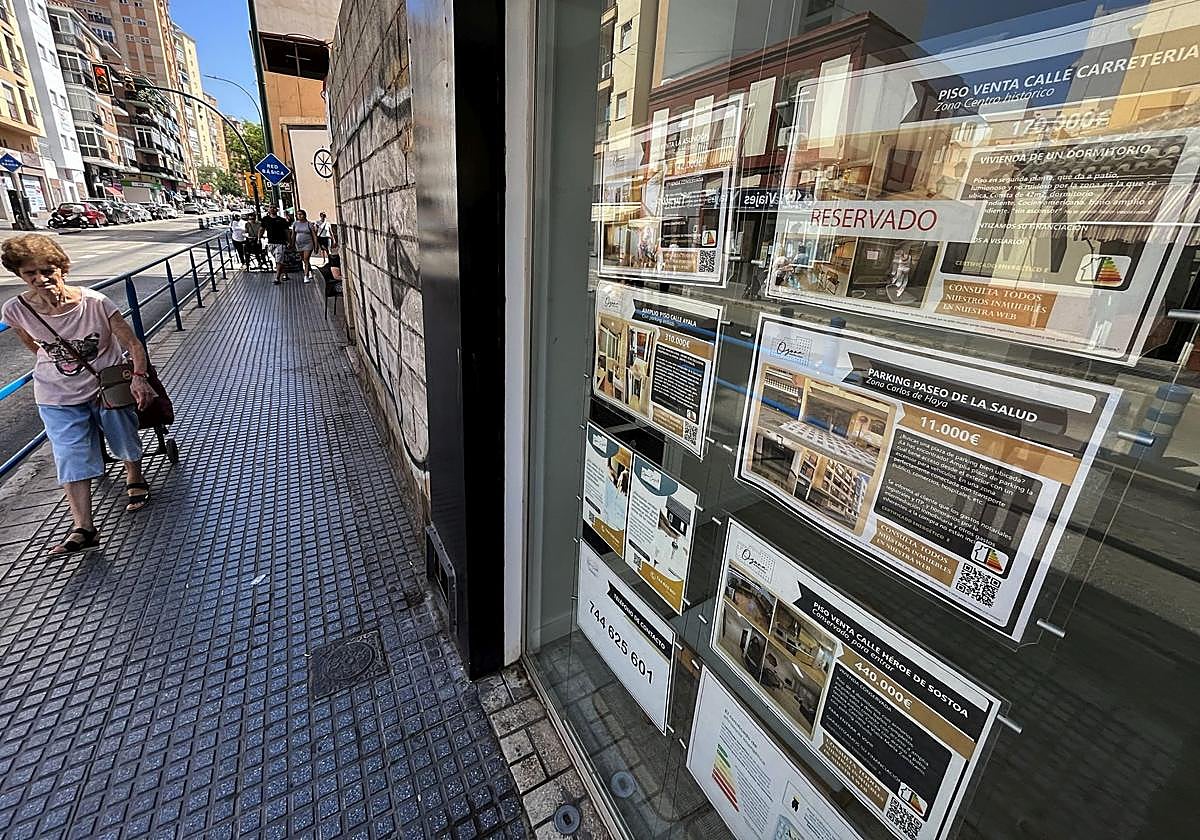

Malaga is the Spanish province with the second highest number of foreign workers employed in the real estate sector, with 4,537 people, a figure surpassed only by Madrid, with its 5,478 foreign-born workers engaged in this trade. However, there is another fact that is even more striking. Malaga is, together with Alicante, the province with the highest proportion of foreign employment in the real estate sector as a whole - not just in construction or laying bricks, but in selling properties. No less than 35% of the total of 12,764 people employed in real estate in this area are foreign-born, meaning that one in three workers in this sector was not born in Spain. The Spanish average is limited to 15.65%. These figures are taken from the latest report on foreigners registering with Social Security, published by the Ministry of Inclusion.
If the Costa del Sol province comes second in terms of foreign employment in the real estate sector, it is in third place in terms of total employment (adding foreign and domestic employees together) in this sector, behind Madrid (on average, 41,755 registered workers in August) and Barcelona (30,865).
Employment in real estate has grown by 77% in Malaga over the last ten years, placing it fifth place in all of Spain. It is still behind the growth registered in smaller provinces such as Teruel, Jaen, Granada and Soria, but stays ahead of the Spanish average (51%). At the same time, strictly foreign employment dedicated to real estate has doubled in the last decade, in this case identically to what has happened in Spain as a whole, where it has gone from 13,780 registered workers in August 2015 to 27,778 this year.
To give more context to these figures: Malaga is the sixth province in Spain in terms of the number of foreign Social Security contributors, with 124,320 in August. Ahead of it are Madrid, Barcelona, Valencia, the Balearic Islands and Alicante. However, in terms of foreign employment as a percentage of the total, with 15.4%, a dozen provinces are ahead of Malaga, with Lleida and the Balearic Islands at the top of the ranking. In these two locations, foreign workers account for around 25%, or one in four. In Andalucía, ahead of Malaga are Almeria (22.3%) and Cadiz (19.72%). The Spanish average is 14.17%.
Real estate is the economic sector with the greatest proportion of foreign workers in Malaga province. However, two other sectors follow close behind: information and communications, which largely encompasses technology, and the hospitality industry (bars, restaurants, hotels and so on). In both, foreign contributors account for almost 30%.
If we start with the first, while the province as a whole has a total of 23,144 workers, 6,708 are foreign-born, or 29%, while in Spain as a whole this proportion does not even reach 14%. Malaga is thus fourth in Spain in terms of foreign employment in technology, behind only Madrid, Barcelona and Valencia. Moreover, among all the regions in the country where this is an important sector, Malaga is the one that has seen the most significant increase in the last ten years: it has more than quadrupled, going from 1,550 foreign workers to the current figure of over 6,700.
In terms of total employment in the technology sector, Malaga ranks fifth in Spain as, in addition to the aforementioned provinces, Seville also ranks ahead.
In addition to this purely technological employment, Malaga is also the Spanish province with the fourth highest number of foreigners employed in professional, scientific and technical activities (6,513), which represents an increase of 130% over the last decade. That said, in this case they barely make up 15% of all workers in the sector (albeit five percentage points more than in the rest of Spain).
The proportion of foreign-born workers in the hospitality industry
While the real estate and technology sectors may not be the first to come to mind when talking about foreign employment, the hospitality industry is a different kettle of fish. So yes, in absolute numbers, bars and restaurants employ the bulk of foreign-born workers (33,392 registered with Social Security). However, in percentage terms, hospitality is only in third place among the sectors with the highest proportion of foreign workers, slightly below the technology sector, accounting for 28.8% of the total, which is close to 116,000 when both local and foreign employees are combined.
In Spain as a whole, the hospitality industry is the sector with the highest proportion of foreign workers: over half a million, approaching 600,000, which represents 30% of the total.
Retail trade: important in number, but smaller percentage
In absolute numbers, the second most important sector for foreign employment in Malaga is the retail trade, with almost 17,000 workers, but they only account for 13% of the total of almost 129,000 employees (in Spain as a whole, foreigners also account for 13% of those employed in this sector of general commerce). The third largest employer of foreign workers is the construction sector, with 12,900 registered workers. In this case, the proportion is above the provincial average as they account for practically 20% of the total of over 66,300 construction workers. A similar situation is occurring across Spain as a whole: the nearly 300,000 workers employed in construction nationwide also represent around 20% of the total.
It is striking that agriculture, a sector one might presume to be a niche market for foreign workers, has only 617 foreign-born workers employed in Malaga province. This figure barely represents 10% of the total number of people employed in the primary sector in the province, a proportion that falls to 8.6% in Spain as a whole.
![[]](http://static.vocstatic.com/voc26/latest/assets/images/favicon/surinenglish/apple-touch-icon-57x57.png)