
Environment
Malaga's forests to gain 100,000 Spanish fir trees in major repopulation push
Following the 2021 Sierra Bermeja fires, the regional government has already planted 10,000 specimens to restore one of Andalucía’s most unique and ancient species

Málaga
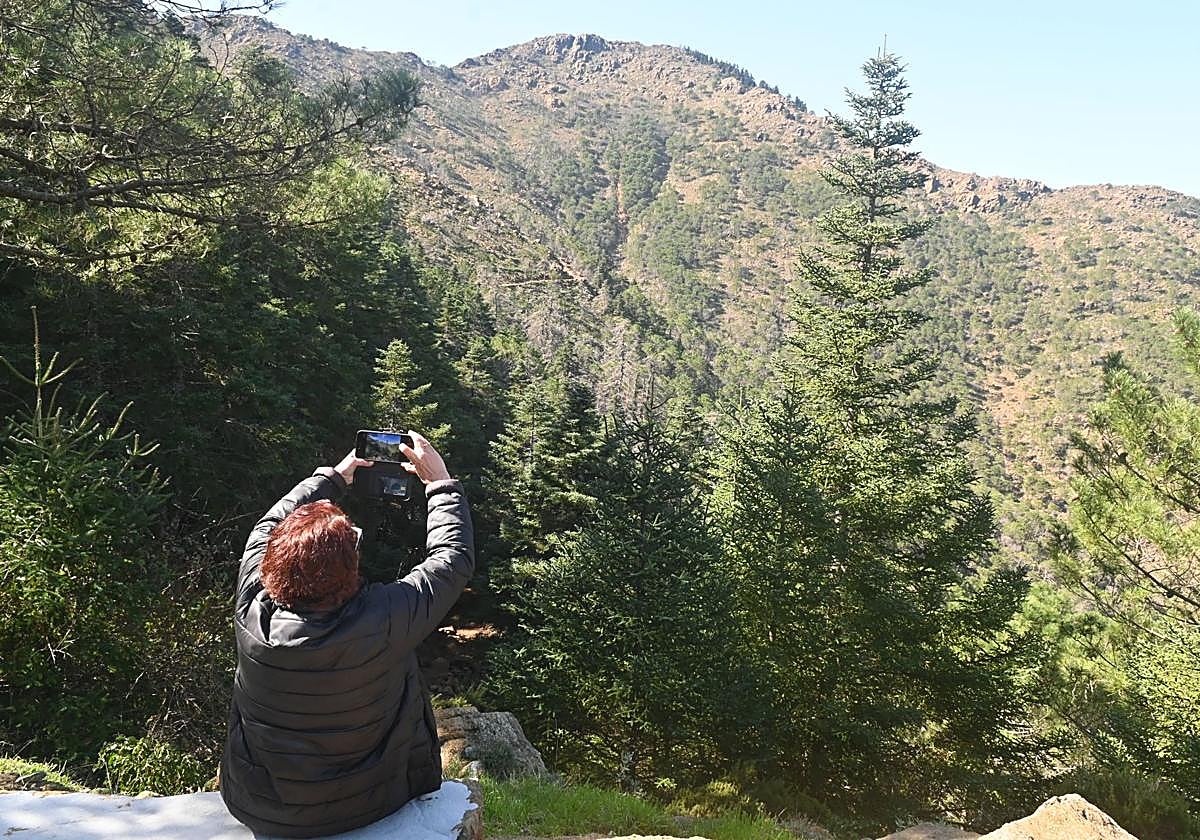
The regional ministry of sustainability and environment has prepared more than 100,000 Spanish fir (Abies pinsapo) seedlings to repopulate the mountain ranges of Málaga province.
The regional body has already planted 10,000 specimens in the Los Reales de Sierra Bermeja area, which was devastated by summer fires in 2021. This strategy has made environmental experts hopeful for the future of this unique species.
According to the Spanish fir recovery and conservation plan, the fire five years ago affected only 3% of the Los Reales forest. The damage occurred mainly in "expansion zones," where the fir develops under the canopy of pine forests, rather than in the heart of the forest itself.
"The dense core remained mostly intact," regional coordinator of the recovery plan Gabriel Gutiérrez Tejada has said. Preservation during the fire was possible thanks to the work of the Infoca fire extinguishing teams and the morphology of this species, which does not facilitate the rapid spread of fire.
The expansion zone
The greatest damage occurred in transition areas between the pine forest and the Spanish fir. These areas that did suffer losses require a period of consolidation until experts declare the repopulation area fully established.
4,336
hectares of Spanish fir forests live in the Sierra de las Nieves, Sierra Bermeja and Grazalema
Besides Malaga, some other provinces in Andalucía as well as areas of Aragon will receive seedlings for repopulation.
The current distribution of the Spanish fir forest exceeds 4,336 hectares. In addition, the extended surface area (areas where the species mixes with other trees) is over 9,000 hectares.
Climate change refuge in Cortes de la Frontera
Among the key initiatives is the restoration of historical populations, such as those in Cortes de la Frontera, where technicians have built metal protections around young trees.
The aim is not only to restore the historical canopy, but also to create "climate refuges" - areas outside the traditional territory that could serve as genetic reserves or safe habitats in the face of climate change".
The report also monitors mortality and survival. The good news is that there has been a decrease in the loss of specimens, suggesting that planting techniques and nursery stock have improved. Gabriel Gutiérrez Tejada, however, says that this process will take years.
The provincial authority of Malaga is also working on the removal of biomass to prevent fires. This material can then serve as a source of energy, while the vacant spaces facilitate the development of young trees.
The ancestral fir tree expands in Aragon
Although the Spanish fir tree has its largest forests in Andalucía (especially in Malaga and Cadiz), it has also spread to other regions. Aragon is an important area of colonisation for this species.
The two regions are collaborating to consolidate forest conservation and management. The aim is to study the behaviour of the species in different environments and help it adapt to climate change.
![[]](http://static.vocstatic.com/voc26/latest/assets/images/favicon/surinenglish/apple-touch-icon-57x57.png)