
Environment
Marbella tackles tea beetle plague after detecting first cases
The town hall has contracted emergency work to prevent and eradicate the plague declared by the regional government of Andalucía a year ago

Marbella
Marbella town hall has begun to tackle the plague of the Euwallacea fornicatus sensu lato, also known as tea borer or beetle, native to South-East Asia. In December 2024, the regional ministry of agriculture, fisheries, water and rural development confirmed the plague caused by this beetle after it appeared in avocado crops in Motril (Granada). It has already been detected in several places in Malaga province, including Malaga city and, now, Marbella.
According to information provided by the regional government, the tea beetle is associated with the avocado wilt fungus caused by Fusarium sp. (a species of fungus which causes more than a hundred diseases in more than a hundred other plant species). The beetle acts as a transmission vector and the disease eventually kills the tree. Up to 19 plant species have been identified as vulnerable to attack, which starts even on healthy trees.
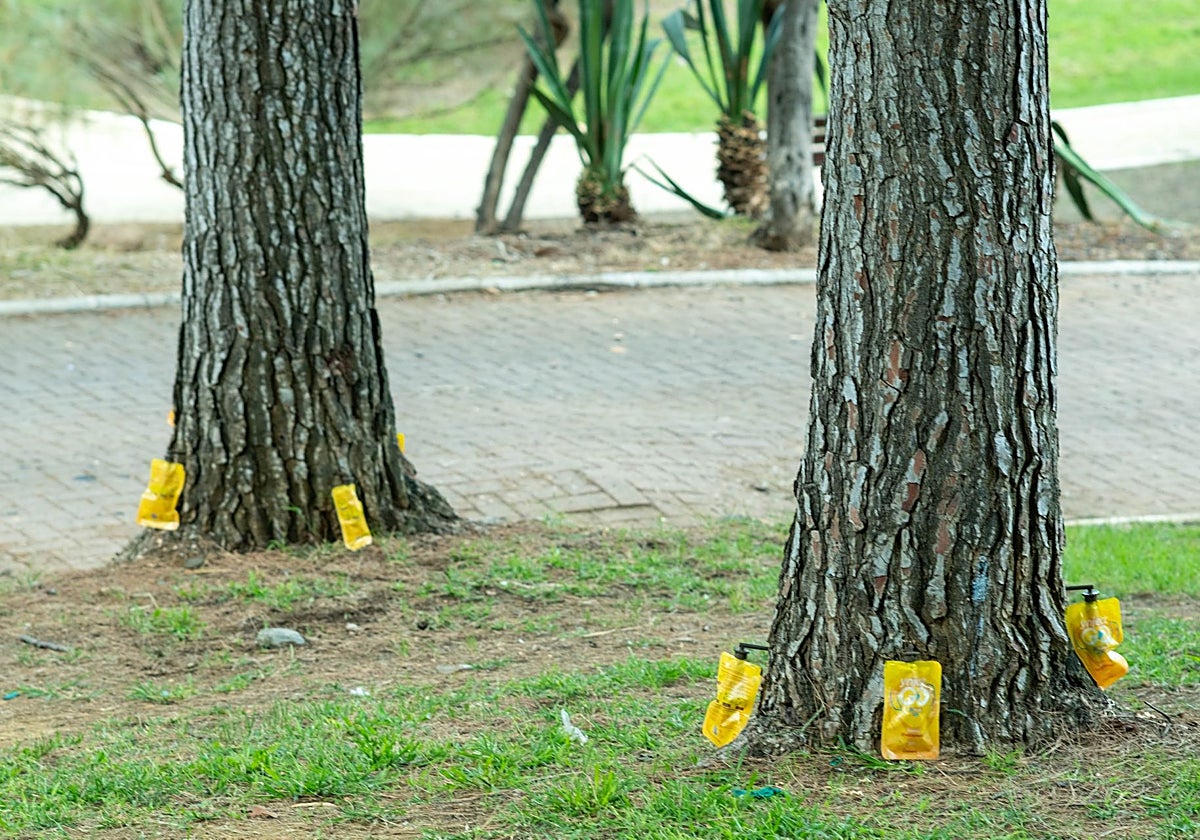
The town hall has contracted specialised company Genal Ingeniería y Paisajismo for just under 170,000 euros to carry out preventive treatments on trees, as well as pruning and, where necessary, felling, in accordance with the provisions of the resolution declaring the plague.
'Controling is very difficult. There are no effective pheromones, nor are there any known chemical control methods,' so 'the most effective thing is prevention', the regional ministry warns.
"Controling it is very difficult. There are no effective pheromones to attract it, nor are there any known methods of chemical control of the beetle or the fungus once the tree is infested," the regional ministry warns, adding that "the most effective thing is prevention".
The difficulty in fighting the tea beetle is that it is practically imperceptible to the human eye (females are black and 1.8 to 2.5 millimetres long, while males are brown and only 1.5 millimetres long). They also spend very little time outside the branches of the trees they penetrate, where they mate, feed and stay.
Insect wisdom
"The females mate inside the tree, create galleries in the branches and infest them with the symbiotic fungi they carry in their mouths. The fungi develop on the walls of the galleries and spread throughout the tree by means of the sap," the Junta says.
For this reason, by the time they are detected, the trees are already showing symptoms of the disease, such as the appearance of dried resin on the outside (gummosis), dry or wet exudates in the form of so-called 'sugar mountains' or simply the presence of beetle entry and exit holes or dark patches.
In addition, this pest can travel short distances by flight (430 to 860 metres without wind, at a speed of 0.3 to 0.6 metres per second and for a maximum of one hour in an open field). Its main means of dispersal is through the movement of infested plant material.
![[]](http://static.vocstatic.com/voc26/latest/assets/images/favicon/surinenglish/apple-touch-icon-57x57.png)