
Housing
Malaga with fastest rising rental debt among Spanish provinces
Tenants at "breaking point" as rents outpace wages across the Costa del Sol
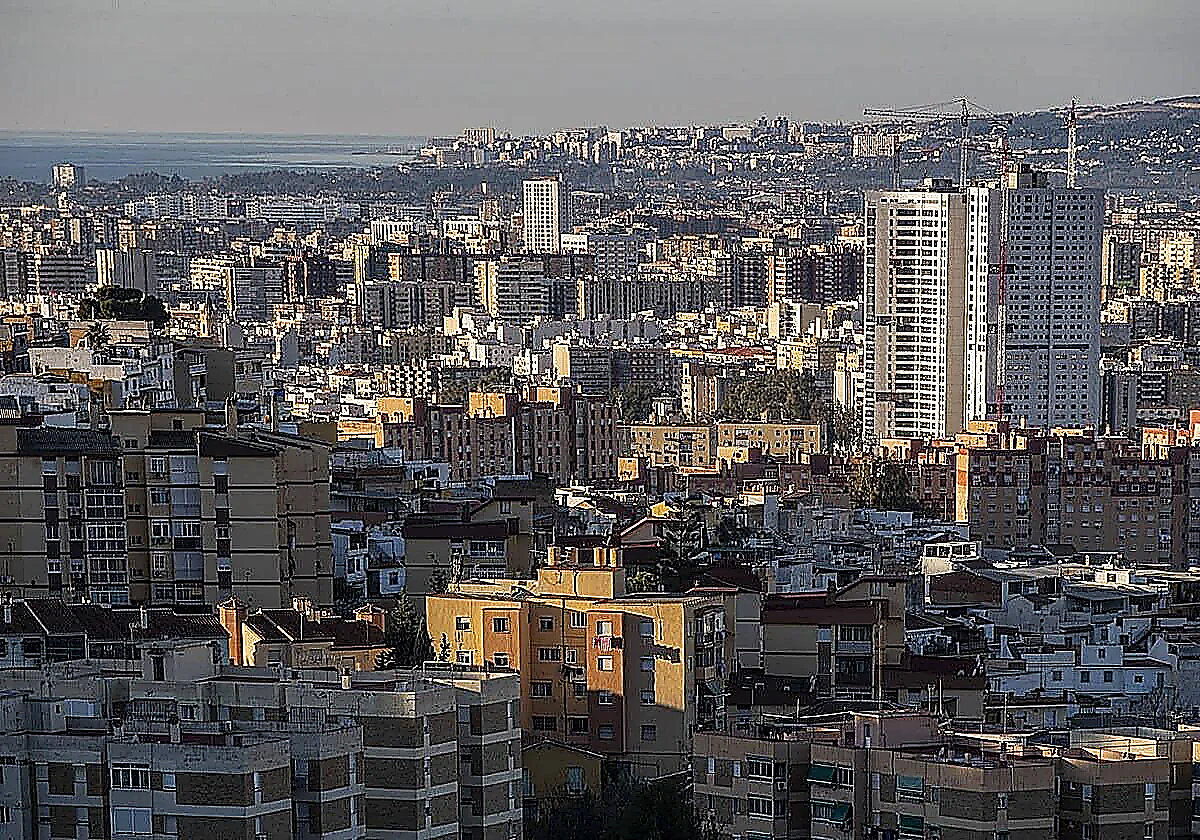

Malaga has officially become the Spanish province where rental arrears increased the most last year, surging by 21.5%.
A new study by the Observatorio del Alquiler (Rental Watchdog) warns that the payment capacity of tenants on the Costa del Sol has reached its absolute limit, closely followed by the Balearic Islands (+20.9%) and Murcia (+21%).
"The study reveals a clear hierarchy of defaults, led by the more unbalanced markets of the mainland and the islands, where the price of rent has exceeded the solvency of tenants," the report states.
What it does not do is count the number of tenants who have defaulted on their rent in the last year and what their impact is on the overall rental market. In other words, it doesn't measure the true extent of the problem.
"Our agreements with the entities that share information with us prevent us from disclosing this information," head of Observatorio del Alquiler Sergio Cardona said, also without commenting on whether non-payment is a major problem.
"In the 2024 report, we warned that we had to be careful because many tenants were having problems paying their rent on time in the first week of the month and that this was going to lead to non-payments," he stated.
According to a report published by Fundación Foessa Foundation (an organisation dependent on the Caritas charity), there are 200,000 people in the province of Malaga living in households that fall below the poverty line after paying rent.
Average ren defaulter in Malaga owes €10,000
-
While the national average for a tenant in financial difficulty is approximately €8,489, the debt in Malaga is significantly higher. At roughly €10,000 per defaulting household, Malaga is now part of an elite group of high-debt provinces including:
-
Barcelona: €14,036
-
- Madrid: €10,420
-
- Balearic Islands: €10,354
-
- Guipúzcoa: €10,137
In Spain as a whole, the average tenant with payment difficulties owed an average of 8,489.30 euros in 2025. In Malaga the figure is around 10,000 euros, surpassed by Barcelona (14,036.5 euros), Madrid (10,420.4 euros), the Balearic Islands (10,354.4 euros) and Guipúzcoa (10,137.6 euros). Immediately after Malaga is Seville, with close to 9,000 euros.
The lowest debt levels in the country are in Ávila, Soria and Zamora, where tenants owe average amounts of less than 3,000 euros. The report also highlights the case of Salamanca, where the increase in arrears in the last year was just 3.2 per cent.
"Unlike other areas with low variation - such as Álava, Lérida, Zamora, Lugo, Cáceres, Jaén or Teruel - which respond to a less dynamic market or reduced prices, the behaviour of Salamanca is due to its nature as a university city. In this market, the predominant profile is that of a student, whose rent is usually guaranteed by parents," the report notes.
"In the 2024 report we warned that we had to be careful because many tenants were having problems paying their rent on time in the first week of the month and that this would lead to non-payments"
In terms of non-payments, the report provides information at regional level. Murcia leads the ranking, with more than nine months of rent owed, followed by Andalucía and Catalonia, with more than eight months.
As the document points out, the increase in non-payment is due to the rise in rental prices and the fact that wages are not growing at the same rate.
In Malaga, rent takes 38 per cent of household income, above the 30 per cent set as a "safe" level. There are many people who share their house in Malaga because they have no other choice. The average number of rent payers per flat in Malaga is 2.1.
This happens more markedly in places like the Balearic Islands, Madrid or Barcelona, where the average per household is 2.5 people sharing (not counting minors or students).
![[]](http://static.vocstatic.com/voc26/latest/assets/images/favicon/surinenglish/apple-touch-icon-57x57.png)