
Weather
Malaga province recovers, with one eye still on the sky, after string of seven storms fills up reservoirs
Local water reserves are at their highest level for 13 years and there is still uncertainty about further damage due to saturated ground and the state of infrastructure
Chus Heredia / Antonio M. Romero
Malaga.
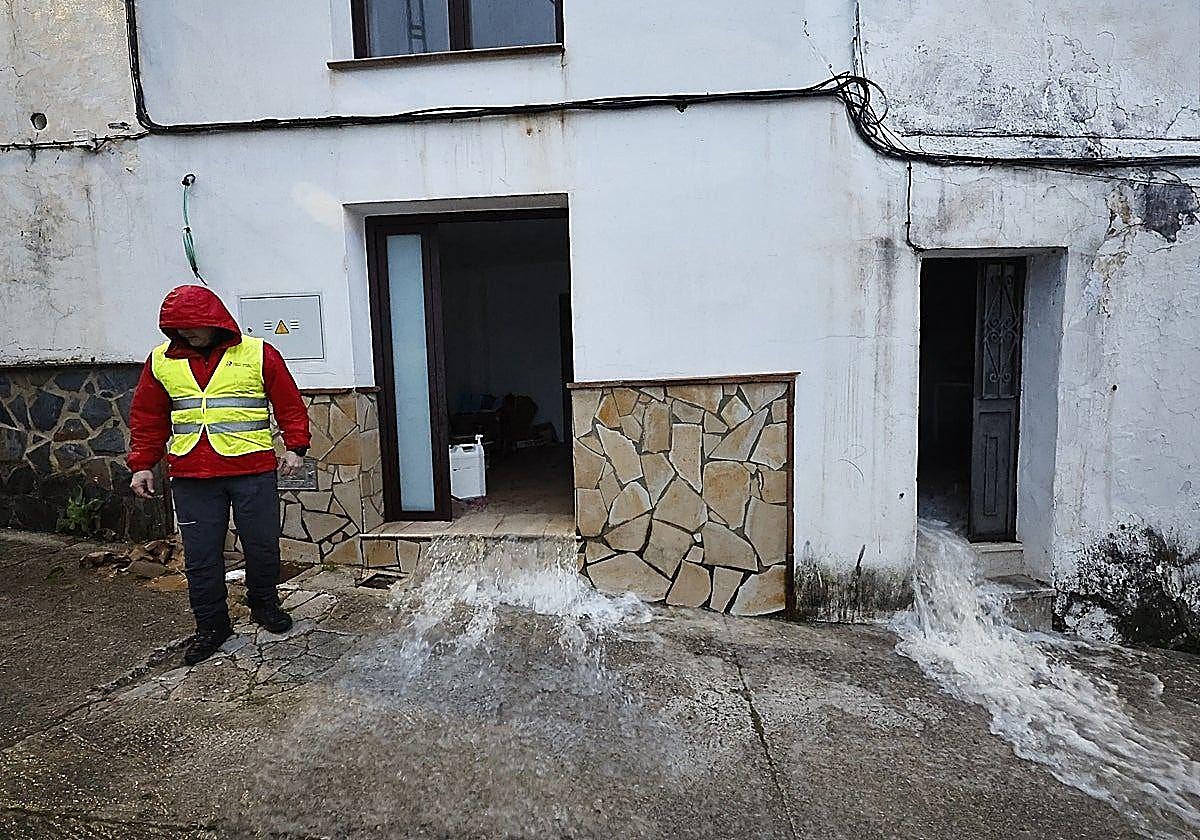
Goretti, Harry, Ingrid, Joseph, Kristin, Leonardo and Marta. The succession of storms has brought Malaga province no respite in recent weeks.
It is the rainiest hydrological year of the last 16. The damage is well known (evacuations, effects on infrastructure such as the high-speed rail network and roads, floods, cancelled classes...).
The rain eased this week, although the concern was now not the quantity of rain but the limited spare capacity of riverbeds and land to absorb more water.
Storm Oriana was expected to bring rain to the same affected areas today (Friday), with up to 60mm and strong winds in the province. Looking ahead to next week, the weather is finally forecast to become more stable.
Engineers still fear for ground stability, which could affect buildings and infrastructure further. In the local road network alone, the provincial authority estimates initial damage at 15 million euros. There will be more, and new problems will emerge. In other infrastructure, such as the high-speed rail line, a landslide in Álora will disrupt communications until March.
The river causing the greatest concern in Malaga province this week was still the River Guadiaro, on the western border with Cadiz province. On Monday morning this week an amber alert for it was triggered. It was carrying 77,000 cubic metres per second and reached a level of 1.71 metres, although far from the nearly five metres recorded a few days earlier.
Reservoirs
The only positive aspect of the series of storms is the reservoirs. Seven consecutive storms (and an eighth one today) have completely reversed the situation in Malaga, which until early 2025 had been suffering from an extreme drought. In the last hydrological year (October to September) the province's reservoirs had fallen below 100 million cubic metres of stored water. This week they were at over 540. As recently as November, just three months ago, they stood at 276. Now, despite continuous releases of water for safety, reserves stand at 90 per cent. They have not been at this level since October 2013.
The Guadalteba reservoir, near Ardales, and which is part of a system that serves Malaga city, holds the most water. Since Thursday last week it has been overflowing into its neighbour, the Guadalhorce reservoir. This has raised the level behind both dams. Both are at around 98% of their capacity.
Guadalteba, which receives inflows from the river of the same name, stores nearly 150 million cubic metres. On its own, it could supply Malaga city with drinking water for three years.
Radical change in La Viñuela
The second reservoir with the most water in the province is La Viñuela, in the Axarquía. This week it was at 125 million cubic metres. At this time last year, it was barely at 36.
La Concepción reservoir, between Marbella and Istán, has been releasing water at different times since 2 January. The rainfall could have filled it several times, but for safety reasons a maximum volume cut-off is maintained.
Storms Leonardo and Marta caused widespread damage in Malaga province's countryside. The Serranía de Ronda, Guadalhorce Valley and western Costa del Sol were particularly affected.
Heavy rain and strong winds damaged olive groves, citrus orchards, avocados, vegetables and cereals, reducing yields and spoiling harvests. Flooding left fields waterlogged, delayed planting and destroyed forage crops, while much fruit fell to the ground. Farmers face significant financial losses.
Rural infrastructure was also badly affected: roads, irrigation channels, pumping stations and hydraulic systems were damaged, limiting access to farms and livestock. Agricultural organisations described the situation as a natural disaster and asked for urgent government support, infrastructure repairs and aid.
![[]](http://static.vocstatic.com/voc26/latest/assets/images/favicon/surinenglish/apple-touch-icon-57x57.png)