
Water supply
Malaga finalises tests to supply water from its large underground reservoir
The Bajo Guadalhorce well system, with a potential of more than 800 litres per second, begins to send water to El Atabal after an investment of 16 million euros
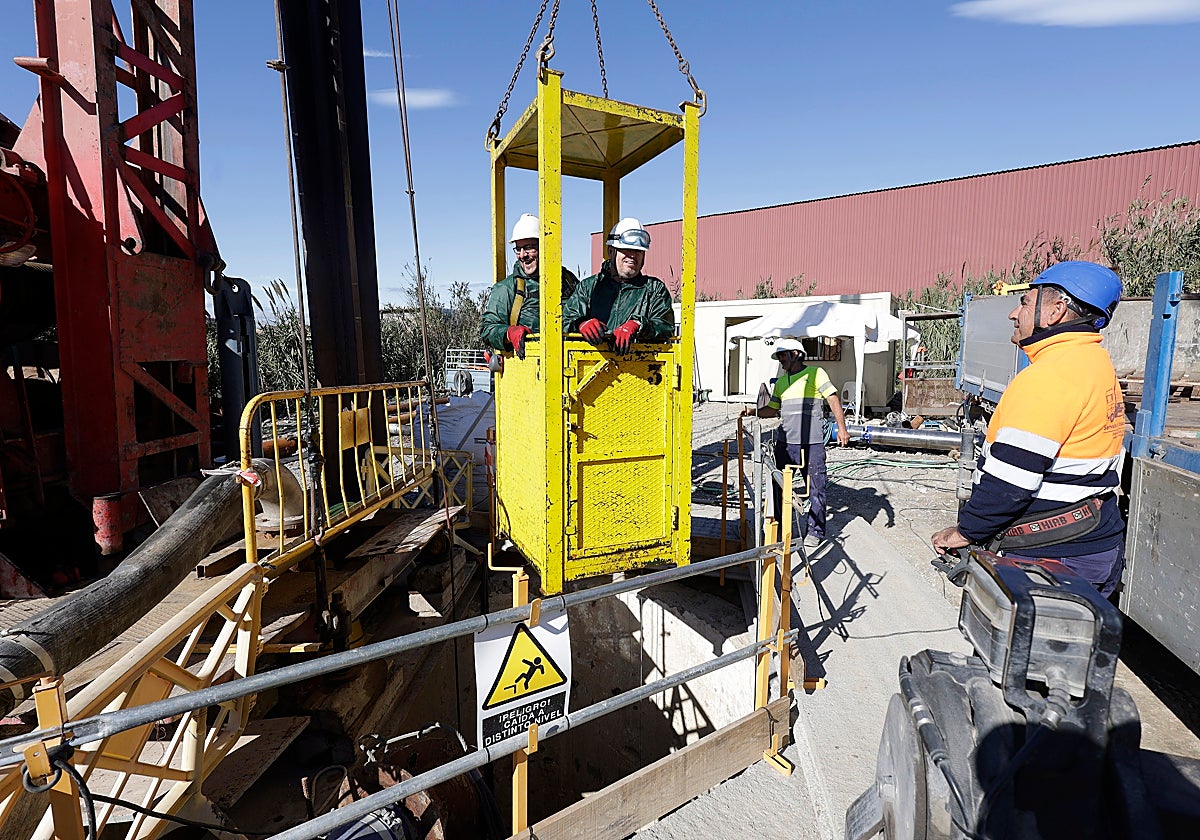

The Bajo Guadalhorce underground reservoir is a key project in which the Andalusian regional government and Malaga city council have collaborated within the framework of the drought plan. It has involved the recovering of five, old wells in the Bajo Guadalhorce capable of supplying more than 800 litres per second to the city. This potential is greater than that of a full dam such as El Limonero or Casasola. Logically, the maximum will not be used except in an emergency situation, so as not to deplete the aquifer.
During these past few weeks, public water company Emasa has been testing the entire system. On Wednesday began the testing of the pipe that leads from the Perales and the Puente del Rey wells to the El Atabal desalination plant. The tests are gradual and very controlled, with small flows (around 100 litres per second) so as not to force the pipeline.
More tests
In the coming weeks, pumping, telecommunications and control systems will have to be tested. The aim is for El Atabal to start receiving water by the end of the month.
The well strategy is on the rise in Malaga, especially since the last drought. Much progress has been made in knowledge, study and exploitation. The idea is to combine the use of wells with reservoir water. The wells lower the pressure on the reservoirs, but, at the same time, we must try not to force them. Last winter's storms and heavy rains have allowed for more flexibility of use. It is striking that, at this point in the summer, the Grande river is still releasing water in the Aljaima weir.
Laboratory
The point is that, regardless of the source, the water that comes out of the taps meets uniform quality standards, with low levels of conductivity (salt) and hardness (lime), thanks to the work of the El Atabal desalination plant.
Malaga has the enormous opportunity to manage the great underground 'reservoir' located in the Bajo Guadalhorce. The key is not to 'kill the goose that lays the golden eggs' and, for that reason, Emasa has put out to tender a powerful consultancy to monitor what is happening in this alluvial aquifer minute by minute for the first two and a half years.
Flows
Initial estimates point to a flow between the five wells (3 in Perales, Santa Teresa industrial area, and 2 in Puente del Rey, airport area) of up to 900 litres per second. This is more than half of the flow through the Malaga network, but that is the maximum capacity. Underground resources pose a risk: they can drop in quantity and quality very quickly. They can become saline, for example, or be contaminated with pesticides and other undesirable chemicals.
With the experience of the network of wells of Aljaima and Fahala (Cártama), Emasa prefers to have an indicator that recommends a flow rate for exploitation. In the first instance, given the good level of the reservoirs, use will be limited to a few hundred litres per second.
Monitoring
Malaga is about to contract a consultancy for 30 months and 300,000 euros. The company will be responsible for a large number of laboratory analyses on the qualitative and quantitative development of the alluvial aquifer of the Bajo Guadalhorce. The aim is to monitor its progress during the first phases of supply.
The rehabilitation of Perales and Puente del Rey involved an investment of more than 15.4 million euros. Emasa undertook the refurbishment of these five wells with a budget of 2.3 million. The regional ministry of agriculture, fisheries, water and rural development has been responsible for the execution of the necessary pipelines to transport the extracted water to the existing reservoir to the north of the airport and, from there, to the pipes that connect with the main network to the El Atabal. Specialised companies such as Fadelpo, PTOC and Rialsa have been involved in the whole process of recovering the wells, flows and infrastructure, which was carried out by emergency procedure.
Ranney system
The Perales construction system, known as Ranney, consists of a large vertical well in the form of a tube in the shape of an inverted umbrella - the 'rods' are the catchments that pour into the basin and the water is then pumped upwards under great pressure. The water must rise vertically more than 60 metres. All the wells at Perales were built with the same system.
![[]](http://static.vocstatic.com/voc26/latest/assets/images/favicon/surinenglish/apple-touch-icon-57x57.png)