
Economy
Malaga and Costa del Sol contribute 2.3 billion to state coffers in first half of year, some 20% more than in 2024
Tax collection in the province is growing twice as fast as the average in Spain, as it heads towards a new record for the fifth year in a row
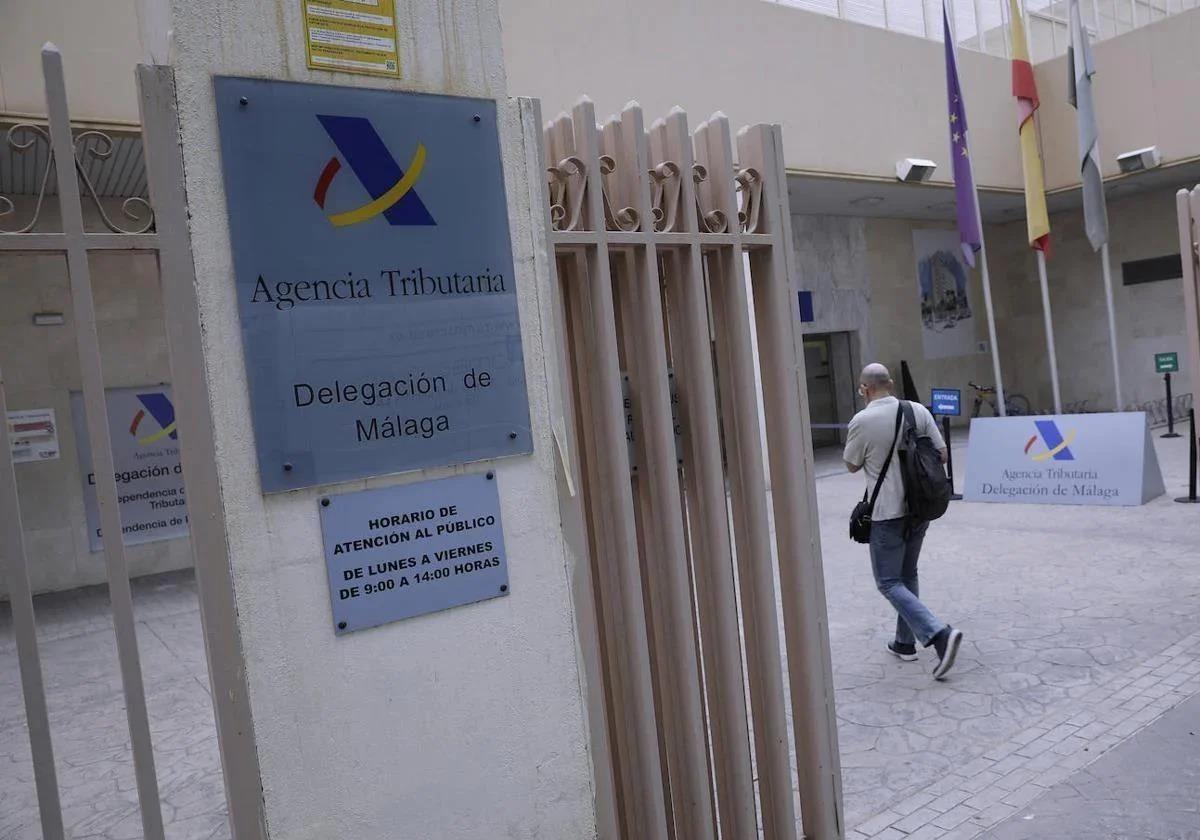

Malaga had contributed more than 2.3 billion euros to Agencia Tributaria - Spain's tax agency - by the end of June, which is almost 20% higher than in 2024. This data comes from the latest tax collection report published by the Ministry of Finance on Thursday. While the second half of the year remains to be seen, it seems like the province is on a path to set a new record for the fifth year in a row. However, simply matching the first half's results in the second won't be enough to surpass last year's total of 5.5 billion euros, due to the high bar set in 2024.
The good news is that Malaga province demonstrates greater dynamism in tax collection than Spain. Nationwide, tax revenue grew by just 10% in the same period, meaning Malaga's increase is double the national average.
More economic dynamism
This higher growth in tax collection in Malaga is consistent with forecasts that the province's GDP will expand at a faster rate than the national average this year. This is a forecast in which Analistas Económicos de Andalucía (part of the Unicaja group) and the Malaga association of economists coincided when they presented their economic estimates at the halfway point of the year. Although with certain nuances: the Unicaja company anticipates a provincial GDP expansion of 3.5%, while the economists, somewhat more cautious, foresee a rise of 2.8%. Spain does not seem likely to exceed 2.5%.
In any case, Malaga is not the province where tax revenues are growing the most this year, nor does it stand out in the ranking by volume of revenue. In some provinces, increases of nearly 50% have been recorded (Cuenca); among the main contributors, Alicante stands out (33.8%); and among the Andalusian provinces, it is in Almeria where the highest increase has been registered (32.3%).
If the ranking is ordered by amount collected, Madrid comes first, with almost 62.8 billion euros in the first half of the year, with growth identical to the national figure (10.4%), followed by Barcelona, with 22.2 billion and a somewhat more modest increase (5.4%).
Malaga is in the ninth position, although it is the sixth in terms of population. Valencia (6.8 billion euros), Seville (3.5), the Balearic Islands (2.7), Alicante (2.6), Coruña (2.5) and Vizcaya (2.4) are ahead of it. In the first half of last year, Malaga was also ninth, with only one province replacing one of the territories currently preceding it: instead of Vizcaya, Zaragoza was among the first eight.
IVA - the most important type of tax in Spain
Let's take a look at the type of taxes that Malaga's contribution to the state coffers was mostly made up in those first six months of the year. IVA (sales tax on goods and services) comes first in the province, with a 980-million-euro portion of the contribution between January and June, which represents a year-on-year increase of 12.8%. While Malaga ranks ninth in terms of overall tax revenue, it is sixth in terms of IVA revenue, ahead not only of Vizcaya, but also of Seville and the Balearic Islands. This shows the importance of consumption in the province, as well as the presence of a large floating population. In Spain as a whole, revenue has been boosted by the return to normal rates in electricity, gas and food after the drop that took place to counteract the rise in inflation.
In total, Malaga contributes just over one billion euros to the state coffers in indirect taxes, i.e. IVA, Impuestos Especiales and the tax levied on foreign traffic. These last two taxes, although their net contribution is not very significant (limited to 13.5 and 8.9 million euros, respectively), have registered a significant increase in the last year of around 30% each. The coffers technicians attribute the performance of excise taxes to the rise in rates in the tax on electricity and tobacco products, as well as to the first revenues from the tax on liquids for electronic cigarettes.
15.1%
rise in personal income tax revenues
in Malaga, while in Spain as a whole the increase is limited to 9%
The second most important tax for the province is personal income tax (IRPF): between January and June it has added 895 million euros, the bulk of which comes from earned income. This represents an increase of 15.1%. In Spain as a whole, where this is the tax with the highest contribution, the rise is lower (9%). The coffers technicians attribute this improvement to several factors: on the one hand, job creation and wage increases, as well as the increase in pensions, to which must be added the growth of income from movable capital, which is also taxed by IRPF. In this tax, Malaga returns to the ninth place in the national ranking. An interesting thing is that among the regions that exceed it are not Vizcaya or Alicante, but Cantabria and Zaragoza.
Fifth province in corporate income tax
Direct taxes, which together raised 1.3 billion euros in the province in the first half of the year, include IRPF, corporate income tax and non-resident income tax.
234.8
million euros
of corporate income tax paid by Malaga, exceeding the Barcelona's and Seville's contributions
Beginning with corporations, the tax applied to business profits amounted to 234.8 million euros in the province - 59% more than during the first half of 2024, thanks to both the increase in gross revenue and the reduction in refunds. It is this tax that has earned Malaga the fifth position, behind only Madrid, Valencia, Alicante and Murcia.
Finally, non-resident income tax - the tax levied on taxpayers who do not live in Spain but earn income in the country (in Malaga in this case) - accounted for 143 million euros of the provincial contribution, almost 54% higher than during the same period last year. In Spain as a whole, it has also risen sharply this year: 36.9%. This is a sign that foreign investment is growing and so are returns.
![[]](http://static.vocstatic.com/voc26/latest/assets/images/favicon/surinenglish/apple-touch-icon-57x57.png)