
Motoring
Red traffic light cameras in Malaga catch more than 1,500 drivers in first month
The city council is considering extending the network which fines drivers who break the law 200 euros, an amount that is reduced by half if the fine is paid promptly
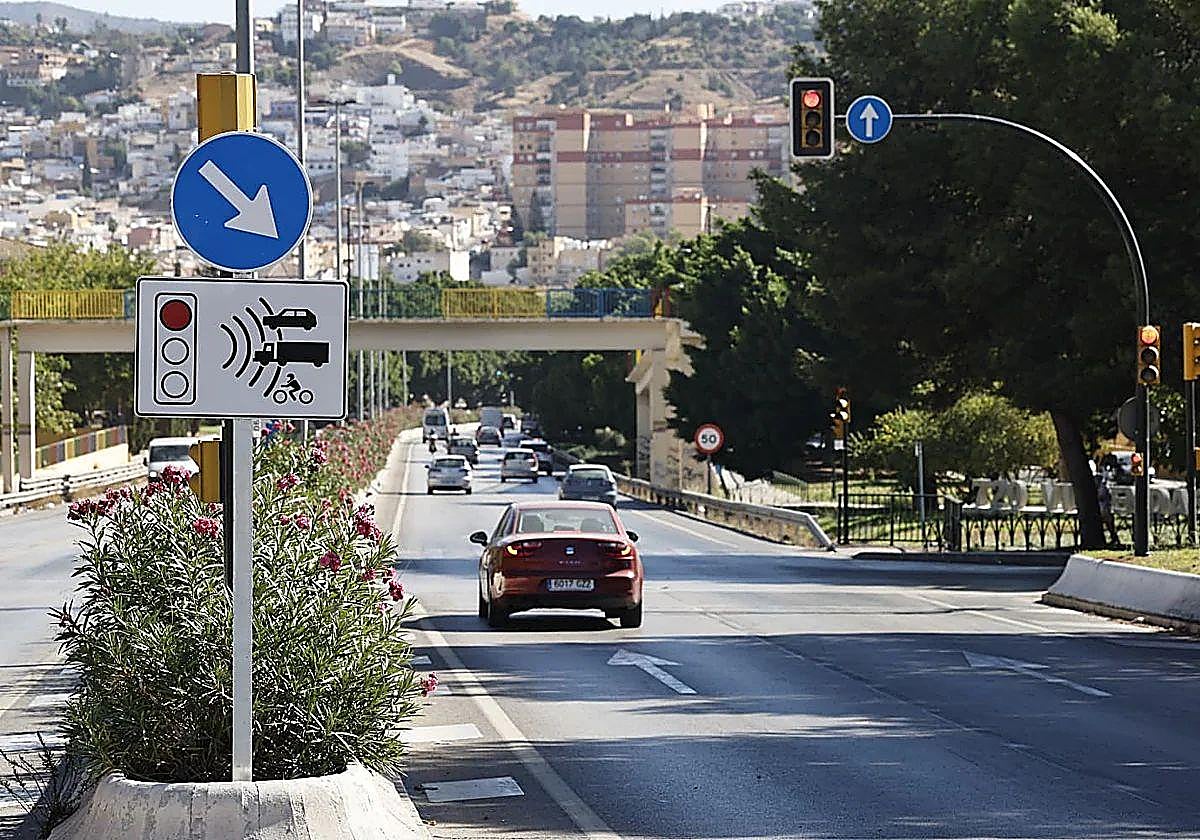

The transport department of Malaga city council has decided to extend the network of red traffic light cameras for safety reasons, following the mandatory reports from the Local Police. As municipal sources told SUR, new devices are being considered at key points in the city. Just in the first month of operation, the red-light radars on Avenida Valle Inclán and near the Hospital Clínico fined more than 1,500 drivers for running a red traffic light.
Related story
Con Málaga spokesperson Toni Morillas, who requested this data, received the following response from tax management: "As of 30 October 2025, 1,516 proceedings have been initiated [...]. 137 penalties have been paid (amounting to 13,700 euros) and 1,379 are being processed."
Reduction
Fines that are promptly paid benefit from a 50% reduction, which means that sanctioned drivers only have to pay 100 euros, instead of the 200 euros set by the traffic authorities (DGT). Running a red light is a serious offence that also results in the loss of four points of the driving licence.
Councillor for transport Trinidad Hernández highlights the importance of this system in preventing accidents. "We seek to prevent tragedies, to protect pedestrians, cyclists and drivers. I always say that respecting traffic lights means respecting life. That is why I ask the people of Malaga to be responsible behind the wheel. The aim behind every traffic rule is to save lives. We must remember this," she recently said.
3,000
drivers were fined for speeding on Avenida Valle Inclán last year
On Avenida Valle-Inclán, there is also a fixed speed camera in the direction of Torremolinos, which caught almost 3,000 drivers last year. The red-light cameras are located at the junction with Camino de Suarez (so that both eastbound lanes of traffic are monitored); two at the junction with Avenida Simón Bolívar (one westbound and one eastbound); and another at the junction with Avenida de La Palmilla, to monitor both eastbound lanes of traffic.
In the case of the intersection with the metro, at Jiménez Fraud and Louis Pasteur, the measure consolidates the traffic lights, acoustic signals and conventional signs that regulate it.
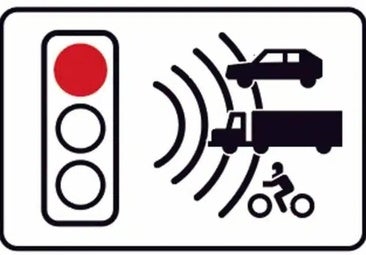
Signs warning of the presence of these control systems are also part of the DGT's new signage catalogue. The pictogram shows a red traffic light accompanied by the characteristic radar waves and different vehicles. The signs are located immediately before the junction, just a few metres from the line where you have to stop.
137
fines have already been collected
If a driver runs an amber traffic light, the regulations do not stipulate that the behaviour is punishable, unless there is sudden acceleration or similar behaviour.
According to the latest municipal traffic counts (May-August), 32,475 vehicles circulate on Valle-Inclán in the eastbound direction on a working day. In the opposite direction, westbound, there are 25,377. There are no official figures for the monitored axis in Teatinos, but it is considered a problematic spot due to the convergence of line 1 of the metro and the vehicles circulating around Clínico, Romeral and the Teatinos campus.
This measure is not without controversy, as it has generated a high level of litigation in several cities. Among the cities that have such control systems are Madrid, Barcelona, Bilbao, Palencia, Segovia, Burgos, Oviedo, León and some municipalities in the wider area of Valencia. The Spanish capital is the city with the biggest red-light radar network: more than 40. The devices were removed from the roads of San Sebastián after court decisions.
200
euros is the fine (100 for prompt payment) and four points are deducted from the driver's licence
These cameras detect a vehicle that fails to stop at a red light or moves off before it should. Photographs and short videos of the offence and the registration number are taken to document the incident. The cameras are synchronised with the traffic light controller. According to DGT data, there are more than 500 such cameras in Spain.
![[]](http://static.vocstatic.com/voc26/latest/assets/images/favicon/surinenglish/apple-touch-icon-57x57.png)