
Transport
Malaga Metro passenger numbers hit record high as network nears break-even point
The city’s light railway system recorded nearly 20 million journeys in 2025, reaching a major financial milestone ahead of the extension to the Hospital Civil

Málaga
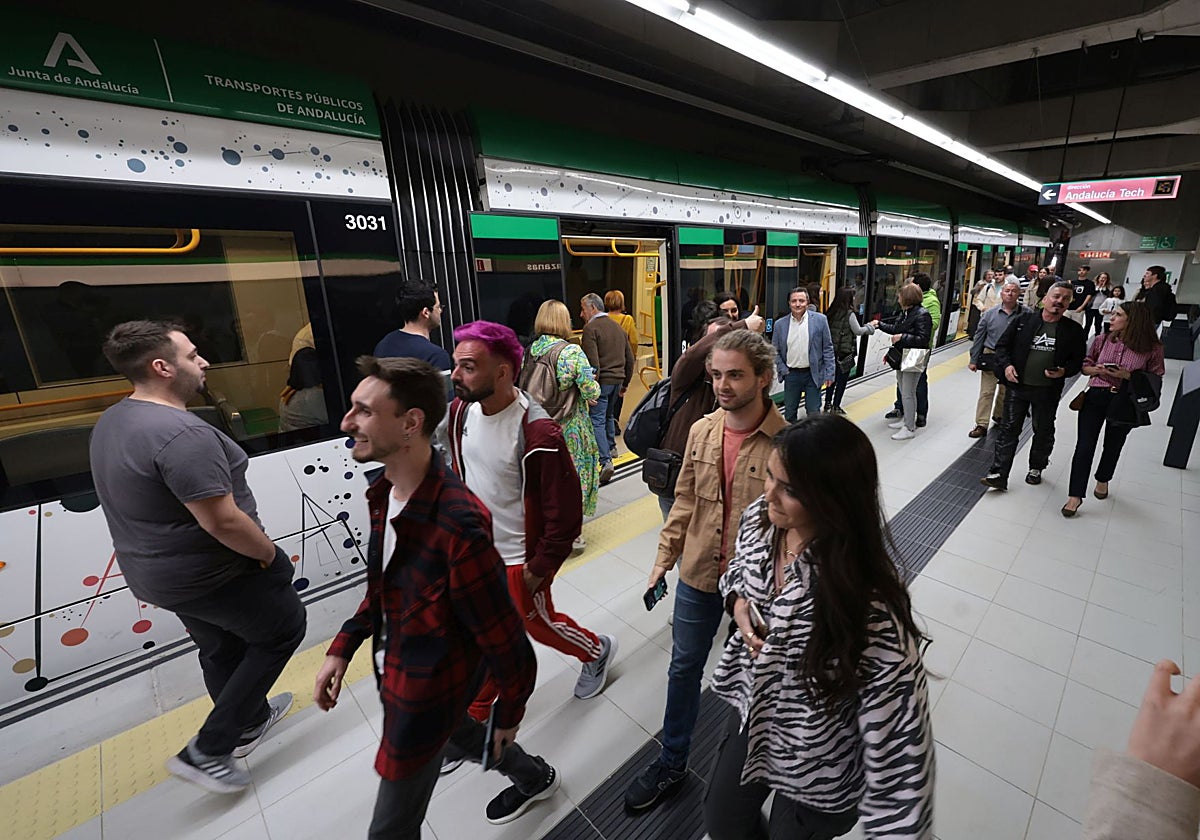
The regional government of Andalucía (Junta) set the break-even point for covering the costs of running Malaga's metro at 21 million passengers per year back in 2014. In 2025, the figure was nearly 20 million - a milestone achieved before the metro extends to Hospital Civil.
The decision to extend the metro to one of the city's hospitals dates back to 2014, when the economic crisis led the Junta to make Alameda Principal the location of the central station. That was also when it redirected the route from La Malagueta to the north of the city. Initially, this route was above ground, but with the arrival of the PP party to the Junta it became 100% underground.
The regional government made these decisions to ensure that the number of passengers and the fare renevue would cover the cost of running the service, even with some tickets subsidised by the Junta.
There are still a few years to go before the metro reaches the future Virgen de la Esperanza hospital, which will certainly further increase the number of annual passengers.
The Malaga metro closed 2025 with a new record - 19.23 million passengers (19,222,912, to be exact). This represents an increase of 5.3% compared to 2024, according to data provided by the regional ministry of public works.
The metro station in the city's historic centre has allowed a growth of almost 180%, thanks to increasing demand since the construction of the Guadalmedina and Atarazanas stations in March 2023.
1.9
million passengers used the metro in April 2025, which was an all-time high thanks to the Easter holidays
The extension to the large medical centre will be 1.8 kilometres long and have three stops, which will add between 3.5 and 4 million journeys to the network. When completed, the system could easily reach 24 million passengers, although this will not happen earlier than the end of 2030.
More than one million passengers per month in 2025
The statistics show that the number of passengers in every month of 2025 exceeded one million. April was by far the best month, with nearly 1.9 million (1,863,087), thanks to the Easter holidays. It was also the month with the highest volume of demand since the metro inauguration on 30 July 2014.
The month with the lowest number of passengers was August, with 1.2 million (1,197,104). However, this is the suburban line that experiences the smallest summer drop of all Andalusian suburban networks, thanks to the Malaga fair. Unsurprisingly, weekdays see the highest number of passengers, averaging almost 60,000 (59,846), followed by Saturdays (45,895) and, lastly, Sundays (30,703).
The busiest day
The day with the highest number of passengers in 2025 was 14 April, coinciding with Easter Monday, with a total of 113,880, followed by 17 April (Maundy Thursday), with 100,305, and 28 November, the day on which the Calle Larios Christmas lights were switched on, with 87,594. The day with the lowest number of passengers was 6 January (17,662).
113,880
passengers used the metro on 14 April 2025 (Easter Monday), which was the busiest day of the year, followed by Maundy Thursday (100,305) and the day of the Christmas lights switch-on (87,594)
The stations that recorded the highest passenger traffic were, naturally, the city centre stations: Atarazanas (2,756,056), El Perchel, which connects with the María Zambrano railway station and the intercity bus station (2,434,257) and Guadalmedina, next to El Corte Inglés (1,876,039).
The stations with the lowest passenger demand were El Cónsul (333,584) and Paraninfo (364,232), both in the area of Malaga University, and La Isla, in Héroe de Sostoa (461,990).
Recurrent and cheaper travel cards, such as Metro de Málaga's coin card, the multimodal card of the Consorcio de Transportes, the progressive discount card (MásMetro) and the Metro Pay card, accounted for 94 per cent of journeys.
According to the Junta, this shows that many people regularly use the metro. On the other hand, the one-off ticket (single and return) and direct purchase with a bank card without registration only accounted for six per cent.
Regional Minister of Public Works Rocío Díaz highlights the continuous improvement in demand since they connected the metro with the city centre. To further improve the offer, the Junta has increased "both services and the number of trains". "We want it to grow not only in terms of passengers, but also in terms of services to make it a central element of the city's transport," she says.
Bigger fleet
The increase in demand prompted the commissioning of the three new trains that had been ordered years ago. Since then, the fleet comprises 21 trains. Of these, two have been in service since September, which has allowed an increase in capacity and an improvement in frequencies during weekday rush hours. The shortest waiting time between two trains is four minutes and 45 seconds.
Nevertheless, the saturation of carriages at peak times, especially in the centre and at the university, are still a common complaint among users, who are calling for the implementation of double trains (two trains running together).
![[]](http://static.vocstatic.com/voc26/latest/assets/images/favicon/surinenglish/apple-touch-icon-57x57.png)