
Environment
Work under way at mouth of Guadalhorce river in Malaga city to make it more 'bird-friendly'
Since last month, the Junta has been working on the wetlands to enlarge the bodies of water, create islands and smooth out the steep slopes of the banks where many vulnerable and protected species nest and take refuge
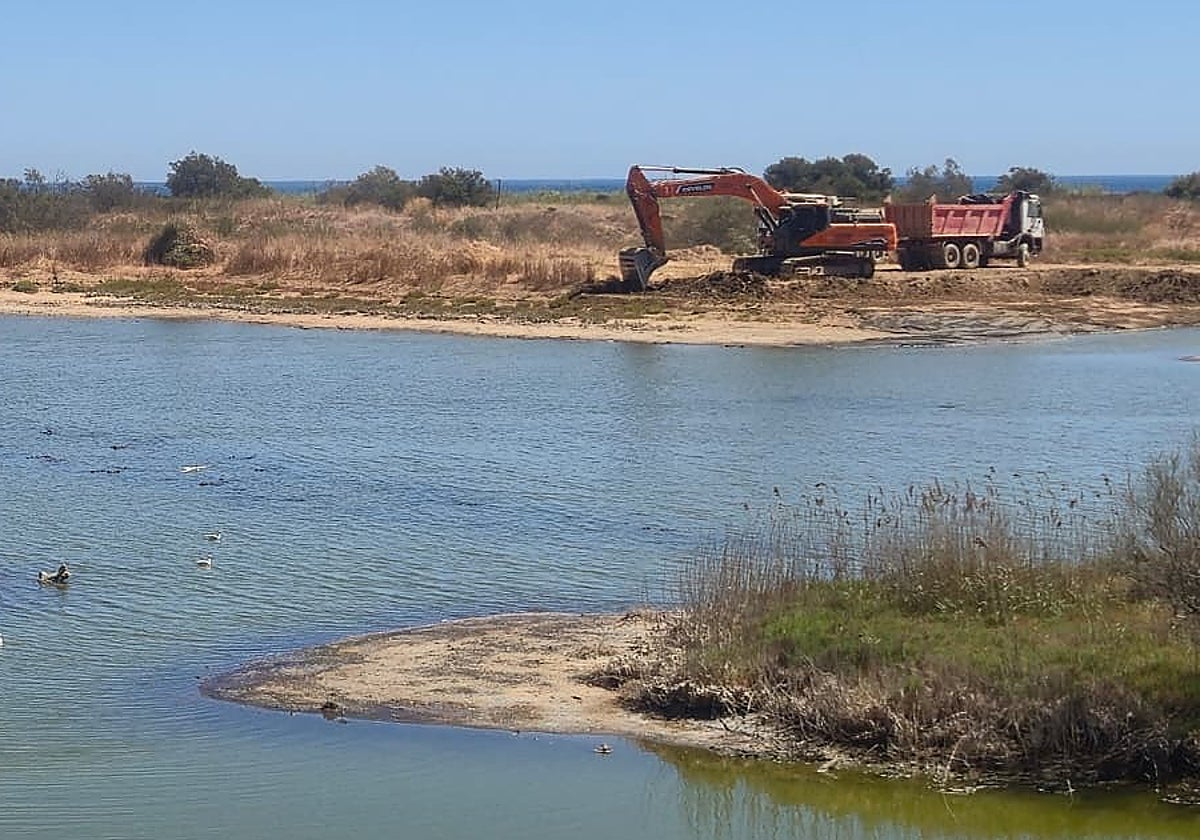

In just 30 months, the Guadalhorce river mouth natural park in Malaga city has been the subject of two important interventions by the Junta de Andalucía's regional ministry for sustainability and the environment to promote the conservation of the ecological integration of these wetlands and their waterfowl populations. The first was completed in March, after starting in 2023, and the second began just a month ago and will continue for eight more. Excavators and lorries are already working in the area although, according to Junta sources, they will try to shorten the timeframe, to "speed things up". The purpose of this project is to make the area more friendly to the numerous birds, many of them vulnerable and protected species, that nest, breed, make stopovers and take refuge in the lagoons and small islands in this estuary.
The contract is worth 335,470.09 euros, IVA sales tax included. The site covers 67 hectares and the process to increase its surface area to 145 hectares is under way. This work should have started earlier but, in December 2024, the water level in the wetlands was high after heavy autumn rains and in spring the birds nest there and must not be disturbed. "Now we can work without negatively impacting these areas, because they're not breeding nor wintering. We're going to try to speed up the project," said Junta sources.
Smoothing out steep slopes
Right now, the slopes of the riverbanks overlooking the lagoons are being smoothed out, increasing shelter capacity for the birds. By doing this, Junta sources explain, more small islands are being created, providing more space for birds to forage.
The project has several objectives: to enlarge the existing bodies of water used as breeding, resting and shelter sites for the various species of protected birds that frequent the wetlands, as this is a stopover site en route to their wintering areas. Work on the existing islets should also achieve the same objective. In addition, debris will be removed as part of the forest restoration work and they also aim to remove an old road in the area where there are independent pools and lakes as well as the so-called 'old river', an old river course of the Guadalhorce that became independent of its natural channel following all the channelling work done at the beginning of this century.
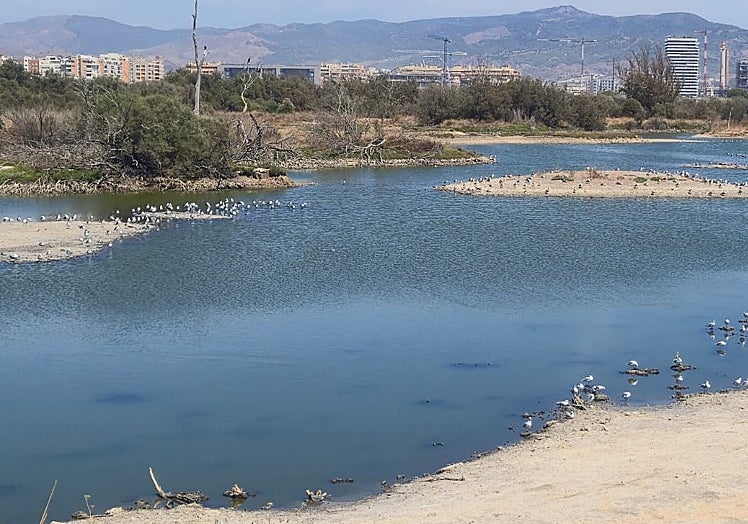
The river mouth complex is made up of several artificially-created, permanent bodies of water plus temporary ponds that form when the river is in flood. The wetlands, especially Laguna Grande, are connected to land or have numerous barriers within them, which reduce the capacity for birds to take shelter, along with refuge for other wildlife. Numerous, branching arms extend into them from the mainland, facilitating the entry of land predators into the birds' breeding and resting islands and preventing their use by different species. Furthermore, the small islands are also full of dead tamarisk trees, which reduces the available land.
Debris removal
The removal of debris, which has mostly accumulated in six locations but with some scattered about, will be carried out in the Río Viejo area, where a new island will also be created thanks to the excavation work. In total, there are five islands to be created: two in Laguna Grande, which will be covered with gravel and boulders, two in Laguna Escondida and another in Río Viejo, also covered with gravel.
Other work includes clearing of vegetation, cutting back, cutting down, clearing away excess brush and smoothing out embankments with the help of excavators to scoop it all up.
The site of all this work is located on the La Isla estate, which was fully cultivated in the 1960s, bordering an area of marshland that flooded from the east. There were lagoons and small lagoons along the beach. In the 1970s, the cultivated areas were reduced and the land was used for aggregate extraction. This created a series of pools that were progressively flooded with groundwater, which in turn gave rise to the wetlands that exist today.
The typical vegetation in this environment is made up of tamarisk, reeds, bulrushes and other species from the rush family. The area is of great ornithological interest and birders affectionately call the place 'El Guada'. Among the fauna worth mentioning are the common bittern, the black stork, Audouin's gull, the white-headed duck and the osprey. However, there are lots more: little ringed plover, common teal, mallard, grey heron, ruddy turnstone, pochard, various subspecies of sandpiper, coot, little egret, red-billed tern, black-headed gull, Pallas's gull, great cormorant, spoonbill, whimbrel, black-necked grebe, purple swamphen, pied avocet and northern shoveler. Some of these species are vulnerable and even on the endangered species list.
![[]](http://static.vocstatic.com/voc26/latest/assets/images/favicon/surinenglish/apple-touch-icon-57x57.png)