
Air travel
One in eight passengers at Malaga Airport now travel for work
Around 12% of flyers passing through the gateway to the Costa del Sol pass through the terminals up 20 times per year for professional reasons

Malaga
The pull of technological Malaga, the unstoppable rise of remote work since the Covid pandemic and the rise of the so-called digital nomads have promoted the airport as an air bridge to Europe that allows people to live on the Costa del Sol and travel periodically, in some cases even on the same day, to the cities where the company they work for is based. This new phenomenon is reflected in the airport statistics and in the activity of important airlines. Director of Malaga Airport Pedro Bendala says that around 12% of their passengers travel for work.
"More than 80% of our passengers are international," Bendala stated, adding that one-week tourists are not as popular as professionals who travel for work reasons. Many are foreigners who have chosen Malaga as their living base. They maintain the positive growth of the airport, even when numbers in the hotel and tourism industries are dropping.
In the first nine months of this year, Malaga Airport reached 20 million passengers, for the first time in its 106-year history. This represents a 7.5% growth: 20,750,257 passengers and 144,190 flight operations were recorded up to September. To compare, there were 24,923,774 passengers and 174,915 flights in the whole of 2024.
Hanneke Kézér, executive of TGW Consultancy and Málaga2Taste: "I travel to the Netherlands once every three weeks"
Kézér has chosen Malaga as her place of residence because of the culture, atmosphere and climate and because it is only two and a half hours away from the Netherlands.
According to Bendala, "frequent passengers" are those who travel for work, as they often make ten, 15 or even 20 trips in a year. Some of them spend part of the week living on the Costa del Sol and the rest working in another country. Bendala, who describes this as a new phenomenon, says that passengers are increasingly looking for connections not only with the big European capitals but also with smaller cities and towns. Malaga Airport provides great connections to a variety of destinations, allowing passengers to go somewhere on Monday morning and come back on Thursday.
"This versatility is not only attracting digital nomads, but also people who live in Malaga with their families and have their work in Hamburg or Berlin, for example," Bendala said. In addition, there are Spaniards who move to the Costa del Sol from other parts of the country when they get hired by a foreign company and need to travel. However, there is definitely a certain professional niche that most of these passengers work in: technology.
In summer, there are up to 906 flights per week to and from the UK, while in winter there are 456, with as many as 80 flights on some days
Oliver works for an American strategy consulting company. Five months ago, he moved from Toulouse in France and settled in Torremolinos, from where he frequently travels to France and other countries for work. He expects to have completed 40 trips by the end of this year. Born in Venezuela to Dutch parents who live in the US, Oliver was attracted to Malaga because of the city's connections, climate and the hospitality of its people. "I spend half my time here. This week, I was in Toulouse until Tuesday. The air connection is fantastic. Volotea flies four times a week and the prices are great," he says. It is also in Torremolinos where he traditionally meets with friends from Venezuela around Christmas. "My parents have also bought a house to move here when they retire," he said.
Of the 259 routes available at Malaga Airport during the high season, which ends at the end of the October, some 210 connect Malaga with European countries. The Costa del Sol facility has increased the number of seats offered to these destinations from 16.3 million to 20.9 million.
Hanneke Kézer from the Netherlands has been working remotely from the Costa del Sol since 2024. Kézer works for two companies in the Netherlands: TGW Consultancy - a hotel and commercial management consultancy that develops hospitality concepts for large Dutch companies; and Malaga2Taste - a startup for Dutch tourists that offers inspiration, excursions, events and workations. Through her work, Kézer pays Malaga back for its hospitality by promoting the destination to the Dutch community. She travels once every three weeks to the Netherlands.
"I have chosen Malaga for its climate, but above all for its culture, its friendly people, its inclusive community, its beautiful nature, the possibilities, the hospitality, the gastronomy, the heritage and the relaxed atmosphere. It is only two and a half hours away from my country," she says, confirming that "more and more international companies" are finding roots in Malaga.
The cornerstone of this growing phenomenon is the fact that Malaga Airport is the fourth in Spain with the highest number of direct connections. A total of 62 airlines connect the Costa del Sol with 157 cities around the world during the high season. The only airports that exceed these figures are Madrid and Barcelona, with 218 connections, and Palma de Mallorca, with 194.
José Mascaró, senior software quality programmer: "I decided to live in Malaga after four years in Dublin"
The computer engineer from Granada says that he has worked in four companies in Malaga for six years and, except for the first one, he has worked remotely in all of them.
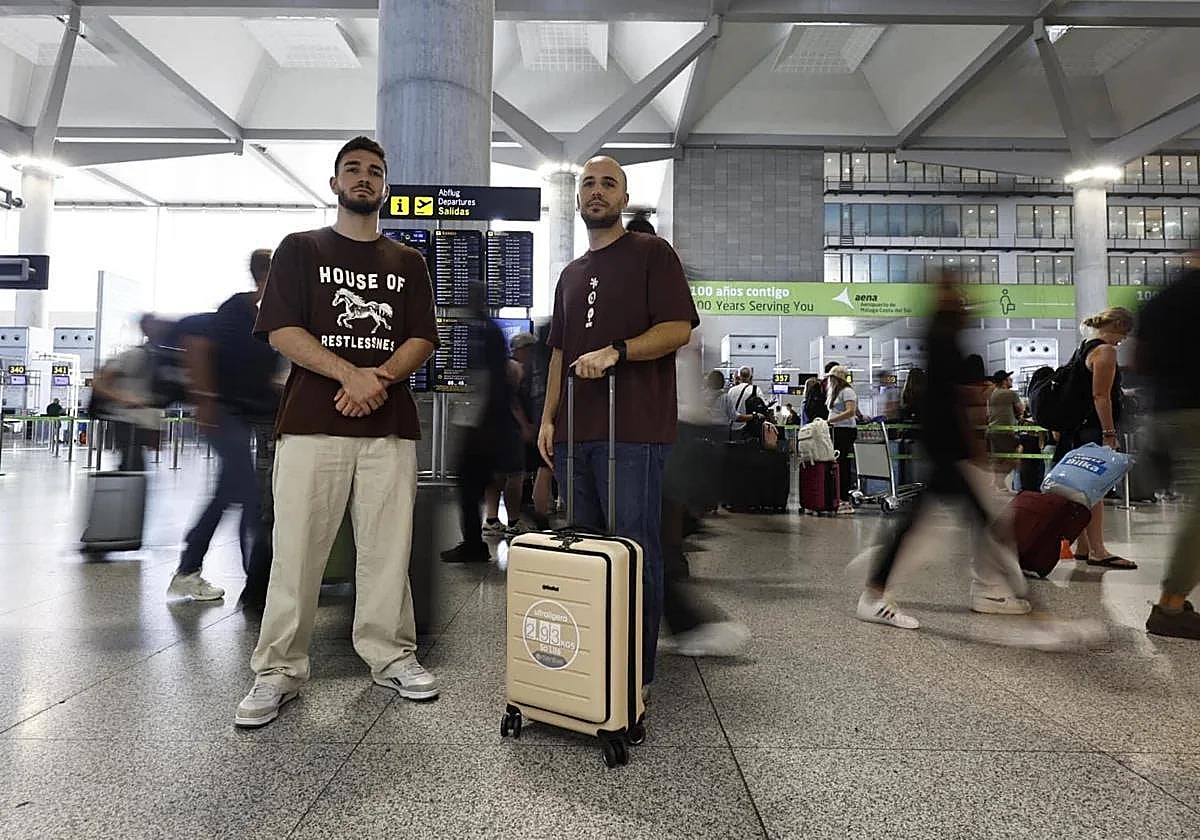
Malaga's air connectivity also opens up job opportunities for young people. Raúl Moreno and Juanjo Gámez are two young engineers who have chosen Malaga for work. They have remote contracts with companies in the Netherlands and Barcelona, although they only travel to the headquarters when necessary. Malaga Airport is a luxury for them.
Moreno works for Intercept - a company based in the Dutch town of Zwolle dedicated to providing services and creating cloud infrastructures for other companies. To get to Zwolle, he takes a flight to Amsterdan and then a one-hour train. It takes him a total of five hours. Although there are certain fixed dates around Christmas and during the summer when he needs to meet clients in person, he has "total flexibility to work from any European town with an internet connection". Moreno values this opportunity because the salaries are well above the average for an engineer working in Malaga.
Gámez works from Malaga for a company based in Barcelona dedicated to software consultancy. He did an internship at the TechPark in Malaga, after which he was offered a contract. However, the salary was not enough to live in Malaga city, so he looked for better opportunities and found the company in Barcelona, which allows him to live in the Costa del Sol capital.
210
connections with European destinations
José Mascaró from Granada is a computer engineer who has also chosen Malaga, although he works with a company based in Paris and Barcelona. He says that, so far, he has worked for four companies while living in Malaga. All of them, except for the first one, have offered him remote work. Mascaró has chosen Malaga over Dublin, where he has previously lived.
Airlines are also appreciating the impact of this new passenger profile. Ryanair's director of marketing and sales in Spain and Portugal Elena Cabrera recently told SUR that they are noticing the increase in traffic thanks to remote workers based in Malaga. "This flow is helping us deseasonalise and grow more in winter," she said. Head of sales in Spain for United Airlines Antonio de Toro told SUR that both tech and business attract workers to Malaga.
According to Spain's airport operator Aena, there are more than 905 flights per week to and from the UK in summer (56 daily flights to London and 14 to Manchester), as well as 148 a week to and from Paris and 114 to and from Brussels.
![[]](http://static.vocstatic.com/voc26/latest/assets/images/favicon/surinenglish/apple-touch-icon-57x57.png)