
Environment
Malaga tackles bad smell from Guadalhorce sewage treatment plant with AI
Municipal water company Emasa has hired specialists to monitor the plant and anticipate higher levels of pollution to improve operations
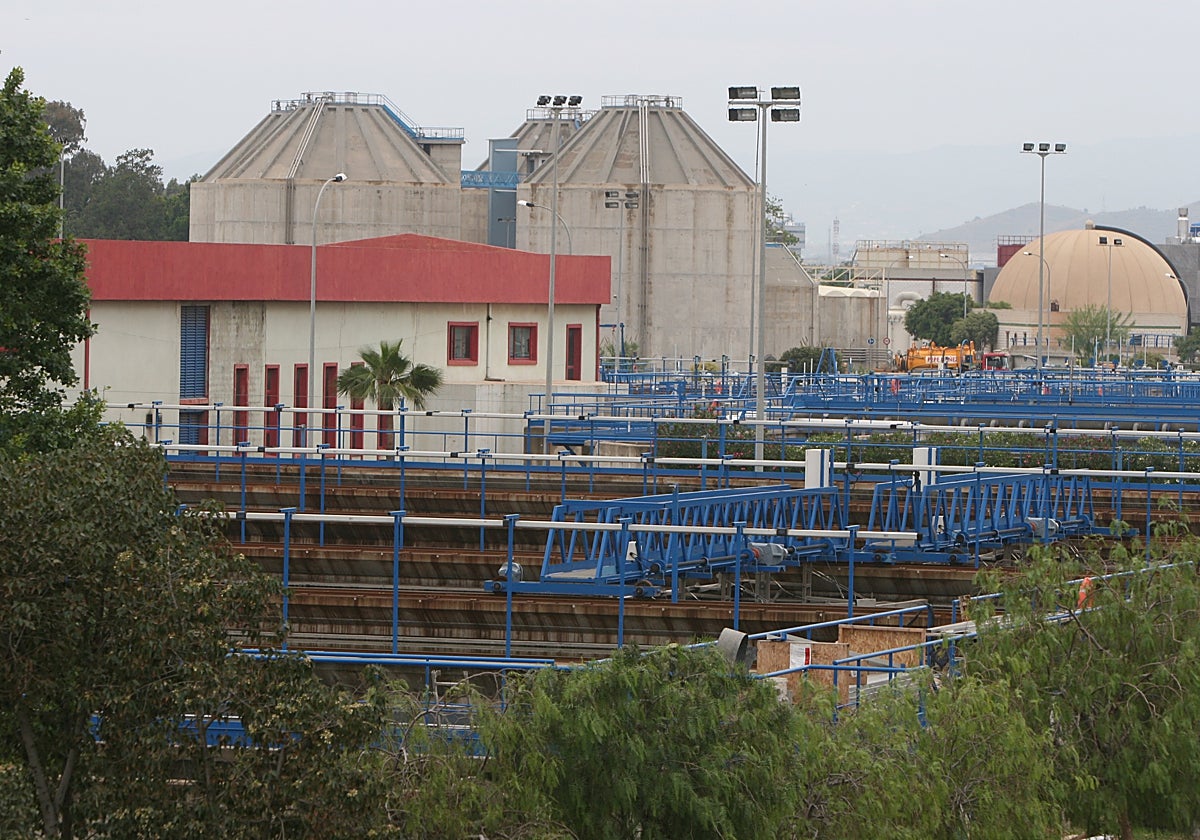

Malaga’s municipal water company, Emasa, has partnered with Suez Smart Environmental Solutions to address the persistent odour issue from the Guadalhorce sewage treatment plant.
The company will use artificial intelligence (AI) to monitor the facility, predict higher pollution levels, and improve operations.
The 181,000-euro contract, which spans five years, includes four months of technological support to enhance the plant’s monitoring capabilities.
This initiative comes in response to years of complaints about the 'rotten egg' smell affecting areas like Azucarera, Guadalhorce, and Churriana.
The unpleasant odour primarily arises from the plant’s waste treatment processes. The high temperatures involved in fermentation and bacterial decomposition contribute to the rotten egg-like stench, particularly from the sludge.
In contrast, Malaga’s Peñón del Cuervo plant, which is situated farther from residential areas, does not produce the same bad smell issues.
The other treatment system is a small plant in Olías.
165,000
cubic metres of waste water are treated by the Guadalhorce treatment plant every day
The Guadalhorce WWTP treats huge volumes of wastewater, some 165,000 cubic metres per day. The treatment process must take into account the nature of the water at source and bacterial, physical and chemical processes, as well as flow peaks and atmospheric conditions.
Once the tertiary treatment finishes, the water returns to the environment ultrafiltered.
Finding a solution is not an easy task. It involves monitoring, placing sensors, working with artificial intelligence, algorithms and modelling with the help of a 'digital twin', which is a precise virtual replica of the treatment plant.
Forecast
Emasa's idea is to predict when the treatment plant will emit stronger odours in order to faciliate management decision and reduce nuisance. The same innovative model will also be applied at the Peñón del Cuervo plant and at three of the most problematic plants.
The Guadalhorce will install sensors for hydrogen sulphide, ammonia and methane. The system will also include weather stations measuring at least wind direction and speed. In total, there will be four sensors, while the Peñón del Cuervo site will have three.
"The platforms technology must rely on an artificial intelligence (AI) model trained with CFD simulation results, allowing it to predict contaminant concentrations in real time," the technical specifications the tender state.
![[]](http://static.vocstatic.com/voc26/latest/assets/images/favicon/surinenglish/apple-touch-icon-57x57.png)