
Health
Malaga hospital uses innovative techniques to predict stroke recurrence risk
The city's Hospital Clínico is one of the six centres in Andalucía and the only one in the province to have a neurosonology unit

Malaga
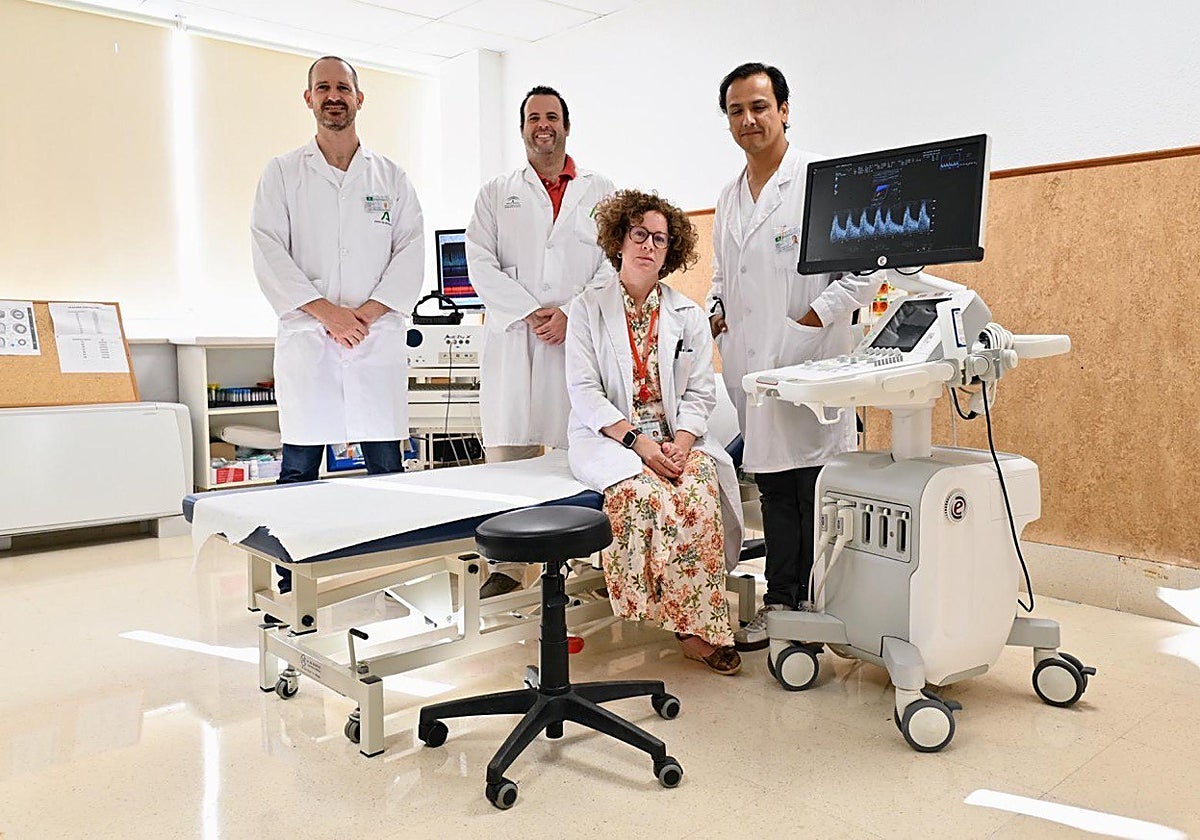
Hospital Clínico Universitario Virgen de la Victoria in Malaga is one of the six leading hospitals in neurosonology in Andalucía, together with the Virgen Macarena and Virgen del Rocío in Seville, the Torrecárdenas in Almeria, the Virgen de las Nieves in Granada and Reina Sofía in Cordoba.
The Malaga centre has been renovated with the latest technological equipment available, for which the team of professionals in this unit have all the necessary qualifications. They are Dr Carlos de la Cruz Cosme, Dr César Tomás Martínez and Dr Alejandro Gallardo Tur. One of the most advanced techniques they use is ultrasound monitoring to accurately predict whether a person who has suffered a stroke might have one again.
This neurosonology unit uses specific ultrasound studies aimed at assessing cerebral circulation in a broader sense than that offered by conventional tests. The method also observes the changes that happen in the brain in real time. The neurosonology team, which has resumed its work after having to stop because of Covid-19, collaborates with the radiodiagnosis unit, which helps to analyse static brain images.
The unit's patients are people who have had a stroke, with or without sequelae. In their case, "it is important to assess the risk of recurrence as soon as possible", as this increases the possibility of long-term effects. This assessment can prevent unnecessary hospital admissions or reduce hospital stays, when the risk is very low. Without this method, it takes more than a week to obtain different tests.
Dr Cruz said that the laboratory helps them make the best decisions with the most clear evidence, allowing them to determine the route of treatment depending on the risk. He added that the transcranial monitoring ultrasound helps to determine whether the patient should undergo surgery for carotid obstruction. "For the first time in years we have reliable information about the diagnosis: between 5% and 10% of those who suffer carotid stenosis are at risk of suffering a stroke in the following months or years and now we can choose whether to operate," said Dr Cruz.
They apply techniques such as the detection of microemboli or the study of cerebral vasoreactivity - an ultrasound technique that assesses the ability of the vessels to regulate blood flow in response to different stimuli. It indicates whether the patient can live with the obstruction in the carotid artery.
A thousand patients per year will benefit from this resource. It is also estimated that it will alleviate the healthcare system by avoiding the unnecessary admission of about 100 patients and shortening the stay for another 300 (from more than a week to two or three days).
![[]](http://static.vocstatic.com/voc26/latest/assets/images/favicon/surinenglish/apple-touch-icon-57x57.png)