
Archaeology
Excavations reveal ancient Phoenician settlement at river mouth became Malaga's first 'industrial estate'
The findings of the current investigation on the ancient island of Cerro del Villar in the Guadalhorce estuary confirm that the area was used for more than a millennium up to Roman times

Málaga
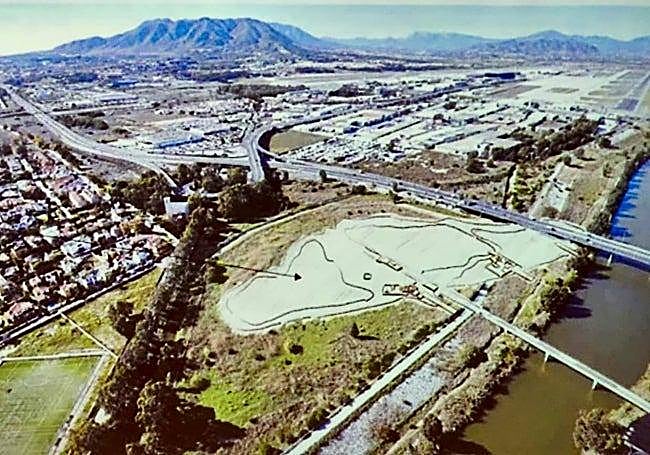
On the other side of the road is the Villa Rosa industrial estate, and this is followed along the valley by the Guadalhorce, Santa Teresa, San Luis and El Viso. And although this may seem like a modern way of organising commercial activity, it turns out that factories and workshops have been in this area of Malaga since the birth of the city.
This has been confirmed by the current excavations on the old island of Cerro del Villar at the mouth of the river. These have concluded that it is no longer accurate to say that this settlement was abandoned after catastrophic floodings. Archaeologists now talk about the continuous usage of this area, where the city dating back to the Phoenician era, was then used for pottery production during the Punic period and later a Roman salted fish factory. It was a sort of "industrial estate" that supplied the neighbouring settlement Malaka, where the inhabitants of Cerro del Villar moved to after their glorious years from 8th until 6th century BC.
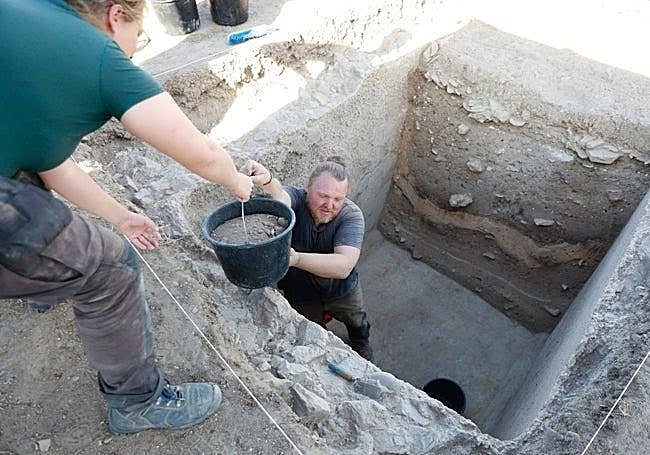
"Cerro del Villar was not abandoned; even Dr María Eugenia Aubet's work, where an oven from the 5th century BC was discovered, indicated that the site continued to be occupied," explained Bartolomé Mora, professor of Archaeology at Malaga University (UMA), who a few days ago presented the latest findings at a conference on archaeological research organised by the regional ministry of culture.
At the Museo de Malaga, the director of the excavation project, José Suárez, and specialists Antonio Sáez and Carmen Alañón, presented the findings of the fourth consecutive investigation, sponsored by the Junta de Andalucía and led by the University of Malaga, with the institutional collaboration of the city hall, Diputación and Fundación Málaga, and the support of Andalusian and international universities, such as Marburg (Germany) and Chicago, as well as specialists from the CSIC and SCAI.
Occupation of the island
1,200
years. It is estimated that Cerro del Villar was used from 8th century BC as an island city at the mouth of the Guadalhorce until its industrial use around the beginning of the 4th century AD, according to the latest research
This year an important investigation is being made in sector 14, which is located to the south of the ancient island, to ascertain what Cerro del Villar was used for in its later period. Professor Mora pointed out that the brilliant urban planning of its buildings and streets had been "eclipsed" until now, situated at the end of the site. In this marginal space, "the remains of a large pottery production centre dating back to the 5th century BC have been unearthed, with the enormous amount of excess waste indicating that the Cerro del Villar was a large pottery production centre, dating back to the Phoenician-Punic city-state of Malaga," said the professor.
Surprise
This idea of this ancient islet in the Guadalhorce being used as a productive space is supported by the archaeologist José Suárez, who explained that in 6th century BC "the families of the oligarchy of the Cerro del Villar moved to Malaga", to the area around hill on which the Alcazaba now stands.
For this reason, the researcher also introduces the "idea of the subsidiary industrial estate of Malaga" to speak of how this space transformed into a large pottery centre where the people who worked there also lived. Later, this was replaced by the Roman salted fish factories until the beginning of the 5th century AD, which meant that in total, the space was utilised for more than a millennium.
"In the same vein, this year, we have found the link between the Phoenician and the Roman world," said archaeologist Bartolomé Mora
There is also the salting factory from the Late Roman Empire where another two basins were excavated so that their geological features could be analysed, and to record when they were abandoned. And then the surprise came.
"We have been fortunate enough to find that at one end of the site, while carrying out a stratigraphic survey to see where the basins were located, a wall that looks the same as the Phoenician constructions in the northern sector of the island," said Professor Bartolomé Mora who indicated that "the Phoenician or Phoenician-Punic occupation continues in the south of the island", although further excavation is needed to be able to know what era the basins belong to. "In the same vein, we have found the link between the Phoenician and the Roman world," said the researcher, who described this encounter as: "We have found the spaceship dock at the mother ship".
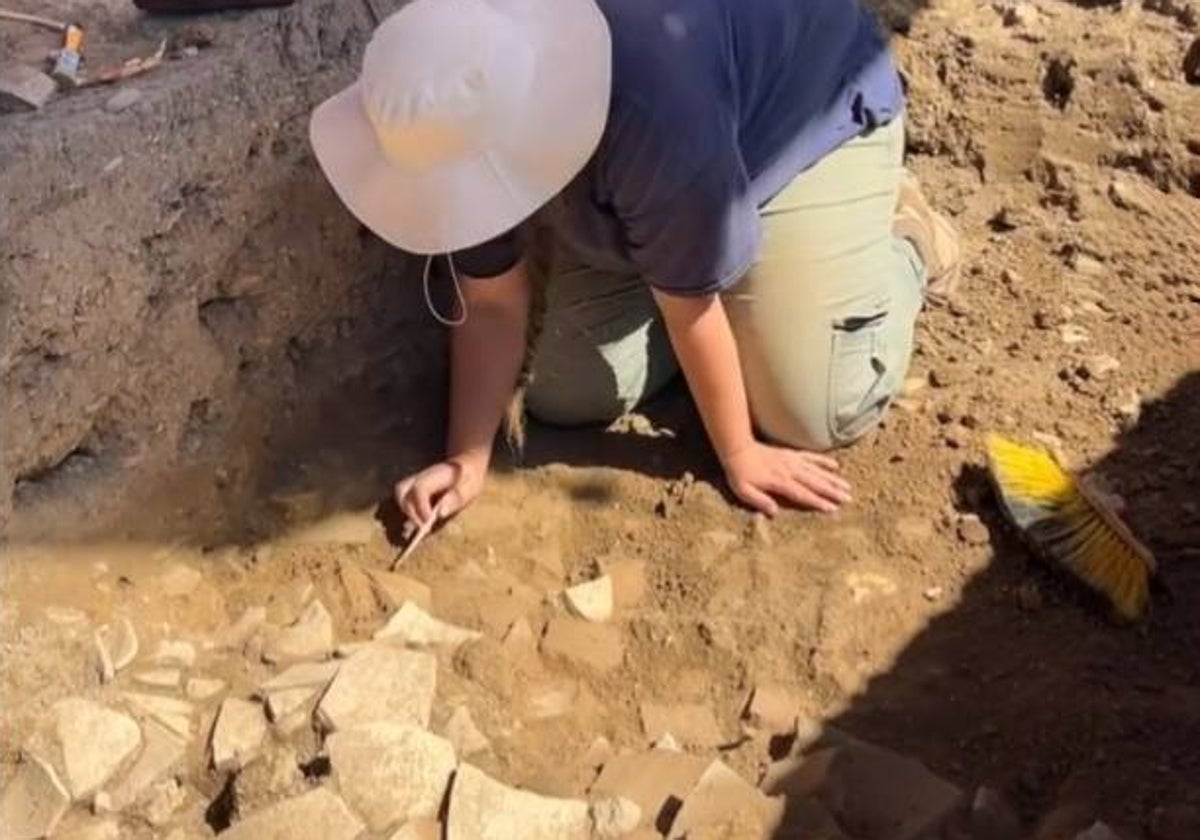
This enthusiasm was also shared by Antonio Sáez, professor of archaeology at the University of Seville, who confirmed the discovery of a pottery centre from the Punic period - 5th century BC - with the existence of a kiln and "thousands" of broken ceramic objects which were dumped there until they formed a small hill, which, today, equates to a mountain of information for researchers. From the type of vases to the material they're made of. "I feel sorry for the ceramists because this huge amount of waste meant production wasn't going well, but for us it's very good," he said.
To get an idea, archaeologists have excavated an area of more than 40 square metres, where these broken ceramics were deposited. And, while awaiting the results of the analysis, there is no doubt that the "we can place the pottery frenzy between the end of 6th century BC until the first half of 5th century BC," said Sáez, who agrees with his colleagues, pointing to a period where Cerro del Villar was no longer a city, "but a kind of industrial estate in Malaga". And in the ancient estate, there are still many secrets to unearth.
![[]](http://static.vocstatic.com/voc26/latest/assets/images/favicon/surinenglish/apple-touch-icon-57x57.png)