
Business
Malaga-based startup aims to end frustration of charging electric cars by harnessing power of WhatsApp and AI
Chargia aims to close a one-million-euro investment deal for its revolutionary system before the end of the year

Malaga
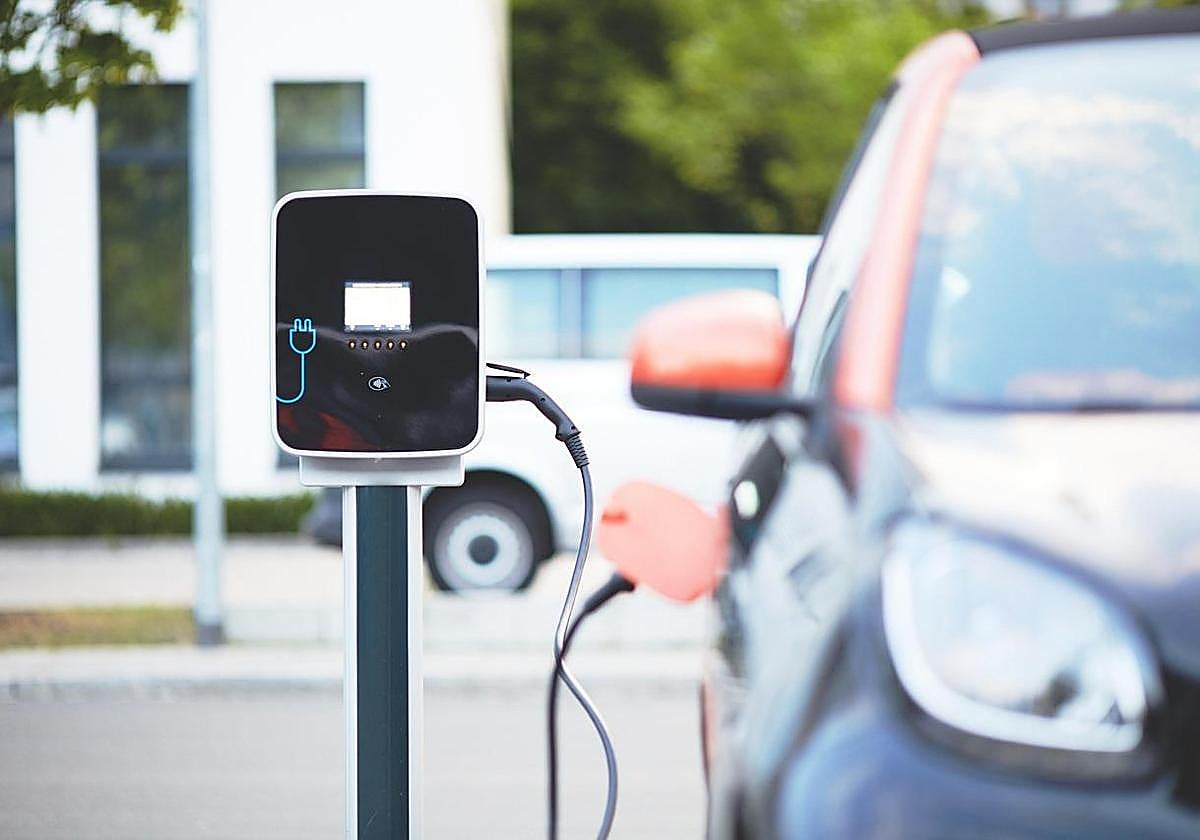
Anyone who owns an electric vehicle has probably experienced the frustration of arriving at a charging point in the nick of time, only to find it inoperable or having to install a different app every time they want to plug in their car. There are more than 30 charge-point operators (CPOs) in Spain and the user experience is still far from ideal. A startup from Malaga aims to make a difference by betting on artificial intelligence with Chargia. "We want to revolutionise the electric vehicle charging experience through a 24/7 instant virtual assistant based on artificial intelligence that users can access in the simplest, hassle-free way: via WhatsApp," state those behind this venture, Eduardo Medina and Martín Fimia.
"One of the biggest obstacles for users of electric means of transport remains the lack of efficient support at charging stations. Whether it's technical glitches, unclear instructions or the need for real-time guidance, they struggle to get the help they need," say Chargia's developers. Their response to this challenge is a multilingual chatbot via WhatsApp. Users don't need to register on any website nor download an app. They simply open a conversation with Chargia and ask any question or request they want: find charging points, plan a route, solve a problem or pay for charging. "Our intelligent virtual assistant ensures that drivers receive instant and reliable help at charging stations, eliminating delays, confusion and frustration," said Medina and Fimia.
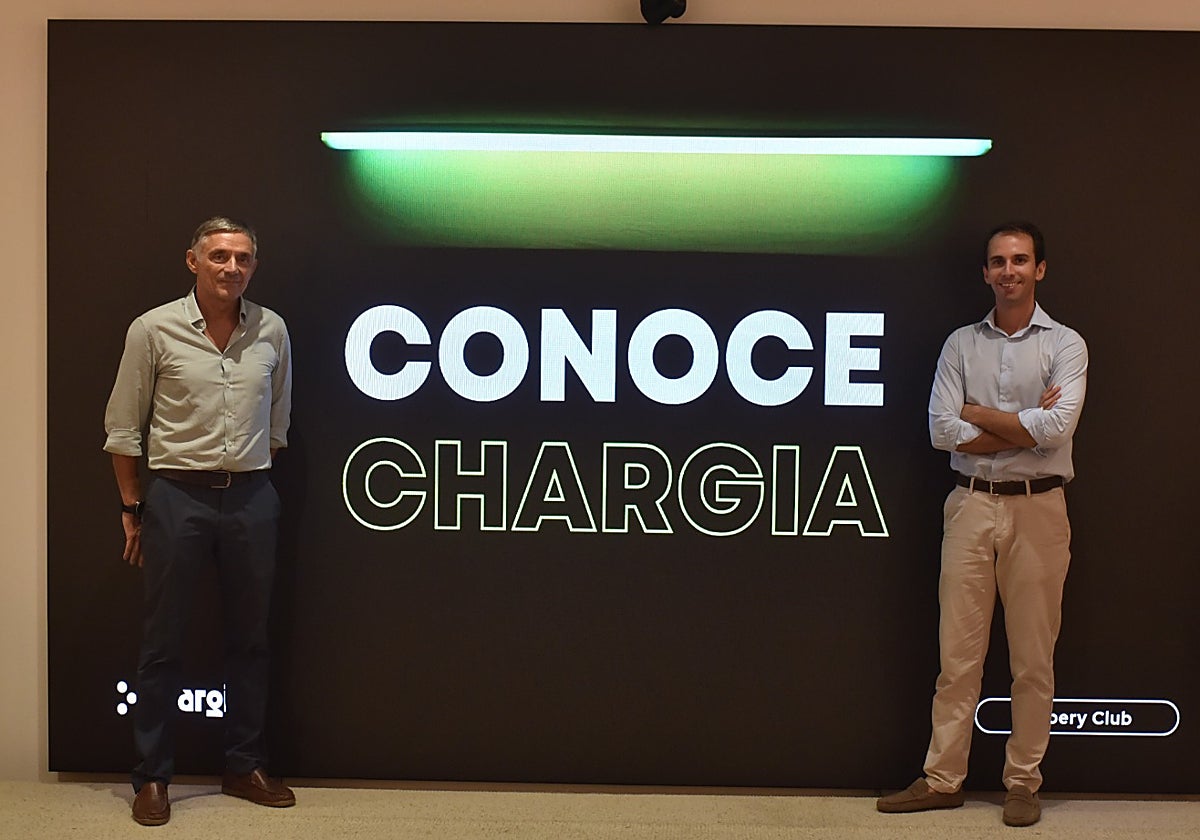
The presentation of this new business project was held last week at the Uppery Club in Malaga city in front of around 100 attendees. Medina and Fimia are recruiting potential investors among family, friends and business angels as a 'friends' round', in which they hope to raise approximately 100,000 euros in convertible loans as a preliminary phase to a pre-seed round. For the latter they hope to raise one million euros before the end of the year, in a mix of private equity, venture capital debt and an Enisa loan (a public entity providing financing for startups, an initiative from Spain's Ministry of Industry). "We are already negotiating with several funds," said Medina.
The reason they are seeking this external funding is that their strategy is to acquire a network of charging points that will provide them with a critical mass of users and allow them to roll out the product and accelerate platform optimisation. Yesterday's meeting included a discussion between four experts from the electric mobility sector: Arturo Pérez de Lucía (general director of Aedive - the business association that is developing and promoting electric mobility), Joel Martín (head of Chargecloud in Spain), David España (commercial director of Livoltek) and Antonio Alarcón (head of business development at Electra).
Two entrepreneurs from Malaga
This business venture was born from the alliance between two entrepreneurs with complementary profiles: Eduardo Medina was CEO of Activacar for four years, one of the pioneering platforms promoting shared electric vehicles. At the end of last year, he left that behind with the idea of starting afresh. He was obsessed with improving the user experience with charging points, an Achilles heel in the so-called 'electric transition'. Martín Fimia, meanwhile, is a veteran engineer and entrepreneur who comes from the contact centre sector (he is the founder of ICCS) and, in recent years, has jumped on the artificial intelligence bandwagon, specialising in its application to the field of customer service. "Martín's son is a friend of mine. He was the one who put us in touch, knowing that we were both into entrepreneurship. We met for coffee one afternoon and that's where the idea came from," says Eduardo. Turning that idea into an MVP (minimum viable product) has taken a good bit longer: several months during which the founders of Chargia have not resorted to external financing or adding to the team other than themselves.
They now face the challenge of bringing together as many operators and charging points as possible, as the success of the business idea will depend on this. "In Spain there are 46,000 charging points, which should reach 100,000 by 2030, and more than 30 different operators. Our goal is to work with all of them and not stop in Spain because the charger protocols are standardised and our technology is perfectly applicable to any country's charging network. Our vision is global and our business model is fully scalable," said Medina, adding that they are in talks with Hubject, the largest international network of interconnected charging points.
Chargia presents itself as an ally of two types of companies in the e-mobility ecosystem: the OCPs (the charging point operators, those responsible for supplying, installing and maintaining the charging points) and the EMSPs (e-mobility service providers), responsible for ensuring users can actually up charge and then pay for charging. "We offer them significant cost savings in customer service. It costs two or three euros per call to serve a customer by phone. With a chatbot, the cost per chat is just a few cents," said Fimia. The revenue model proposed by the Malaga-based startup comes from both charging point operators and charging a commission-based fee.
![[]](http://static.vocstatic.com/voc26/latest/assets/images/favicon/surinenglish/apple-touch-icon-57x57.png)