
Economy
Malaga aims to be on the frontline of defence spending
There are five companies in the province developing technology for the military - Aertec, Mades, Clue, DHV and Indra - but the industry is, for obvious reasons, discreet
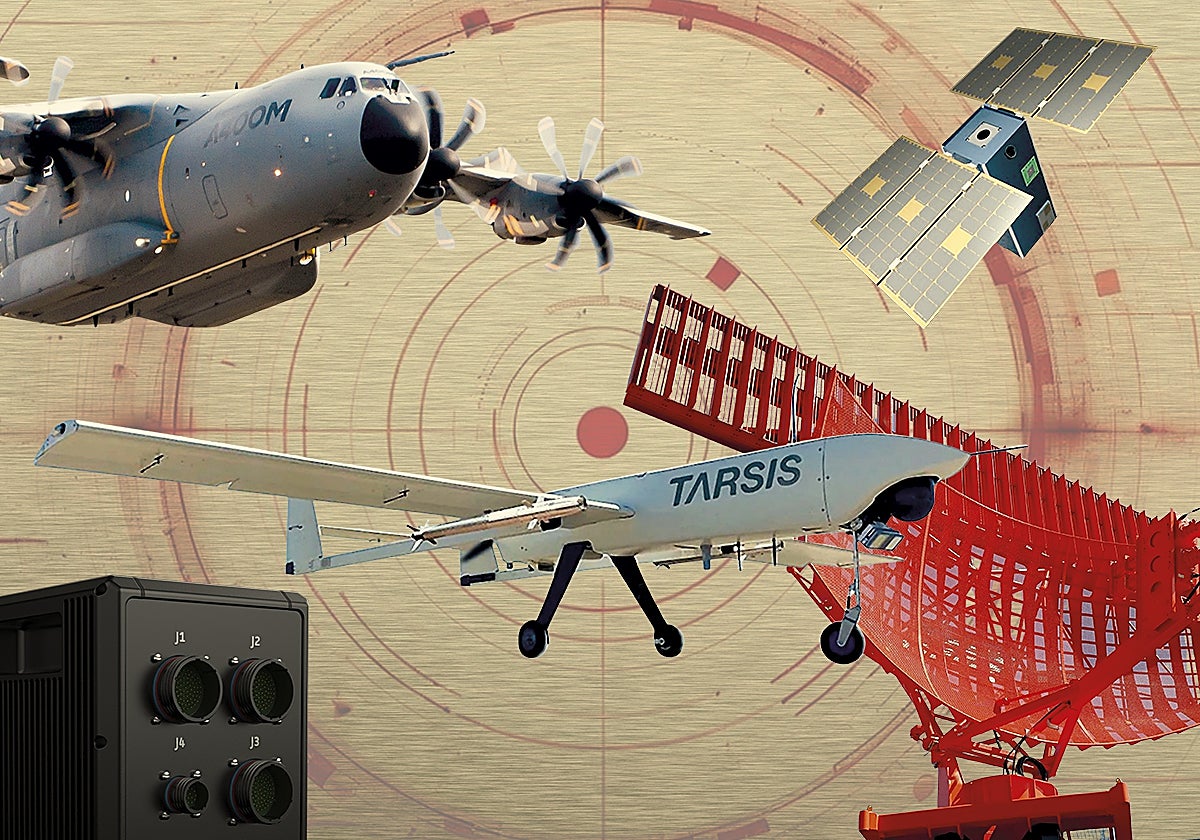

The first Spanish micro-missile for drones bears the 'Made in Malaga' mark, as does the 'smart bomb', also designed for unmanned aircraft, which the specialised media talked about at the last Feindef International Defence and Security Exhibition of Spain. They have been developed by Aertec Solutions. Also manufactured in Malaga TechPark, in the Mades factory, are precision electronic systems that are essential for guiding missiles, combat aircraft, tanks and radars.
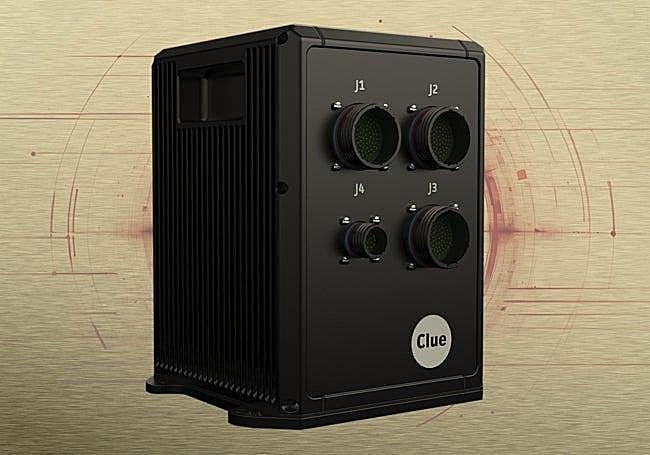
The list of technological 'ammunition' made in Malaga is added to by DHV Technology's solar panels, which power military satellites, and the avionics computers created by Clue Technologies, which will be the electronic brain of Airbus' Sirtap drones.
Few people know that all this technology that is helping to modernise the Spanish military is being developed in Malaga. The industry is, for obvious reasons, discreet; and furthermore, defence investment has not exactly been well regarded by public opinion in recent decades in Spain and Europe.
Reverse hyperactivity
But the latter is changing. The EU suddenly woke up from its pacifist slumber when Donald Trump made it clear that the US no longer intends to continue to guard the security of Europeans. With the threat from Russia at its doorstep, Brussels has had no choice but to embark on an accelerated rearmament: in March, Ursula von der Leyen made it clear: "Europe must prepare for war."
She said this when presenting the ReArm Europe initiative (now Readiness 2030), which seeks up to 800 billion euros to strengthen European defence over the next five years. Just a month later, Spanish PM Pedro Sánchez presented the Industrial and Technological Plan for Security and Defence, which will dedicate 10.4 billion euros with the aim of reaching 2% of Spanish GDP on defence investment, (as required by Nato), this year.
This deluge of millions is going to shower the defence and security sector under two clear criteria that make the difference: "strategic autonomy" and "technological sovereignty". In short: priority will be given to technology made here by Spanish companies.
Revolutionary budgets
Those announcements have unleashed a revolution in the so-called defence economy: investments and corporate movements come one after the other. It is no coincidence that so far this year there have been three major deals involving companies from Malaga: one is the sale of Mades to Swiss company Cicor Group; the purchase of the drone division of Aertec Solutions by Indra; and the acquisition, also by Indra, of Clue Technologies.
This is how the CEO of Aertec Solutions, Antonio Gómez-Guillamón, described the attractive outlook for the sector: "There are growing defence budgets, an industrial and technological plan for security and defence with a budget of 10.4 billion. And the important thing about this plan is that it describes 31 special modernisation programmes, which are in addition to the 50 that are already under way: these are programmes with a new budget that will begin to be approved in the autumn. These programmes will be awarded to the large, leading companies, such as Indra, Navantia, Airbus or Sener, and those will then award contracts to companies at the next level: that is where we come in. We see it as an opportunity to enter new programmes."
This Malaga-based aeronautical and airport engineering firm currently has around half of its business in the defence sector. It is likely that this weight will increase in the coming years in the heat of this investment boom.
Gómez-Guillamón emphasised that this era of growth that is opening up for the military industry is an opportunity not only for companies like his, which are already working for the defence sector, but also for many others that until now have not been involved in this world, which are working on technologies that are useful for the army. Areas such as AI, biotechnology, cybersecurity, quantum computing and semiconductors, for example, are priorities for firms not seen as defence companies.
"There is an opportunity for these companies coming from the civilian world to find that their knowledge is needed by the military," this entrepreneur pointed out. "And all this translates in the end into an opportunity for Malaga to increase its industrial weight," he added.
Mar López, CEO of cybersecurity company Sofistic, recently talked in a SUR interview about her intention to go "all out" for the projects coming out of the Industrial and Technological Plan for Security and Defence, which has 31% of the budget for cybersecurity.
Alliance to boost duel use
This opportunity has not gone unnoticed by the Andalusian regional government, which, together with the Innova IRV Foundation, is promoting a programme to boost projects in the Andalusian region that are driving forces in dual-use, that is, those with both civil and military applications.
"There are many companies in Andalucía dedicated to non-defence sectors, but with capabilities that could be applied to this sector. In fact, almost all industries and technologies are dual. Soldiers feed themselves, dress themselves, take medicine and the army needs many things in addition to weapons," explained Fernando Chacón, vice-president of defence, security and emergencies at Innova IRV. "The challenge and the opportunity is to encourage all these companies to sign up to be part of the army supply chain," he said.
Chacón gave an eloquent example that is close to his heart, as he is from Puente Genil in nearby Cordoba province : quince jelly. "It is a product with a very high calorific value and which lasts a year or two in its packaging. The industry realised that these qualities made it ideal for army rations. Nowadays, quince forms part of the combat rations in many armies and it comes from here, from Puente Genil," he explained.
Innova IRV is currently working to map Andalusian companies whose products or services are potentially attractive for military use. "At the moment there are barely 500 companies in Andalucía working for the defence sector: there are very few and we want there to be many more."
Aertec Solutions
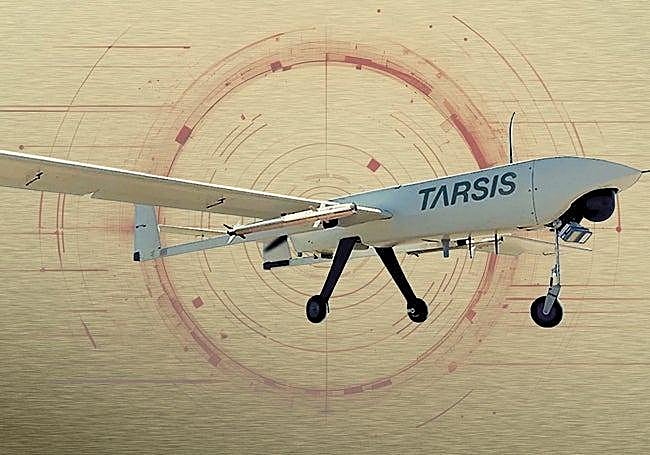
Founded in 1997, Aertec Solutions immediately began to develop engineering projects for the A400M, the military transport aircraft manufactured by Airbus in Seville, and continues to do so today. "Fifty per cent of our business depends on the defence sector," says its CEO, Antonio Gómez-Guillamón. The company is involved in Europe's most ambitious programme: the Future Combat Aerial System (FCAS), which aims to develop a 'combat cloud' made up of swarms of drones and a sixth-generation fighter. It is also contributing to the development of Airbus' Sirtap drone, which is now in the testing phase after completion of the prototype phase.
Just a few months ago, the Malaga-based company closed a deal with Indra for the sale of its subsidiary Aertec DAS (Defence and Aerial Systems). With a workforce of 46 people, this division is responsible for the design and manufacture of the Tarsis class 1 fixed-wing unmanned aerial system, and its armed versions, the Tarsis-W, and the intelligence, surveillance, target acquisition and reconnaissance, the Tarsis-ISTAR. "We were the only company with an aircraft of these characteristics in Spain. Indra did not have this capability and took over Tarsis at a very mature stage of development, with the intention of assuming the necessary investment for industrial production", explains Gómez-Guillamón. Indra's intention is to use the purchase of this division to "create an industrial and engineering hub for drones in Andalucía".
Aertec Solutions also has innovations related to missile systems in its catalogue, such as the first Spanish micromissile to be mounted on a drone, the Fox I, or the BAT (Bomb Wing Tactical) or 'smart bomb', a guided and gliding ammunition system designed to operate from unmanned aircraft.
The company now aims to add new contracts linked to the new Industrial and Technological Plan for Security and Defence, financially strengthened after the sale of DAS.
Mades
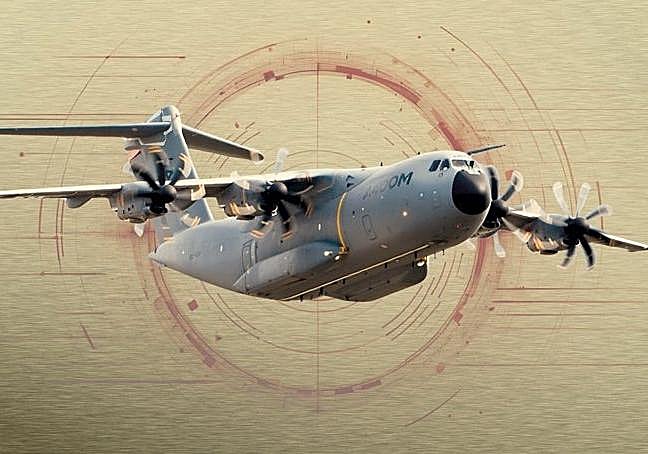
The company now called Mades has changed its name and ownership several times in its long history. It was, in fact, the first company to buy a plot of land in the PTA, back in 1990. At that time it was Hugues Microelectronics, an American firm that came here to manufacture the first microchips for pets. In 1997 the plant was bought by Raytheon, also American, and was renamed Raytheon Microelectronics España. In 2003 it joined Elcan Optical Technologies, a division of Raytheon, which began to manufacture its first electronic systems for aeronautics and defence. In 2015, it was acquired by the US group American Industrial Acquisition Corporation (AIAC), which renamed the plant Mades (Málaga Aerospace, Defense and Electronics Systems), giving it a strong boost that led it to double its turnover and to participate in leading international defence programmes, such as the Airbus A400M, Eurofighter EF-2000 and the Tiger helicopter.
In 2022, the French group Latecoere acquired Mades with the idea of gaining a presence in the American defence market. And this year saw another change of hands: the buyer is Cicor Group, which wants to build "the leading pan-European platform for electronics design and manufacturing services for the European defence market".
According to the latest information, Mades employs around 100 people and generated revenues of approximately EUR 29 million in fiscal year 2024. The company focuses on electronic solutions for the aerospace and defence industry. It is a technology partner to leading aerospace and defence companies, but also has customers in the medical, automotive and railway sectors, among others.
Clue Technologies
This PTA company emerged from anonymity when it was the protagonist of a visit by President Pedro Sánchez in 2023. Specialising in complex electronic systems for aircraft, Clue has positioned itself as a key partner of major companies such as Airbus, Indra and Navantia. With a highly technical profile and a team with extensive expertise in defence and aeronautical solutions, it has participated in major projects such as the FCAS (Future Combat Air System) and the A400M. Its discretion has only been broken once again after the presidential visit: in April this year, when Indra announced its acquisition for around 40 million euros.
Clue's team of around 60 professionals develops solutions that integrate artificial intelligence and data analytics to improve the safety and energy efficiency of aeronautical systems.
By 2023, Clue had recorded a turnover of 4.3 million euros, 30.7% more than in the previous year. The company participates in various national and European R&D&I projects, collaborating in strategic initiatives such as the Naval, Aerospace and Microelectronics and Semiconductors Perte.
-kTUB--650x455@Diario%20Sur.jpg)
Indra
Indra is one of the major driving forces in the Spanish defence sector: companies capable of leading strategic programmes, coordinating supply chains and setting the technological and industrial benchmark in defence are defined as such. The company has been redoubling its military commitment for several years now. And its strategy includes the acquisitions it has made, including several Andalusian companies: from Deuser in Cordoba to Clue Technologie and DAS (Aertec's drone division) in Malaga. Its managers have expressed their intention to "transform Andalusia into a cutting-edge technology hub at the service of defence and European space".
Indra also has a direct presence in Malaga, with an office where some 150 people work mainly on aerospace and defence projects.
DHV Technology
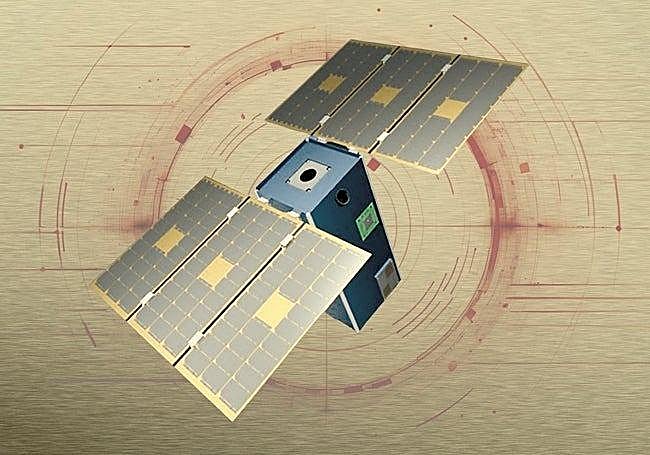
DHV Technology is one of the few European companies and the only Spanish company that manufactures solar panels to power satellites. Up to 340 devices that are currently orbiting the earth carry the technology of this company located in the Technology Park since it was founded in 2013. It has 150 employees and specialises in what is called the "power subsystem", which are the solar panels that supply the energy and the mechanisms that allow the panels to rotate to face the sun.
In 2023 it had a turnover of 20 million euros. It has clients all over the world, from NASA or the space agencies of different European countries, to private companies that have different types of satellites orbiting. It has also started working for the defence sector.
![[]](http://static.vocstatic.com/voc26/latest/assets/images/favicon/surinenglish/apple-touch-icon-57x57.png)