
Innovation
How Malaga’s AI breakthrough is turning sewage into green energy
An international team of scientists has developed an artificial intelligence model that can harvest green hydrogen from wastewater
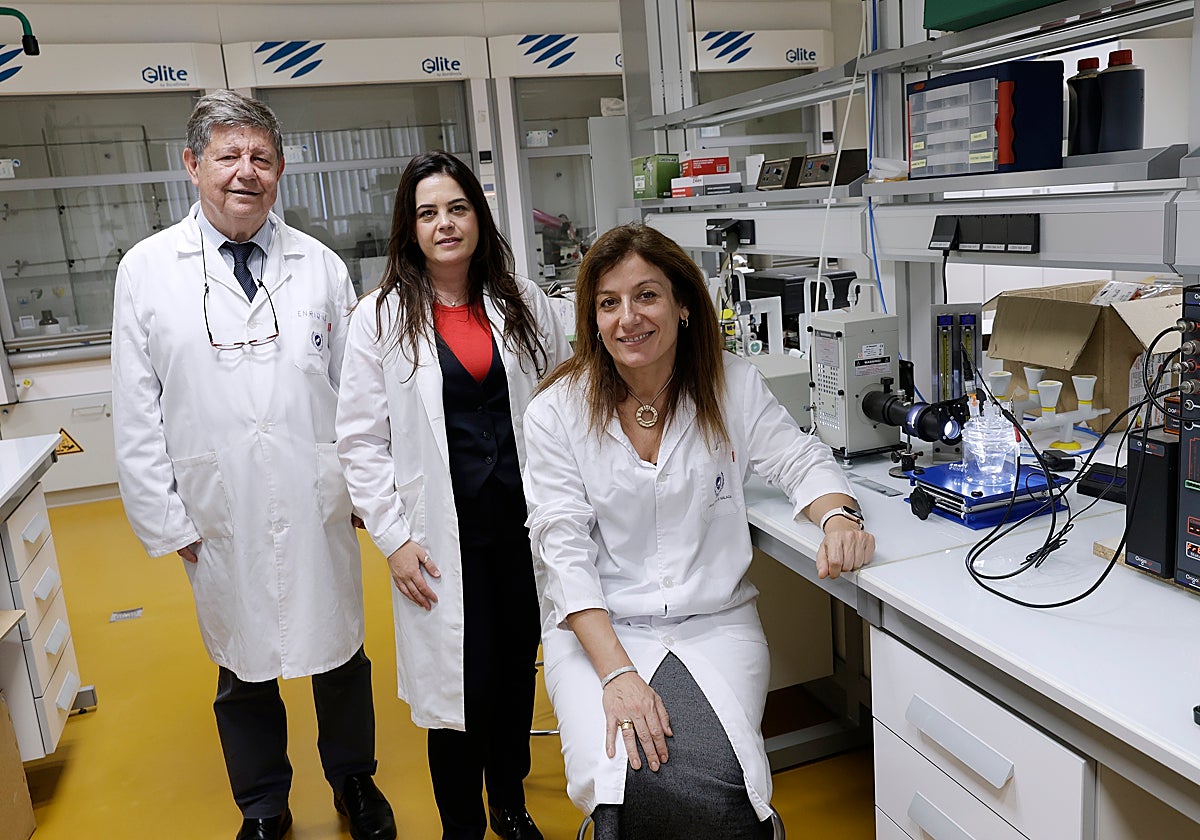

An international team of scientists has developed an artificial intelligence model that can harvest green hydrogen from wastewater, offering a potential double-win for the climate crisis.
Scientists at the University of Malaga (UMA) have helped pioneer a method using artificial intelligence to extract green hydrogen from the water we flush away.
The researchers have taken part in an international research project supported by the association of western Costa del Sol municipalities' water company (Acosol), Fundación Unicaja and the Ministry of Science and Innovation. The results have been published in prestigious specialist journal El Servier.
What is green hydrogen?
Green hydrogen is neither an energy source nor a fuel in itself, but an energy carrier. It allows energy that has been produced by primary sources (light, heat, electrical energy or combinations of these sources) to be stored, transported and released when and where it is needed. It is like a battery, a transporter.
Both the EU and Spain's government are committed to green hydrogen as a tool to accelerate the decarbonisation of the economy. Some of the specific uses of green hydrogen are: electricity generation, transport, industry, energy storage, heating and air conditioning, production of synthetic fuels, among others.
Electrolysis
The main method of obtaining green hydrogen right now is water electrolysis, splitting water molecules (H₂O) into oxygen (O₂) and hydrogen (H₂) using electricity. To generate one tonne of hydrogen, about 11,000 litres of water are needed.
Malaga-based research
Green hydrogen projects are slowly gaining ground in the province of Malaga, as SUR reported in March 2025. There is still a long way to go, however, and research is key.
'The next step would be to obtain funding to implement the procedure at scale, in a mini-purifier,' Olga Guerrero said
One of the participants in the study is UMA professor of chemical engineering Dr Olga Guerrero. She spoke to SUR to explain the importance of the conclusions they have obtained. "It is already complicated to adjust the process when it is done with non-wastewater. In this case, it is even more complicated. These are operations that depend on yeasts, PH... It is complicated. But we have taken an important step forward with a technology that is new for all of us and which opens up many possibilities. The next step would be to obtain funding to implement the procedure at scale, in a mini-purifier, so to speak," she said.
Time and cost savings
Modelling the process would save a lot of time and money. It would be fine-tuned and not require so many lab tests, so many hours of work, so much money in materials and substances.
The production of hydrogen in wastewater could serve to remove many of the pollutants and would be applied in the secondary phase of wastewater treatment, which also generates a lot of sludge. In the tertiary phase, there is no more organic matter and this is when the water is called reclaimed or recycled. The potential is very high. Acosol alone produces 47 million cubic metres a year (a volume equivalent to Malaga city's annual needs), of which it manages to use between seven and ten.
As Dr Guerrero said, hydrogen could not only be used as a fuel but also as a basic reagent.
The way forward
Guerrero mentioned two interesting points: this modelling process could be extended to more areas and, in turn, open up a field of close collaboration with the faculty of computer science for the development of algorithms. "A lot of information and many parameters are required to feed these tools," she said.
In dark fermentation, heavy metals can be saved and organic products and CO2 can be generated. Everything can be used. For example, aldehydes and alcohols can be generated. "In the future, we could be talking about an alternative to traditional purification systems. We have a long way to go, but it is a tool that we need to keep researching and learning about. There are teams doing this all over the world, although the process is still at its early stages,"she stated.
The research, in brief
To summarise the research, we must first explain the term 'dark fermentation'. It is an anaerobic biological process (no light or oxygen) in which micro-organisms, mainly bacteria, break down organic matter (wastewater) to produce biohydrogen as a clean fuel. "It has become a promising method," Dr Guerrero said, but then she listed a number of technical constraints that need to be addressed in order to have a mature technology. Being able to control all the factors and processes to make the leap to commercialisation is the challenge.
AI
In this context, the use of artificial intelligence (AI) and machine learning opens a new avenue to create predictive models for the optimisation of chemical processes such as dark fermentation. These models facilitate the identification and learning of patterns, resulting in more accurate process predictions and system control. A key element is that wastewater has a very different and variable incoming quality, parameters, to which it has to be adapted.
The work, developed by an international consortium, has shown that it is possible to develop predictive models for this process based on machine learning and AI and clarify the influence of process parameters on performance. In addition, the model has been used to optimise energy recovery and minimise organic waste from the process.
International consortium
The study is the result of the collaboration between researchers from different countries such as Vietnam, South Korea, India and Taiwan, alongside UMA professors Enrique Rodríguez, Olga Guerrero and M. Cruz López Escalante, from the departments of inorganic chemistry and chemical engineering.
The water resources optimisation side of the project has been funded by Acosol, while Fundación Unicaja and the ministry's research agency have sponsored hydrogen production and decarbonisation.
![[]](http://static.vocstatic.com/voc26/latest/assets/images/favicon/surinenglish/apple-touch-icon-57x57.png)