
Health
All Malaga province public hospitals to get specialist units treating flare-ups in chronically ill patients
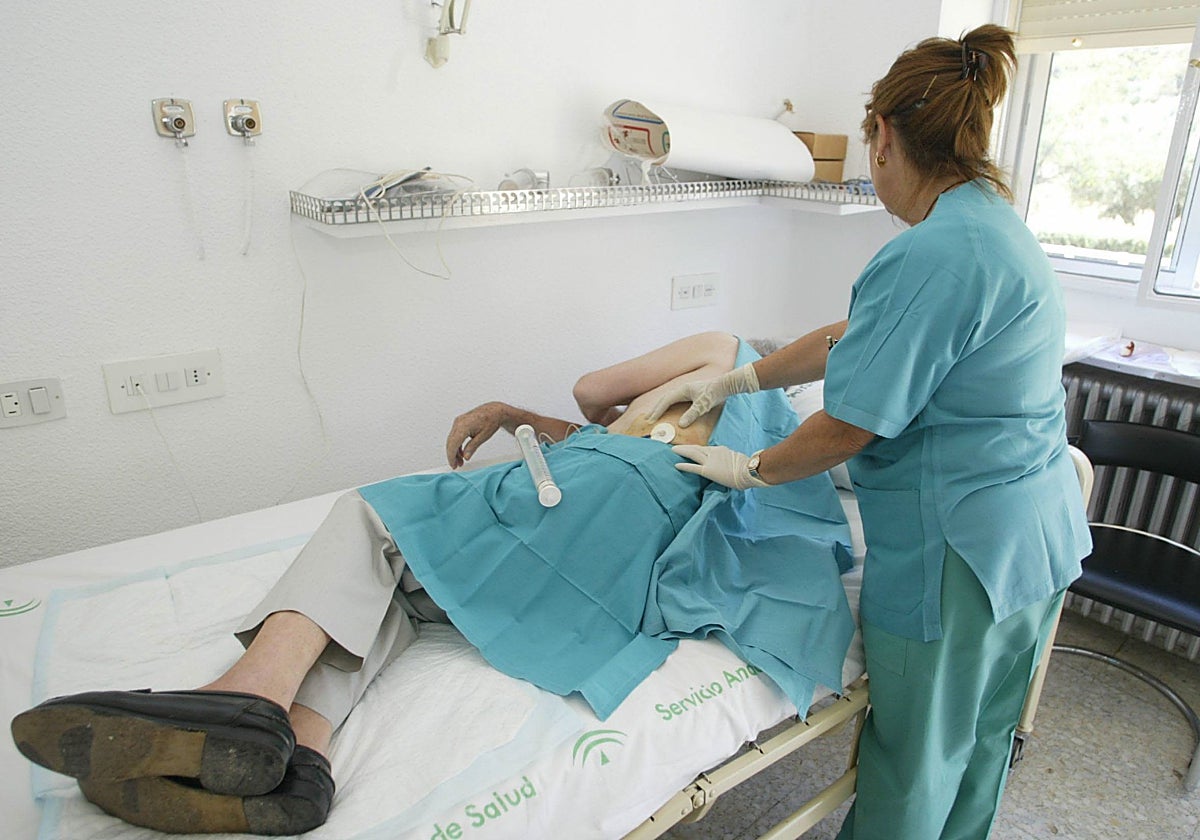
The Junta expects that these continuity of care units will be operational by 2026 to treat acute episodes of long-term, chronic conditions that need more than home care without requiring emergency treatment

Malaga
More than 4.5 million people in southern Spain's Andalucía region have some chronic illness or health risk factors and 900,000 of them suffer from complex, chronic diseases. These conditions tend to progress from acute episode to acute episode, worsening over time. However, there are occasions when decompensations (flare-ups) or complications occur that are not so minor as to be treated at home, nor so serious as to require emergency care and subsequent hospital admission. For these "exacerbations", the regional health ministry has created the UCA continuity of care units. Similar units are already operating in seven hospitals in the region, including the Regional University Hospital of Malaga and Antequera Hospital. Such units are expected to be open in all hospitals in the region and, therefore, in Malaga by 2026, as outlined in the objectives of Andalucía's current 'chronic care plan 2025-2028' (PAdAC). In any case, their creation will be progressive and staggered.
The most prevalent chronic diseases are high blood pressure, obesity, diabetes, smoking, asthma, hypothyroidism, COPD, heart failure, anxiety or mood disorders, atopic dermatitis or psoriasis, glaucoma, chronic kidney disease, osteoporosis and dyslipidaemia (metabolic disorders - for example, high cholesterol).
Dr José Antonio Moyano, a specialist in internal medicine, is responsible for setting up these units. "The natural evolution of chronic diseases is that they frequently experience decompensation," he explains, meaning they are stable for a while and then there is an episode of pain or more serious pain and so on. "Until now, when a chronic illness flared up again, the only way to get hospital care was through the emergency room, which traditionally served only to treat acute episodes of illnesses such as pneumonia or appendicitis, as these always present with a seriously acute episode. They weren't used to people who, throughout their lives, experience many flare-ups," he said. The UCAs, therefore, are designed to treat these decompensations in patients with complex, chronic conditions.
The family or hospital doctor, the carer, a relative of the patient or the interested party themselves (by calling the phone numbers provided) can contact these hospital units, which will have morning and afternoon opening hours, and the person will be seen the same day "or the next day to treat them while they are in the hospital, avoiding the need to go to the emergency room. It allows the person to be treated in a less hostile, more comfortable environment, because they can go home at the end of the day," explained Dr Moyano.
If the worsening of their condition is very serious, the person should still go to the emergency room, as there are technological devices and means for the person to spend the night and be diagnosed, in addition to monitoring their vital signs there, "which we don't have in the UCAs".
Similar units already operate in seven Andalusian hospitals
In the Andalucía region, there are now seven hospitals (Punta de Europa, Antequera, Regional de Malaga, Virgen del Rocío, Virgen Macarena, Virgen de Valme and San Juan de Dios del Aljarafe) that follow this UCA model with varying levels of development (they are the current day hospitals), but plans are already under way to extend this model to all hospitals in Andalucía's public healthcare system.
Improvement to the existing UCAs and their implementation in the remaining public hospitals in the region is planned for 2026, although Dr Moyano believes an optimal outcome would be to be able to deploy them in half of the region's hospitals. Day hospitals are not yet full-blown continuity of care units, as they are geared toward providing regular treatments (chemotherapy, for instance), although they are "an ideal setting to be able to begin developing this activity".
The idea is that, in less than 24 hours, thanks to the patient notification sent directly to the UCA, the patient will receive treatment and return home the same day.
The units will be staffed by a nurse appointed as case manager, another nurse, an auxiliary nurse and a specialist in internal medicine. The UCAs will have armchairs for patients to receive treatment and some beds, added Dr Moyano, "for those who have more difficulty sitting in armchairs".
"People can come from home or even from their nursing home. We run blood tests, often identifying the cause of the decompensation, which could be, for example, a heart arrhythmia or an infection. Then, once the cause has been identified, we start treatment. They can spend the morning, or the morning and the afternoon here, and then go home. We can have them return to the UCA the next day, two days later or a week later," the doctor states, so that any flare-ups are much better controlled, because "often, since they couldn't be monitored at home, the person would hold out and reach a level of severity that required them to come to the emergency room and, in most cases, be admitted", so this will prevent admissions and more serious episodes.
It is, therefore, a question of grouping the chronically-ill patients with homogeneous care and attention needs.The units are aimed at improving quality of life through early attention to any flare-up (decompensation), developing "a care response adapted to the changing needs of the patient, providing single-act diagnostic guidance and parenteral therapeutic resources, inhaled medication or invasive evacuation techniques".
![[]](http://static.vocstatic.com/voc26/latest/assets/images/favicon/surinenglish/apple-touch-icon-57x57.png)