
Food and drink
Costa del Sol hospitality industry closes summer with decline in consumption
Bars and restaurants estimate that customers have been spending an average of five euros less per person while eating out during the peak holiday season, despite the rising prices

Malaga
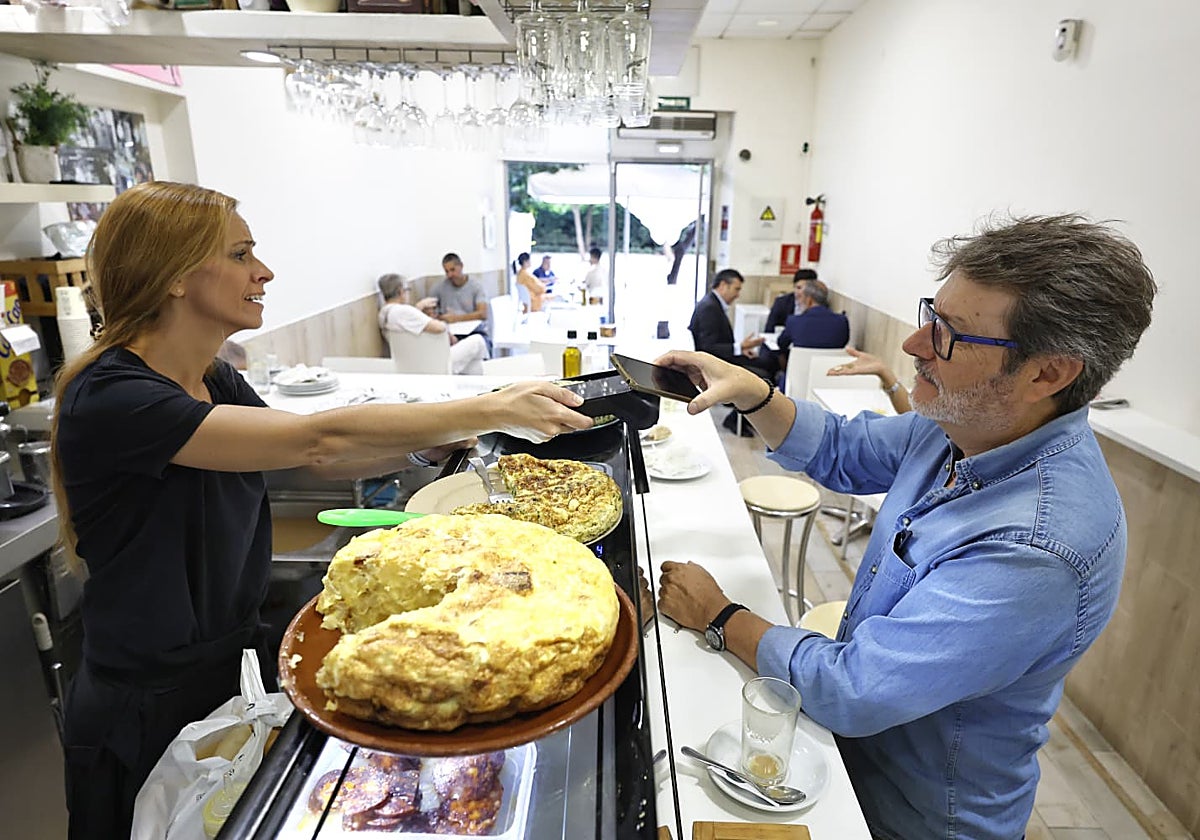
Malaga's hospitality industry is not going to end the summer on the high note it was expecting. Despite the initially optimistic forecasts, bars, restaurants and beach bars will say goodbye next week to a summer season with lower-than-expected turnover. While visitor numbers have generally held steady, businesses have seen revenues of up to five euros less per person during the peak season despite the increase in prices adding more to the bill.
Industry sources explain that this drop in revenue was primarily noted during July and August, months in which they saw a good influx of customers, but with a lower average bill. "This year, they've left their chequebooks at home, only coming with a tighter wallet", says one business owner with a touch of irony.
According to industry data, turnover in these businesses has fallen by between five and ten percent, although figures can vary greatly depending on the location. Thus, consumption seems to have increased in Malaga city and decreased inland and in areas that typically have a greater share of domestic tourism.
10%
Turnover in bars, restaurants and beach bars has fallen by up to ten percent during the summer months in the Costa del Sol province.
The president of Malaga's hospitality business association (Mahos), Javier Frutos, acknowledges a general decline in consumption. "Expectations have not been met. The growth we had seen in recent years has slowed down", he says. Although the turnover figures have not been finalised, Frutos insists that the main decline has been recorded in those areas where there is a greater domestic presence, as the influx of these visitors has slowed this year.
Another variable that has worked against consumption has been the weather. Although it has affected other Andalusian provinces more, the various heatwaves that have hit Malaga province, more so inland, have made it difficult to maximise use of restaurant and bar terraces, consequently preventing customers from going out and spending. "At the regional level, we've had 16-17 days of heatwaves and this has had an impact on consumption on the terraces", states Frutos.
The regional beach bar association makes a similar assessment. Manuel Villafaina, president of the Costa del Sol association of chiringuitos, predicts a 7% drop in turnover for his members all along the coast. He explains that the first few months of the main season, especially May and June, were very good, but that they noticed a decline during July and August. "It's not that there were fewer people, but that they weren't consuming as much as what we were used to seeing."
4.6%
is the average increase in prices in August (4% in July), according to INE data.
In their case, they have especially noticed the drop in domestic customers, who normally would be spending on something all day long. Unlike foreigner customers, who arrive at lunchtime and then leave, Spaniards tend to consume at any time, from the moment they turn up at the sunbeds and start with aperitifs through to the after-dinner drinks and relaxed conversations.
Villafaina explains that now "people are going with the bare necessities" and acknowledges that the economy is not as strong as it used to be. Added to this is the widespread use of credit cards as the preferred means of payment. "Even a two-euro coffee will be paid for with a card and we lose the commission charged by the bank."
Hundreds of thousands of euros
The perception expressed by these two authoritative voices is shared 100% by various hospitality business leaders. "People are going out the same, but now they're looking much more at the prices and, when they used to order three dishes to share, now they're only ordering one", they comment. Taking into account the individual cases surveyed, the average food/drinks bill in the Costa del Sol province has fallen by at least five euros per person, a figure that, when multiplied by the number of customers that these businesses welcome daily during the three main summer months, amounts to several hundred thousand euros.
As mentioned at the beginning, this drop in turnover has occurred despite the increase in prices (up to 14 euros are now being paid for espetos (skewered sardines) in some beach bars in Marbella). According to CPI (consumer price index) data, restaurant prices rose by 4% in July and 4.6% in August compared to the same months last year. This is higher than the 2.7% price increase in the average shopping basket and the cost of living in general.
Breakfast is increasingly expensive with coffee and milk prices on the rise
Breakfast, one of the fastest-growing consumption opportunities in the hospitality sector, has seen prices shoot up by 8% in the last year, due to the price rises for standard breakfast products such as coffee, chocolate and eggs. These product prices have risen by almost 20%.
Specifically, the price of a traditional breakfast consisting of coffee, milk, sugar and toast with olive oil has increased by an average of 8% in the last year, well above the CPI, which stands at 2.7%. Last year, it rose by 5%. This means that a typical Spanish breakfast has accumulated a two-year growth in price of nearly 14%, according to an analysis by Javier Rivas, professor at EAE Business School (Barcelona).
His report confirms that this increase has been particularly influenced by coffee, whose value has soared by 20.2%, compared to 4.3% in 2024. Furthermore, the price of milk has risen by 4.3%, although this has been offset by a 19.3% drop in the price of sugar.
![[]](http://static.vocstatic.com/voc26/latest/assets/images/favicon/surinenglish/apple-touch-icon-57x57.png)