
Archaeology
Masks of the ancient Phoenician inhabitants of Malaga's El Cerro del Villar site revealed
The unexpected discovery of terracotta masks at the site shows the practice of cult activities on the ancient island at the mouth of the Guadalhorce river

Málaga
At first glance it could be an ancient cemetery. But a closer inspection reveals something much more unique. The 'remains' to be found hidden beneath seemingly every rough stone are not bones, but pottery.
In fact, archaeologists have discovered a large 'dump' with thousands of pieces of debris, particularly amphorae pots and other domestic utensils made of clay. These form not just a physical 'mountain' but also one of information, with extremely valuable data that throws light on the use of the Cerro del Villar Phoenician site in the Punic period.
A deposit of artefacts found, together with a kiln, at the westernmost end of the then island at the mouth of the Guadalhorce - today adjacent to the Guadalmar area - has revealed that when this Phoenician colony ceased to be inhabited it was transformed into an industrial zone of the flourishing Malaka .
Archaeologists led by José Suárez, professor at the University of Malaga, unearthed some unexpected shards during their latest dig back in September. These were fragments of terracotta masks, which are now providing new clues about the still unknown religious practices of the people who lived in the area at the time.
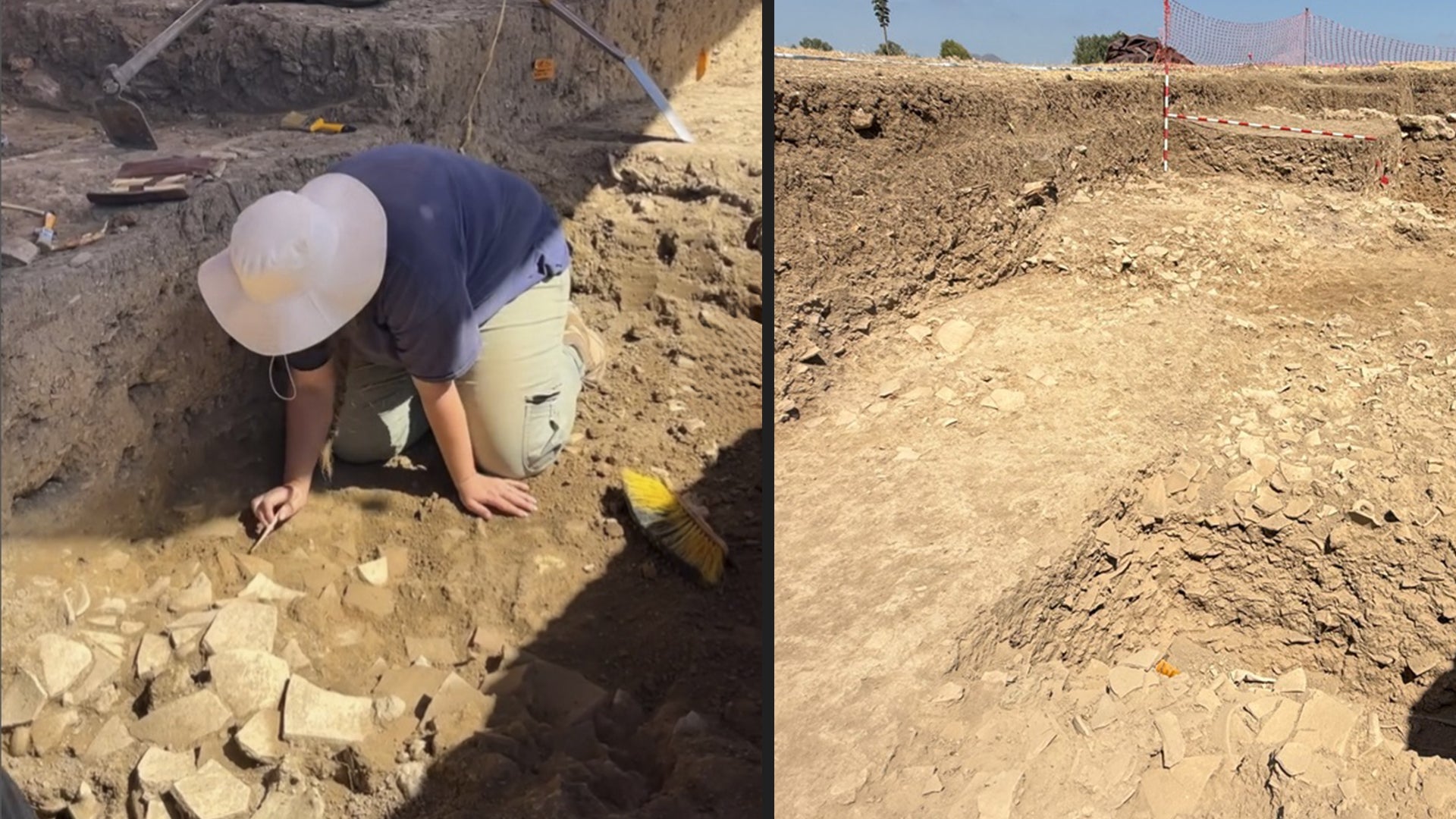
Antonio Sáez Romero, an archaeologist from the University of Seville who is currently studying the two partial pieces found three months ago, explained: "We still don't really know what they were used for or who used them, but we can affirm that they are exceptional elements, since very few masks of this type have appeared in the West."
With the caution that researchers are still at an early stage of investigation, what can be said is that these are the remains of two different terracotta masks that do not appear to be related to each other.
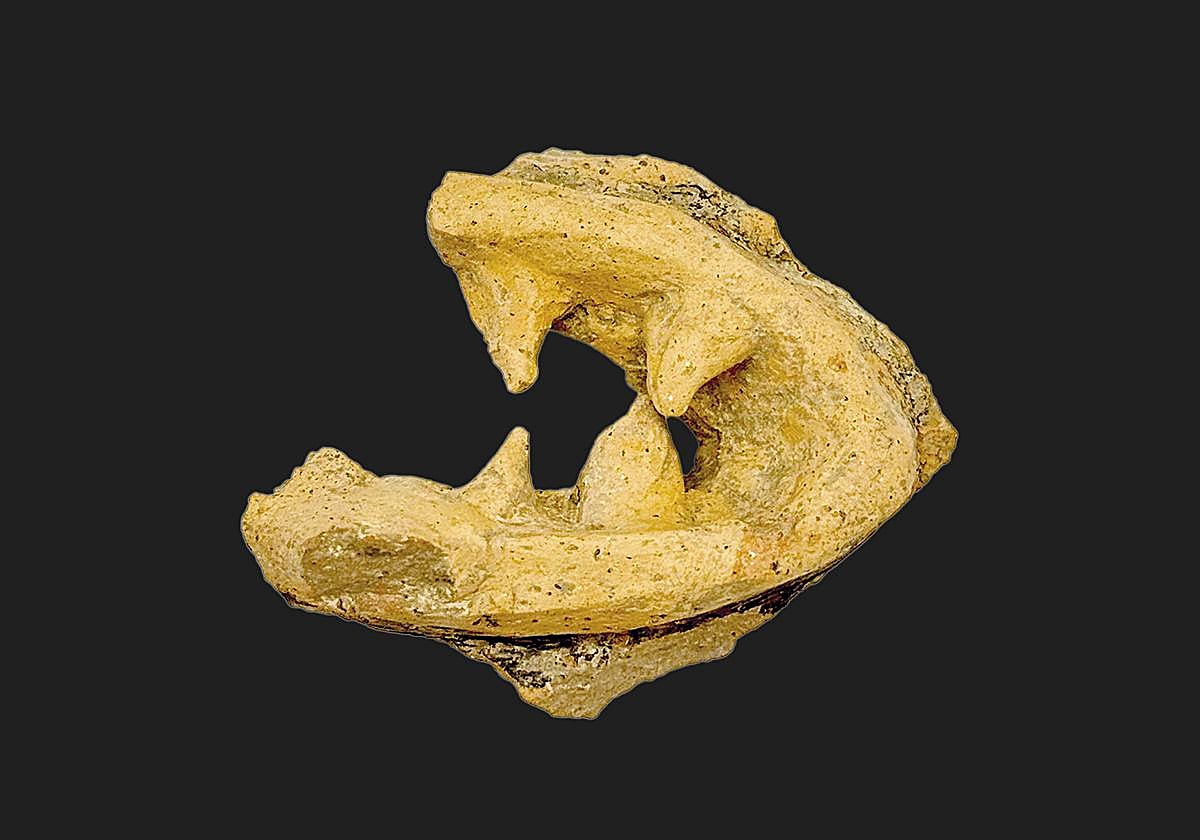
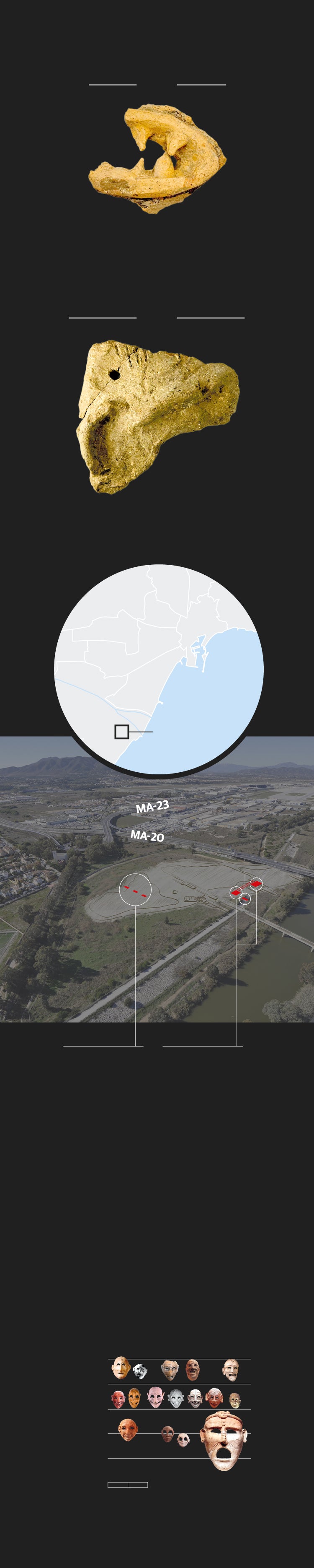
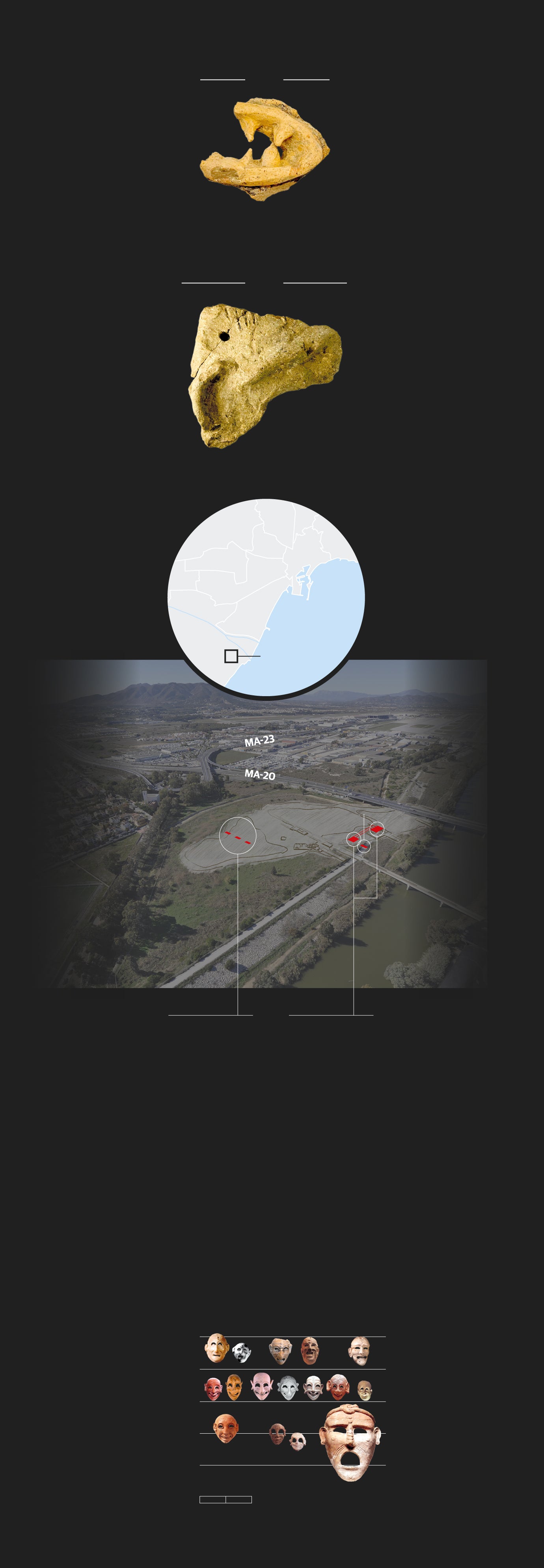
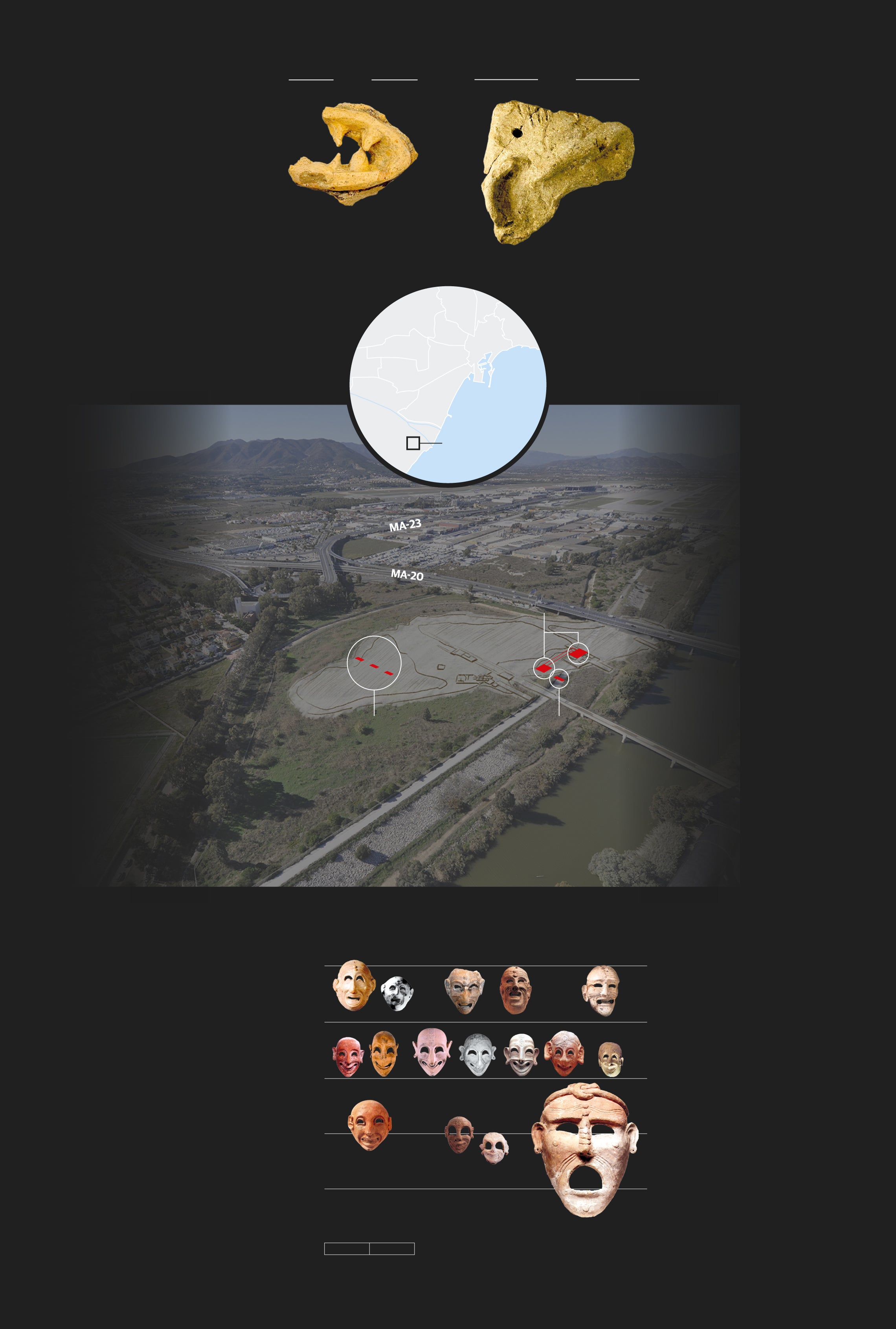
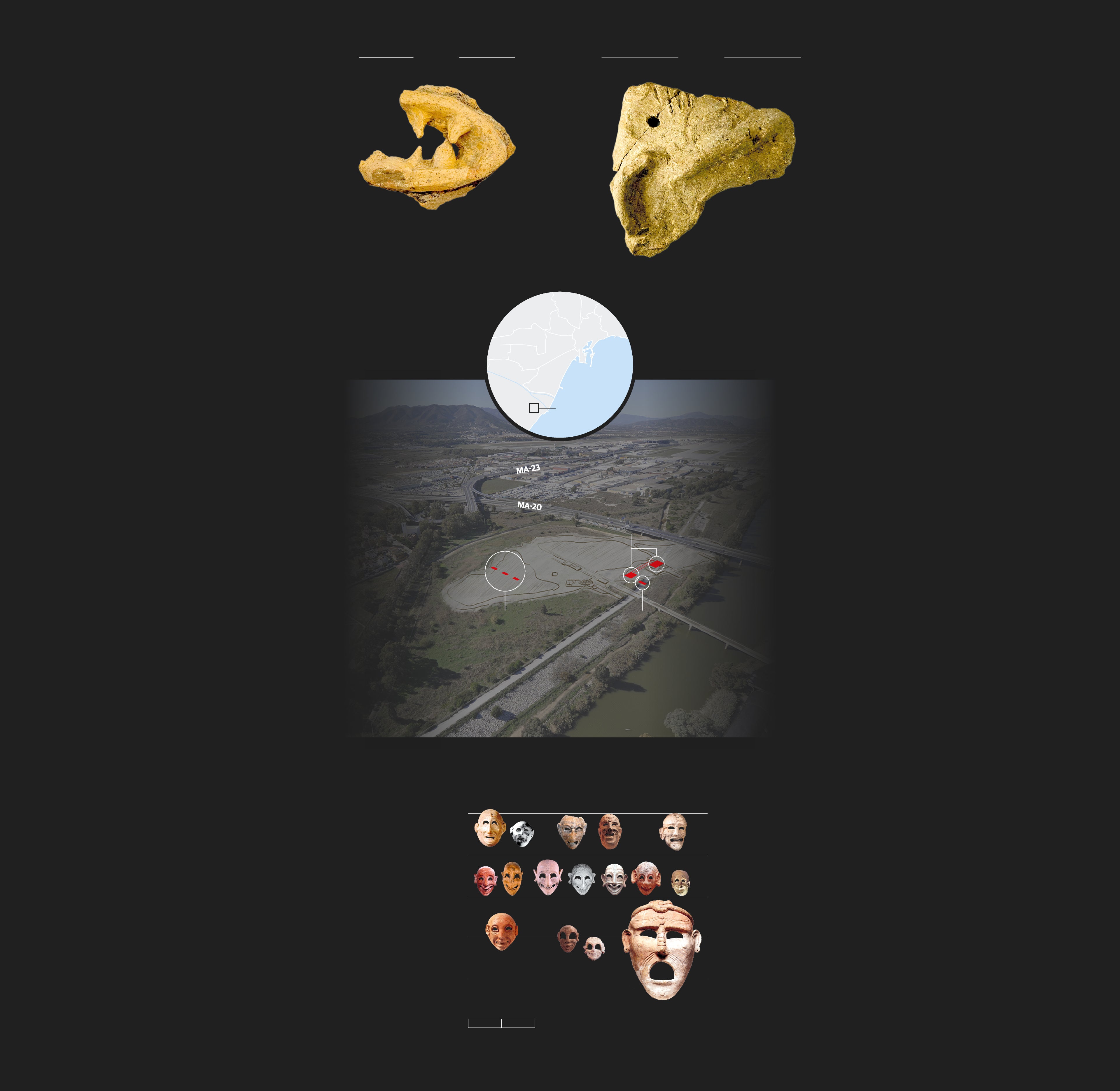
One of them reproduces a mouth with pronounced teeth, while the other includes the nose, part of the forehead, an eye and an ear.
The masks found
in Cerro del Villar
7 cm
Grotesque mask showing a mouth with prominent teeth
9 cm
Mask with a nose, part
of a forehead, an
eye and an ear
MÁLAGA
Carretera
de Cádiz
Guadalhorce
Cerro del Villar
Guadalmar
Airport
Port
Site
Gualdalhorce
Sector 14
Sector 11 y 12
Época
Época
Punic era, 6th to 5th
centuries BC
At the westernmost
end of
the former
island an oven
was found for firing ceramics and a dump
containing thousands of pieces of pottery that
had been
thrown away
Archaic era,
7th century BC
Area with a large
building of
200 square
metres and
close to the port
of Cerro del
Villar, where
fragments of
grotesque
masks were
found
Phoenician masks found at
other digs around the world
650 BC.
550 BC
450 BC
350 BC
250 BC
10 cm
Source: Universidad de Málaga
E. HINOJOSA
The masks found
in Cerro del Villar
7 cm
Grotesque mask showing
a mouth with prominent teeth
9 cm
Mask with
a nose,
part of a forehead,
an eye and an ear
MÁLAGA
Carretera
de Cádiz
Guadalhorce
Cerro del Villar
Guadalmar
Airport
Port
Site
Gualdalhorce
Sector 14
Sector 11 y 12
Época
Época
Punic era, 6th to 5th
centuries BC.
At the westernmost point
of the
former island
an oven was found
for firing ceramics and a dump
containing thousands of pieces of pottery that
had been
thrown away
Archaic era,
7th century BC
Area with a large
building of
200 square
metres and
close to the port
of Cerro del
Villar, where
fragments of
grotesque
masks
were found
Phoenician masks found
at other digs around the world
650 BC
550 BC
450 BC
350 BC
250 BC
10 cm
Source: Universidad de Málaga
E. HINOJOSA
The masks found in Cerro del Villar
9 cm
7 cm
Mask with
a nose,
part of the forehead,
an eye and an ear
Grotesque mask
showing a mouth
With prominent teeth
MÁLAGA
Carretera
de Cádiz
Guadalhorce
Cerro del Villar
Guadalmar
Airport
Sector 11 y 12
Época
Archaic era, 7th century BC
Area with a large building of 200 square metres near the port of
Cerro del Villar, where fragments
of grotesque masks were found
Guadalmar
Site
Port
Sector 14
Época
Punic era, 6th to 5th centuries BC.
At the westernmost end an oven was found for firing ceramics and a dump containing thousands of pieces of pottery that had been thrown away
Gualdalhorce
Phoenician masks found at other digs around the world
650 BC
550 BC
450 BC
350 BC
250 BC
10 cm
Source: Universidad de Málaga
E. HINOJOSA
The masks found in Cerro del Villar
9 cm
7 cm
Grotesque mask
showign a moutha
with prominent teeth
Mask with a nose,
part of the forehead,
an eye and an ear
MÁLAGA
Carretera
de Cádiz
Guadalhorce
Cerro del Villar
Guadalmar
Airport
Sector 11 y 12
Época
Archaic era, 7th centuryI BC
Area with a large building covering 200 square metres and close to the port
of Cerro del Villar, where fragments of
grotesque masks were found
Guadalmar
Site
Port
Sector 14
Época
Punic era, 4th to 6th centuries BC
At the westernmost end of the former island an oven was found for firing ceramics and a dump containing thousands of fragments of pottery that had been thrown away
Gualdalhorce
Phoenician masks found at other digs around the world
650 BC
550 BC
450 BC
350 BC
250 BC
10 cm
Source: Universidad de Málaga
E. HINOJOSA
According to the expert, these types of objects were characteristic of the East and Carthage (central Mediterranean), where they are usually linked to funerary environments and necropolises. This is not the case in Malaga, as these fragments were found in sector 11 and 12 of the excavations, which is the area where the shell floor was also found, indicative of a protected space, in an area close to the port or jetty of Cerro del Villar. "They must have had some kind of ritual component, but the fact that they appeared in a building that was practically next to the old coast, with a lot of commercial activity, could be that they were products that were circulating and that someone brought them or was going to sell them," Sáez says.
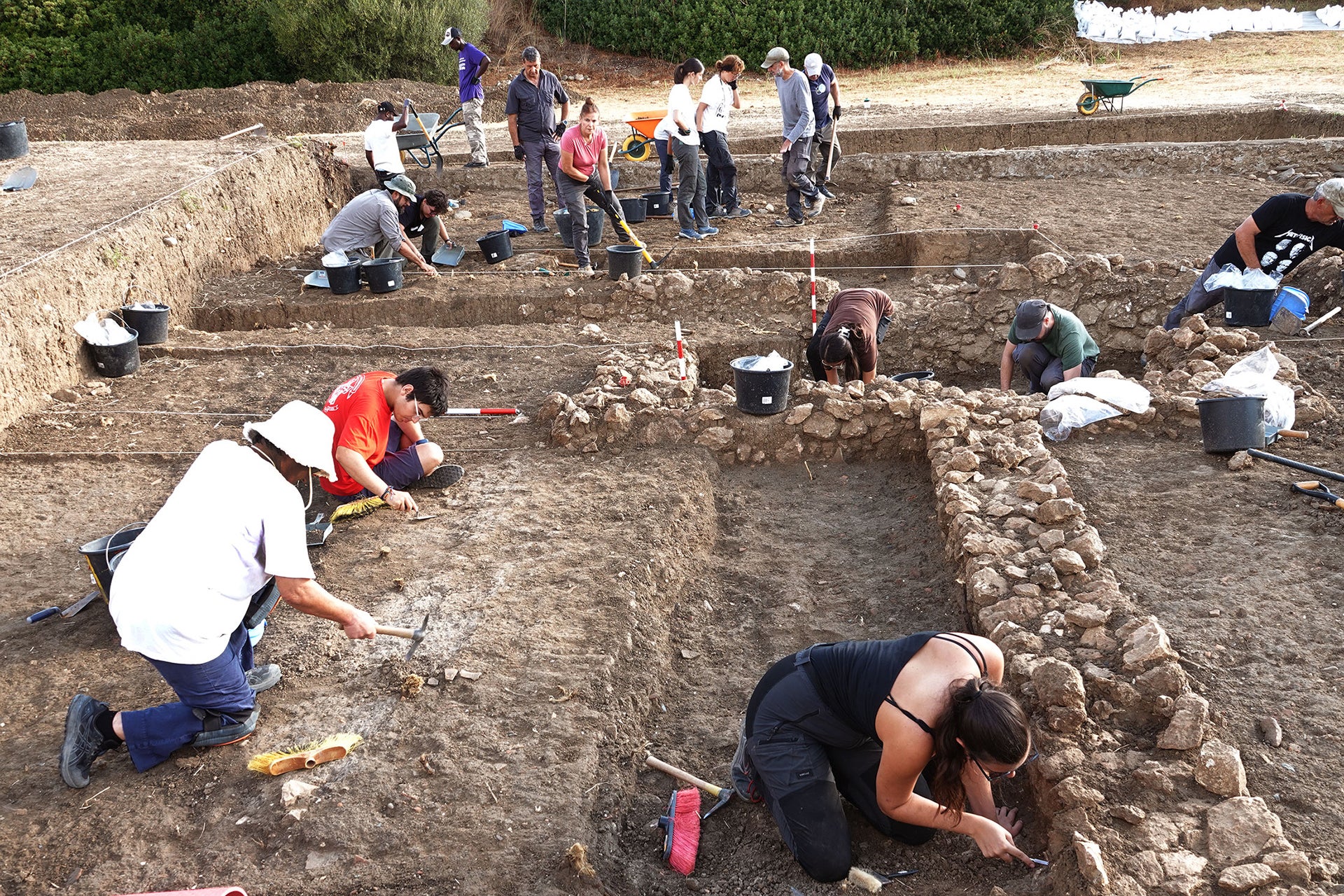
In this sense, the masks were found in a context in which other imported items have also been found, such as Greek amphorae of various origins, as well as utensils from Tyre and Etruscan vessels. "We are talking about a very dynamic area which is very well connected by sea," adds the archaeologist. While awaiting the scientific dating of these pieces, the sequence of evolution of the iconography of the Phoenician masks places their origin in the archaic Phoenician period, while their appearance has similarities with those of the Carthaginian type, "which is very interesting because it is different to those we have found in nearby areas such as Cadiz," says the archaeologist, who insists that this is an initial analysis and that laboratory tests of these pieces are pending.
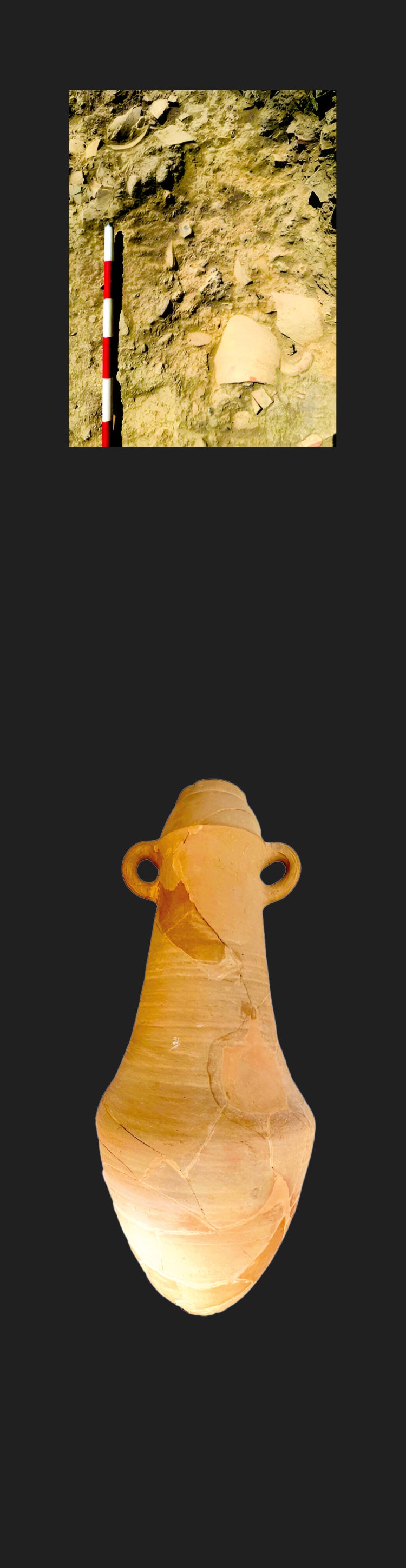
Amphorae from
Malaga to Olimpia
The unearthed amphorae
at Cerro del Villar have
a form and clay composition that allows
their origin to be identified.
Here you can see
fragments of one of them,
with its characteristic handle.
These containers
were distributed around
the Mediterranean.
This Amphora discovered in the sanctuary of Olimpia (Greece)
is the same as those
found at this dig
in the pottery dump at
Cerro del Villar, which
illustrates the flourishing
exports of salted fish
from the Malaga island
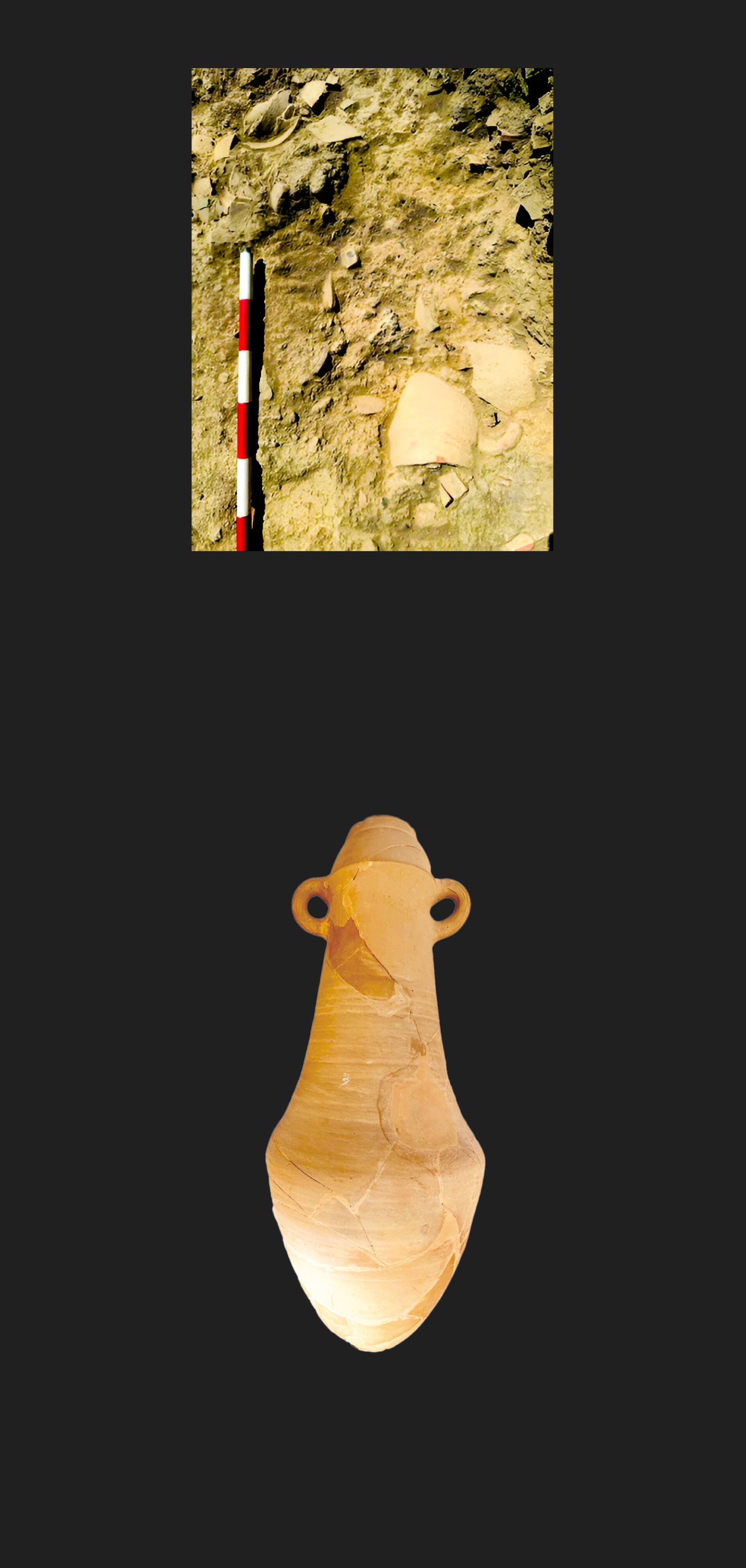
The amphorae from Malaga to Olimpia
The amphorae found at Cerro del
Villar have the form and clay composition of
which allows their origin to be identified.
Here you can see fragments of one of the them
with its characteristic handle.
These containers were distributed
around the Mediterranean
This amphora found in the sanctuary of Olimpia (Greece) is the same as
the ones found at this dig in the pottery dump
at Cerro del Villar, which
shows the flourishing exports of salted
fish from the Malaga island
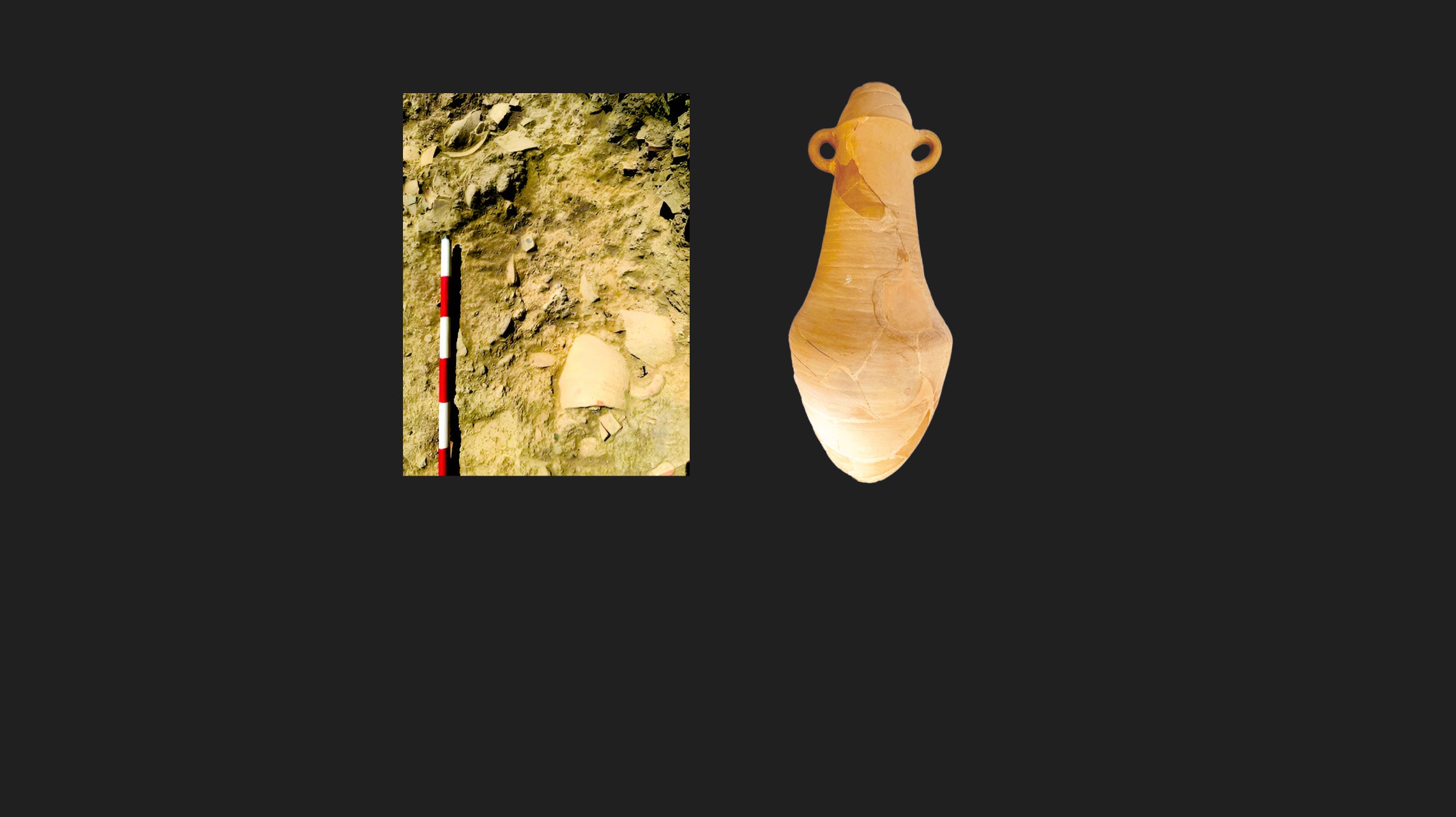
Amphorae from Malaga to Olimpia
The amphorae unearthed
at El Cerro del Villar have
a shape and clay composition
that allows their origin to be identified.
Here you can see fragments
of one of them
with its characteristic handle.
These containers were
distributed around the Mediterranean
This Amphora found at the
sanctuary of Olimpia (Greece)
is the same as the ones
found this year
at the pottery dump
at Cerro del Villar, which
illutrates the flourishing exports
of salted fish from
the Malaga island

Amphorae from Malaga to Olimpia
The amphorae unearthed
at Cerro del Villar have
the shape and clay composition
that allow their identification.
Here pieces of one
of them can be seen,
with its characteristic handle.
These containers were
distributed around the Mediterranean
This amphora found in
sanctuary of Olimpia (Greece)
is the same as those
foudn at this dig
at the pottery dump
in Cerro del Villar, which
illustrates the flouishing exportn
of salted fish from
the Malaga island
The finding of these masks that reproduce some kind of animal or mythological being also connects with one of the great enigmas to be discovered in the ancient Phoenician settlement of Cerro del Villar, where the sanctuary of this settlement has not yet been found, but small altars in residential spaces and objects of offering, such as a fragment of an anchor and figures. "These masks are always related to cult and religious practices, so, having already identified the shell pavement, it would not be unusual for them to have to do with ceremonies that were taking place in this environment," adds the director of the Cerro del Villar excavations, José Suárez, who is leading the current research programme financed by the Andalusian Regional Government at the University of Malaga, with the collaboration of other Andalusian universities, such as Cadiz, Cordoba and Seville, and international universities, such as Chicago (USA) and Marburg (Germany), as well as the support of specialists from the Spanish National Research Council (CSIC) and the Central Research Support Services (SCAI).
Cerro del Villar maritime appearance
The grotesque masks have appeared in a sector that has also revealed new developments this year in terms of urban planning, as it has been possible to excavate in greater depth the large building of 200 square metres located in the previous campaign and close to the port area, so that the archaeologists now have a close idea of the maritime appearance of the then island and what the sailors and traders saw when they arrived by boat. "We have seen how in the 7th century BC, Cerro del Villar had an urban and economic importance that we had not imagined until now," says the director of the excavations, who adds that in this sector evidence has been found of the great trade and exchange of products with other areas of the Mediterranean, such as Greece, Corinth and Etruria, which is evidence of a "moment of strength and wealth".
These routes also worked in reverse, since pieces made at Cerro del Villar have been found in excavations of a sanctuary in Olympia . However, each door that opens at the site also leads to new locks to be deciphered. "We still don't know what the exact use of this large building was," says José Suárez, who adds that residential activity has been identified in the building, as well as storage and metallurgical activity with the manufacture of copper objects. We are, therefore, looking at a "multi-purpose" space, although analyses are still underway to decipher its role in that splendorous Phoenician society of the 7th century BC, he points out about the excavations financed by the Regional Ministry of Culture and Sports, with the collaboration of Malaga town hall, the Fundación Málaga and the Provincial Council.
"It was poorly known"
In parallel, at the other end of the island, in sector 14, advances are also being made about a later Phoenician period, the Punic, in which the island was deserted due to floods and natural phenomena and the population moved to present-day Malaga, but Cerro del Villar remained as an industrial, artisanal and subsidiary zone of the neighbouring population that was built on the bay. "It is a phase of the site that was known, but poorly known, because the information was based on surface material and some structures, but the huge dump of thousands of ceramic fragments not only informs us of the production of amphorae for the salted fish trade, but will allow us to study for the first time the evolution of these containers from the mid-6th century BC until at least the first half of the 5th century BC to establish technologies and trade contacts," explains archaeologist Antonio Sáez.
This mountain of ceramic waste that was formed over the course of a century during the Punic period has already shown "very intense craft activity", and we are therefore witnessing a new "economic flourishing" of the island thanks to the same maritime trade that had already marked the expansion of the Archaic period. And why did this thriving ceramic factory for food storage containers stop in the 5th century BC? And here the answer lies in the combined view of what was happening in Malaga and the rest of the Mediterranean.
"It is a process that we observe in general throughout the region, also in Cadiz and elsewhere, where the salted fish industry seems to be going through a great crisis, they stop exporting to Greece and other distant places, probably because of problems with Carthage, which is an increasingly important power, and the producers take refuge in the nearest regional markets," says the archaeologist Antonio Sáez about the findings that continue to reveal the face of Cerro del Villar. Thus, since the start of the current excavation project four years ago by the UMA, the research has made it possible to put the ancient colony at the centre of the debate to learn about the encounter between the Phoenician world and the indigenous populations of the Peninsula 3,000 years ago.
![[]](http://static.vocstatic.com/voc26/latest/assets/images/favicon/surinenglish/apple-touch-icon-57x57.png)