
Weather
'I feel like selling up everything and leaving the town: the rains are becoming increasingly torrential'
Local residents in the lower part of Cártama Estación in the Guadalhorce valley are still hard at work mopping up the mess after the weekend downpours and flooding that struck Malaga province
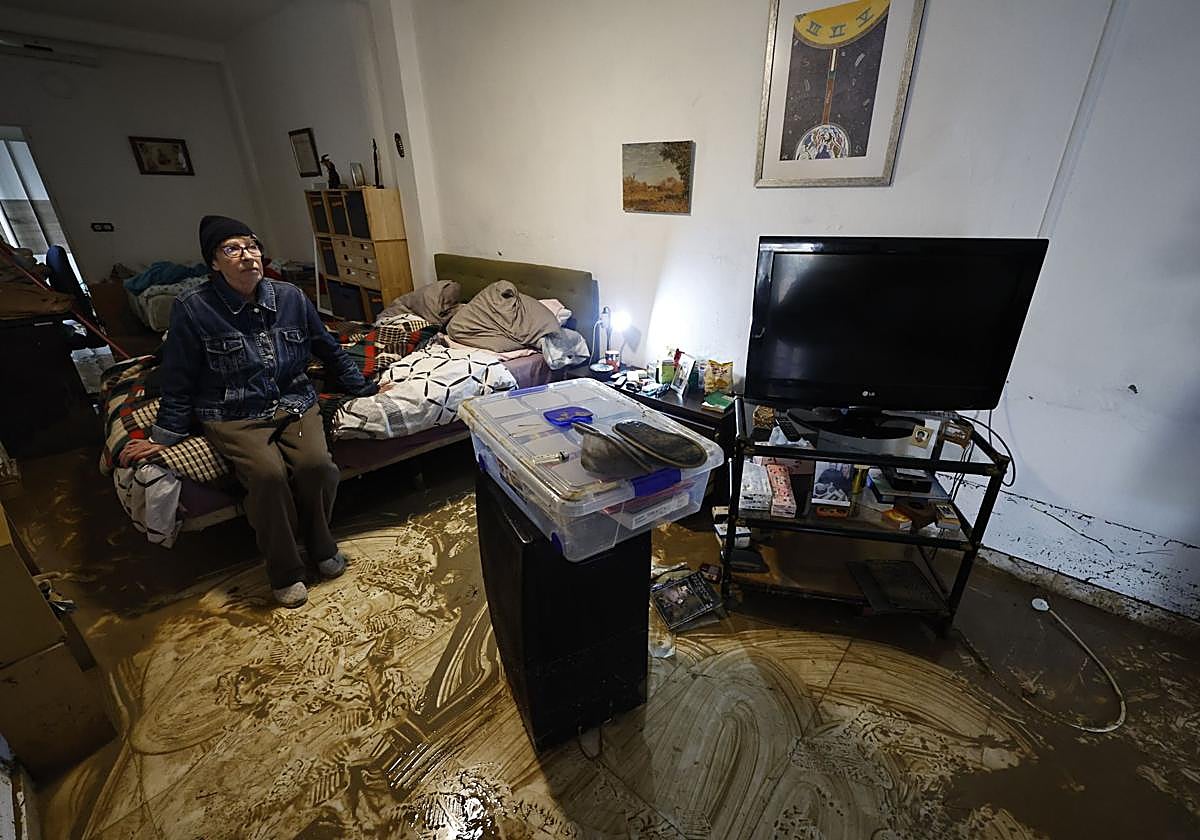

Cártama
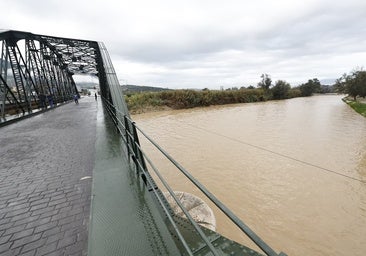
Morning dawned in Cártama Estación on Sunday with local residents heading to the bridge over the Guadalhorce river to see if the river level had gone down and to what degree. It had already receded from the record-breaking high reached on Saturday night into Sunday after more than 100 litres per square metre of rain fell upstream. Francisco, Antonio, Salvador and Reme were among those strolling along the riverbank and they remarked that curious onlookers had even come from Fuengirola to witness the spectacle firsthand. Anything is now an excuse for a trip out just to nosey around. "They've been talking for ages about building a reservoir further upstream or something like that. It's true they've cleaned up the riverbed and that has contained the flooding," said Francisco. Meanwhile, people strolled by peacefully. The temperature around ten in the morning wasn't bad and only a few scattered drops of rain were falling. Even the sun seemed determined to come out and warm things up a bit after the cold of the past few days.
Related story
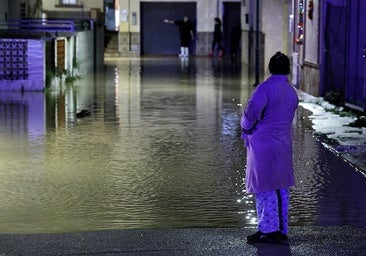
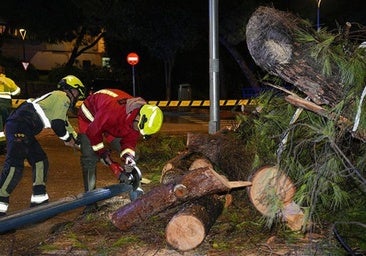
The worst of the aftermath, as we were told while on the industrial-style bridge, was in the lower part of the town, in Calle Pizarra and the surrounding area, where even the Junta delegate, Patricia Navarro, and the head of Malaga's provincial fire brigade (CPB), Manuel Marmolejo, went to view the scene. Marmolejo explained to SUR how a contingent of 25 people worked in the area through Saturday night and then, on Sunday, a total of three teams with nine people and a commander operated as support to Infoca personnel to clean and pump out water.
Related story
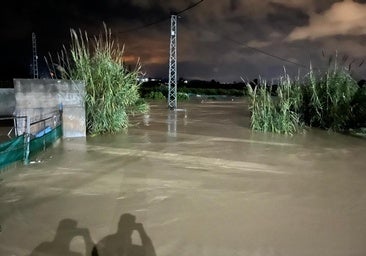
There, at the epicentre of the flood, where even on Sunday morning small piles of hail more typical of higher altitudes still lingered, there were also onlookers. Thankfully, there were also helping hands, like those of Luisa and Jorge, residents from a higher part of the municipality and therefore less affected by the flood: "We spent the night feeling scared, but also thanking God that we live higher up in that part of town. We came here in case our help was needed." Personnel from Infoca and the provincial fire brigade were already working tirelessly on scene. They were pumping out water, clearing away mud and removing mattresses, furniture, books and more from the worst-hit homes and businesses. Everything had to be scrapped.
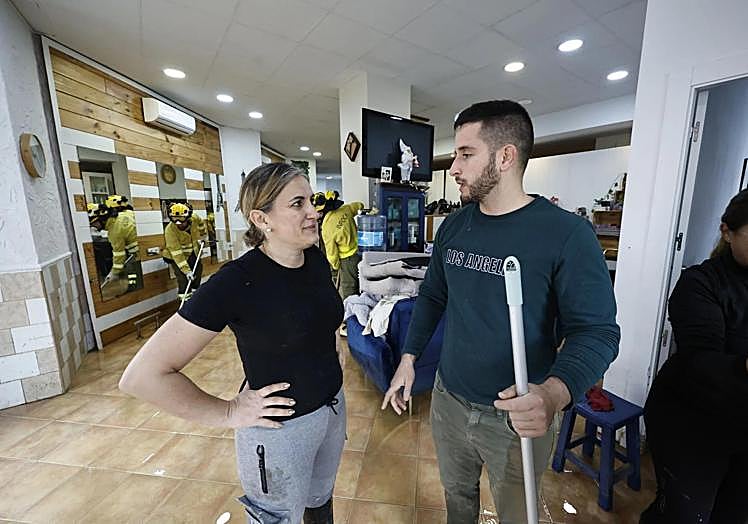
Fernando García and Mónica Moreno share a shop premises that houses two businesses, his nutrition shop and her hair salon. García looked visibly shaken: "I feel like selling everything and leaving this town, because it's always the same thing and the rains are becoming increasingly torrential." He says he has barely received 3,600 euros from the Consorcio (Spain's insurance compensation scheme for such as natural disasters) when the costs of replacing equipment and materials exceeded 15,000 euros after the previous flood that struck the town a few months ago. Fernando García lives only a few steps away from the shop and from his house he could see water pouring in through the window. These streets are a water-trap, enclosed by the boundary wall of the railway tracks and so, if the water level from the river rises above the height of the pavements there, then the floodwaters in the streets do not go down until the river level recedes.
Mónica Moreno, with a touch of dark humour, shouts at the neighbours across the street while bailing out water as though she were performing an ancestral ritual like one of those still practised around the world, the kind that dictates getting rid of everything to show no attachment to anything: "How good are we going to start the new year, throwing out everything that's bad." Yet this isn't a ritual, it's a misfortune, or maybe even a punishment for having taken from nature what is rightfully hers: "This is a lagoon, what belongs to the water belongs to the water", she reflects, with a look of resignation.
"We don't expect anything from politicians, but we do expect better from the engineers, who know what level these streets are at," says Eduardo Herrero, Mónica's partner. He believes that the latest pavement renovations have worsened the situation. In response, mayor Jorge Gallardo told SUR that, where tiles and asphalt have split open, where there are fissures caused by the downpour, is precisely where the improvement work did not reach. Gallardo recounted the sequence of events to SUR: "Last night, this was like a river, with cars floating in the water, all access roads to Cártama closed and we had to evacuate seven families. Six went to other homes of theirs or to stay with relatives and one went to a shelter in Alhaurín de la Torre. A tremendous amount of water came down here."
The scene was Dantesque at the kiosk owned by Manjito Kaur's family, originally from India and now living in Malaga for nearly 25 years. Fridges were broken and all the merchandise was ruined. They estimate losses of 3,000 euros. Across the street, at a body shop, owner Pepe Sánchez Jiménez was breathing a sigh of relief because he didn't have many customer cars in the workshop, given that this is a time of year when people travel. Still, he told SUR that the water reached the height of the cars' rear-view mirrors. "The image of Valencia kept coming to mind. But, at the end of the day, there has been no personal tragedy."
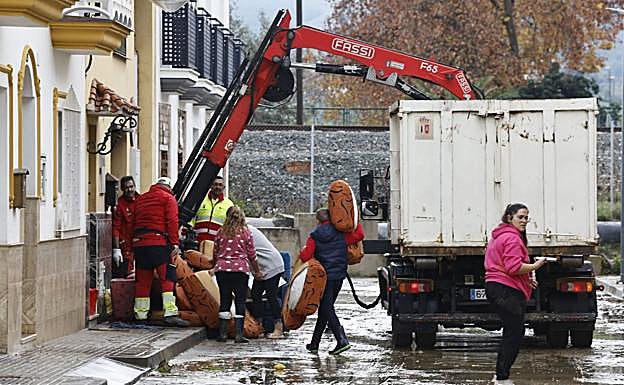
There were also local residents who preferred not to speak. They were angry. "You can see how we are," one woman told SUR as she realised she was going to have to throw all her belongings away. Others, however, were almost in shock, like Elisa Guerrero, a retired postal worker, originally from Argentina and an avid reader, now with many of her books destroyed, all those that were on the bottom shelves of her bookcases. So were all the sofas and mattresses, both hers and those of other families, which were being removed by firefighters from the Junta de Andalucía's Plan Infoca and Malaga's provincial fire brigade (CPB), everything reduced to trash in a single night. Elisa Guerrero's house and those of her neighbours provided yet another Dantesque image of utter destruction. "I'm in such anguish, like I'm in shock, I can't think straight... I just keep looking at my things, I can't do anything else," she said. The disorientation was evident on her face.
There was some irony to this tragic incident: Carlos Fernández, who works for a company that supplies drinking water and was making deliveries during the torrential rains in Murcia and is now assigned to do the same in Almeria, had to get in his car at dawn and hit the road because his wife called to warn him that the house was flooding. He found almost half a metre of water. "We've lost the water pump, furniture... The car and the motorbike were saved by the skin of their teeth. This is the first time that water has entered the house. Other times it's come right up to the door," he said. On Sunday night he had to be on the road again, because Monday is a work day and he might get caught in another storm in the neighbouring province.
Cristina and Sergio also had to go to Cártama to help their elderly parents clean their house. They say they were without electricity for hours. The circuit breaker must have tripped. They don't know if their electrical appliances are working or not. They just keep cleaning. They've been there for hours. They haven't slept all night. It will take days to return to normal. What a cruel joke for the weather to play on 28 December.
![[]](http://static.vocstatic.com/voc26/latest/assets/images/favicon/surinenglish/apple-touch-icon-57x57.png)