
Agriculture
Bumper cereal harvest in Malaga province is hit by low prices and high production costs
The growing season has recovered thanks to the heavy rains during the spring, but the profit margin for the farmer is slim

Malaga
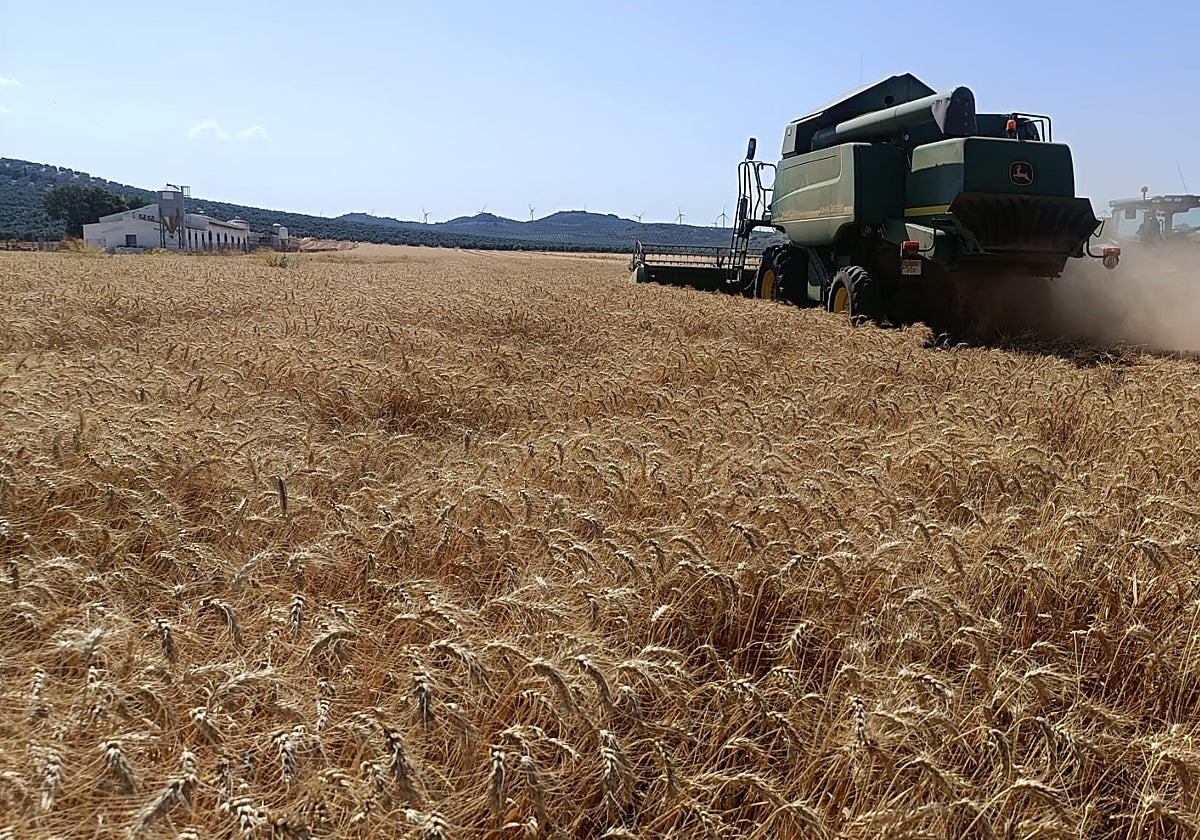
Spring is the natural rhythm of the countryside. What happens at this time of year determines the future of the harvests. After several years of drought, the heavy rains benefited the sowing of cereals in Malaga province, which has its two great granaries in the northern area of the Antequera district and Teba. This season's harvest has been good in terms of yields per hectare. A total area of 61,282 hectares has been sown in the province of Malaga and the good weather conditions have allowed the crops to develop well. With the harvesters already parked up and the grain warehouses full, the farmers have come up against a market that has sown disillusion. Good harvests and surpluses with large international producers such as Ukraine and the Mercosur countries are pushing prices down. To this must be added production costs that continue to rise. The result is a combination of factors that is once again putting the Malaga countryside's profitability at risk.
President of the Campillos cooperative and owner of several hectares of land near Antequera Benito Avilés confirms that the past few years have been more like a game of survival than a profitable business for cereal farmers. "The spring rains were good for the fields and we had very high expectations," he admitted, adding that "the season has been good", but not as good as they hoped. However, given the drought that the province has been suffering the last few years, not much more could be expected.
The cereal dilemma is reflected in the pure and simple mechanisms of the market. Benito Avilés and the rest of the farmers have no use for a good harvest if they cannot sell the product at a good price, which is exactly what they are experiencing right now. The price for grain is calculated worldwide, on different international exchanges. Maritime transport allows wheat from countries such as Ukraine or Argentina, where the regulations and requirements are more lax compared to the web of rules and requirements that the EU imposes on Malaga farmers, to be transported to Spanish ports.
The latest cereal price at the Seville grain market is below 200 euros per tonne of oats or barley. Santiago Sánchez - Asaja's technical advisor for cereal in Malaga - criticises current prices. "We are at a point where talking about profitability, with these prices, is almost impossible. The cereal harvest has been good, but it is very difficult under these conditions," he said. According to Sánchez, the main reason for these prices lies in the oversupply that exists at the moment. "The harvest has not only been good in Malaga, but also in other countries," he explained.
What comes into play here is not a complex mechanism but the simple law of supply and demand. For the Asaja technician, this is not the problem. The setback for the Malaga farmer, he pointed out, lies in the high production costs. "There are more and more regulatory requirements for the farmer and the outlay on phytosanitary products that has to be made is increasingly higher," he said.
The combination of high costs and low prices is strangling Malaga cereal. Sánchez explained that farmers cannot survive without the common agriculture policy (CAP) of the EU, which he considers one of the great absurdities that agriculture in general is experiencing in Europe: Brussels having to come to the rescue of farmers through the CAP mechanism, after having provoked an increase in costs due to ever-increasing demands.
Future market
If there is anyone in the province of Malaga who knows the cereal sector, it is at Dcoop's headquarters in Antequera. This is where Juan Carlos Rodríguez works. He has more than three decades of experience and handles figures and up-to-the-minute data in a way that very few others can. He has what in economics is known as 'global vision'.
Carlos Rodríguez spoke to SUR to assess the situation. "The cereal season has not been bad in terms of yields. Although it is true that Andalucía has lower production than other Spanish regions, such as Castilla y León, for example. But coming from where we came from, it has been a good season. The problem comes with the prices," he said.
In the case of grain, the maize price would set the ceiling. "Maize has done well in both the northern and southern hemispheres. That expectation makes the grain cheaper, because when maize is cheap, it will displace other grains," he explained.
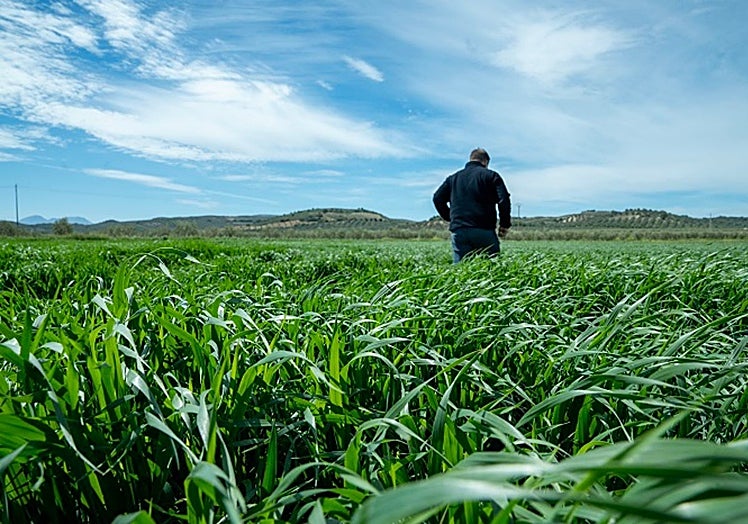
With that said, there is greater pressure on wheat, which is the main product of the province of Malaga. Rodríguez recalls another important factor, which is the amount of debt that many farmers carry over from the times of drought. "This debt is the result of the lack of yields in recent years," he said.
Malaga produces cereals such as durum wheat, soft wheat, barley and oats. The areas where these crops are most concentrated are in Teba, Almargen, Ardales, Campillos, the north part of Antequera, the Serranía de Ronda and the Guadalhorce valley, where the spring and the green fields have raised expectations. Despite a good harvest, it leaves a bittersweet taste. "They always accuse us of crying all day long, but I can't even remember a complete joy in the fields," said Benito Avilés.
![[]](http://static.vocstatic.com/voc26/latest/assets/images/favicon/surinenglish/apple-touch-icon-57x57.png)