
Retail
Shoppers opt to buy fewer, but better quality and locally-sourced products this festive season
A University of Malaga study has shown there is a trend towards spending less and making better choices as part of a more selective and thoughtful purchasing process
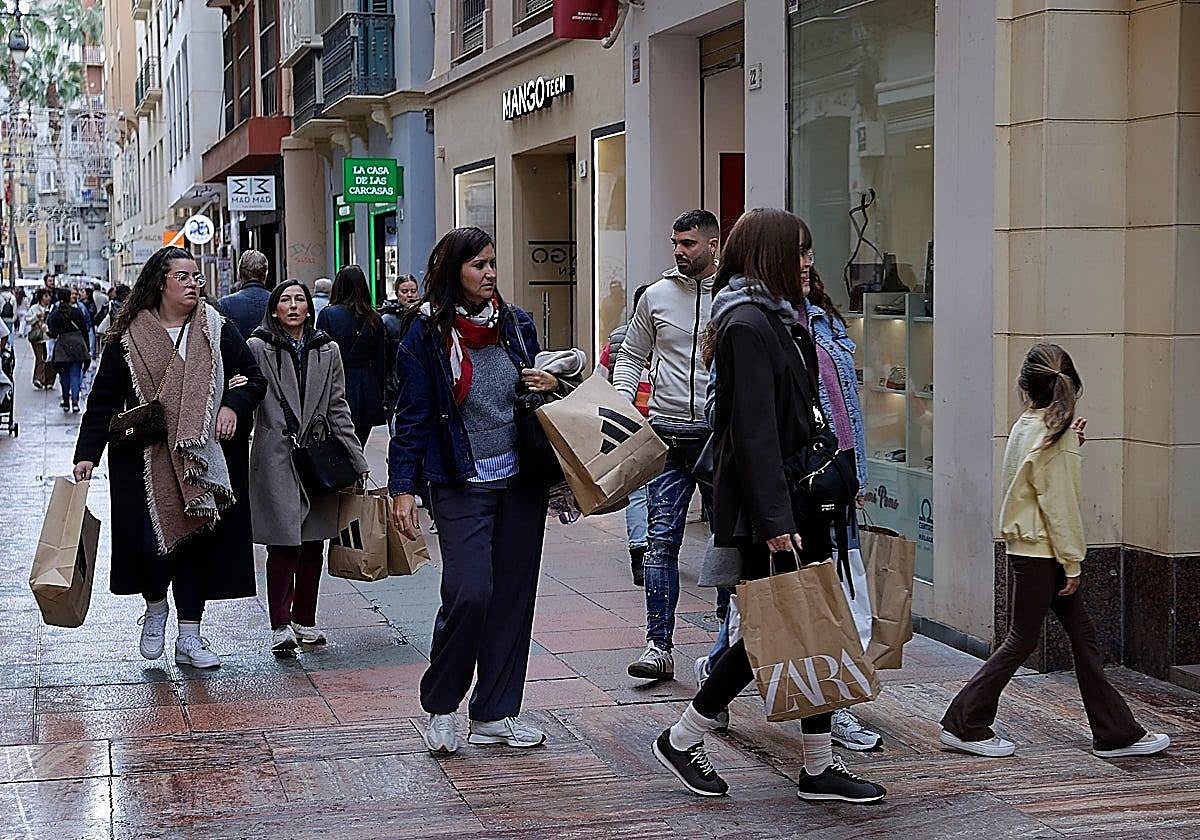

This Christmas holiday season is seeing a more selective consumer, a moderate increase in spending and a market where the hunt for value, advance planning and quality food has set the pace. This is the conclusion drawn from quantitative data from various national studies and qualitative information gathered from consumer interviews, all analysed by Prof Sebastián Molinillo, the commerce and digital transformation chair at the University of Malaga (UMA).
He asserts that the Christmas season maintains its position as the most important shopping period of the year and forecasts for this year point to a scenario of "moderate" growth. This trend, as explained by this professor of marketing and market research at the UMA, reveals a society that is committed to buying "better quality and lower volume".
Spending patterns show a fragmented behaviour, with price-sensitive consumers alongside other consumers willing to pay more for special products.
Data from the previous Christmas season showed a notable boost in the retail trade, with a 6.3% increase in sales, driven by categories such as food, eating out and jewellery. "Christmas continues to be an emotional anchor for Spanish consumption," says Molinillo, in line with the growing trend towards more experience-seeking purchases.
Consumers are increasingly drawn to premium and locally-sourced products such as gourmet foods, wines with protected designation of origin (PDO or DOP in Spanish) and traditional brands. Molinillo says this preference is explained by the search for excellence and choosing such products does not necessarily imply spending more, but rather making better choices in a more selective and thoughtful purchasing process.
Early shopping
Analysis of consumer behaviour shows that this year's Christmas shopper operates along four main axes, ranging from high price sensitivity combined with a willingness to invest in symbolic value, to increased planning, which leads 82% of shoppers to make advance purchases during Black Friday so they can spread spending across several paychecks. "Buying early has become a household strategy to manage inflationary pressure without sacrificing quality," notes Molinillo.
In his opinion, younger generations are combining budget constraints with a growing interest in gifts in the form of experiences and even second-hand products, while the preference for celebrating at home and fine dining continues to solidify as a core element of the Christmas period. "Home is once again the emotional centre of Christmas and this has a direct impact on the fastest.growing categories."
Consumers also expect to increase or maintain their spending levels and, according to estimates collated by this UMA researcher, 71% will spend the same or more than the previous year, while one in four will increase their budget, with food playing a particularly prominent role, potentially registering a 30% increase and nearly 120 euros more per household.
Online sales
Online shopping continues to gain ground without diminishing the importance of bricks-and-mortar stores, which retain an "emotional" role, especially in the areas of food and gifts that require more personalised advice.
Molinillo clarifies that this coexistence of channels is not one replacing the other, rather it's an integration that allows consumers to move more freely between digital comparisons and in-person shopping experiences. This need for flexibility has completely redefined communication strategies for retailers.
Despite the advance of e-commerce, the physical store remains key and around half of consumers still prefer to see and touch the product, a factor that underpins the relevance of the in-person experience.
This necessitates strengthening integration between both channels and, according to Prof Molinillo, stems from a need for "sensory certainty" that the digital channel cannot yet replace.
Companies are facing this duality with optimism and 77% of the FMCG (fast-moving consumer goods) sector expects a better year than 2024, in an era marked by different campaigns that try to attract a customer who is "less loyal, more demanding and much more of a planner".
![[]](http://static.vocstatic.com/voc26/latest/assets/images/favicon/surinenglish/apple-touch-icon-57x57.png)