
Housing crisis
Only seven municipalities in Malaga meet residents' housing needs - including Estepona, Nerja and Manilva
A study by the province's trade association of builders and property developers pinpoints the capital of the Costa del Sol and and its surrounding areas as the locations with the greatest shortfall of new housing in the last decade

Malaga
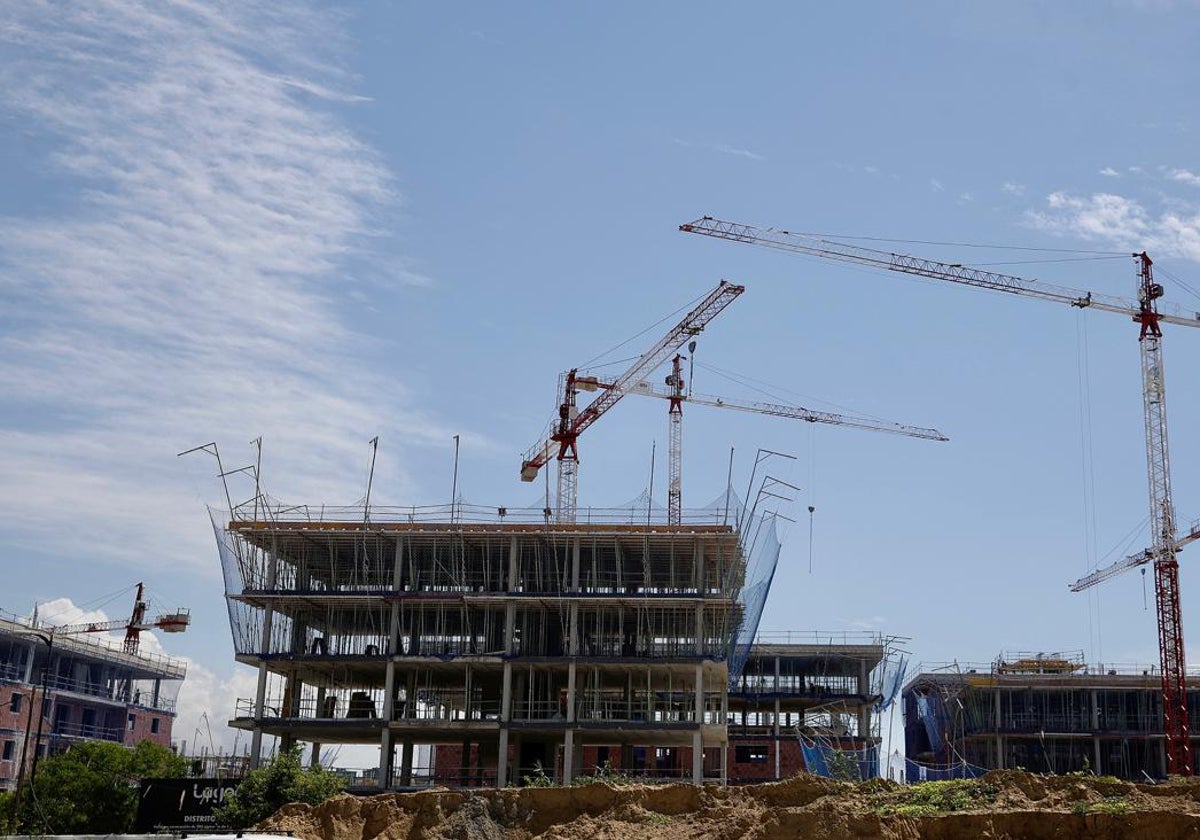
In the midst of the housing crisis, the message from real estate companies continues to be that more needs to be built so that supply can meet the current demand for new homes, which would help ease the escalation in property prices. According to the latest figures from property appraisal company Gesvalt, apartments for sale have risen by 30% in the last three years in Malaga province and rental costs have increased by 47%.
To bolster these arguments, Malaga's trade association of builders and developers commissioned real estate consultancy Atlas Real Estate Analytics to carry out a study to find out which municipalities in Malaga have built enough housing in the last ten years (from 2014 to 2024) to meet the needs of their individual populations. This analysis, covering a total of 32 towns (those where the number of households has decreased or increased by more than 100 during the decade in question), reveals that only seven towns have built enough housing to accommodate new arrivals.
These seven towns are Nerja, Campillos, Manilva, Algarrobo, Casares, Estepona and Benahavís. To this end, a ratio was calculated that relates new homes built to households created or registered in the last decade. Only in these seven municipalities is this ratio greater than one, "which guarantees that new households are not experiencing housing shortages." The report continues: "The rest have not built homes at the same rate as household growth, meaning these new households have less available supply and potentially more expensive housing," predicting that "this prolonged situation will strain residential markets in these municipalities." That means a total of 25 towns.
Among those failing to do their part in terms of producing enough homes are Malaga city, where 21,235 new homes have been created in the last decade, but only 14,301 homes have been built (a quantitative difference of 6,934). Next is Marbella (9,720 new homes compared to 4,581 built homes), and municipalities in the metropolitan area surrounding Malaga city such as Cártama (2,366 new to 526 built homes), Alhaurín de la Torre and Alhaurín el Grande. However, the "most striking" case, according to the study, is that of Rincón de la Victoria, the coastal town with the worst ratio (0.35), where 4,993 new homes have been created over the last ten years, but only 1,762 houses have been built. "Being coastal, the demand for second homes is high and adds to the demand for homes," says the report, placing Rincón as "one of the municipalities where housing could become even more strained in the coming years if this trend is not corrected."
Rincón de la Victoria, Cártama, Alhaurín de la Torre and Alhaurín el Grande present a tense housing situation
Furthermore, this study confirms that the fewer homes built per household created, the greater the increase in house prices in the municipalities analysed. It also analyses the consumption of land for development, highlighting the case of Fuengirola, the municipality closest to exhausting its available space for growth.
For the trade association's secretary-general, Violeta Aragón, the problem of access to housing continues to require "urgent measures by all governing bodies, especially in those areas where household growth is expected to be greatest." In her opinion, this study makes it clear that "in many municipalities the problem will worsen since, far from reducing the deficit, they are increasing it by not building homes at the pace needed."
For Aragón, this analysis of housing production outputs over the last decade "should serve to encourage the municipalities with the greatest deficit to get moving, without delays or excuses." She also expressed her concern that, "in some cases, even what is being announced is going even more slowly." In her opinion, this would be "irresponsible towards the residents and families who do not have a home, as they are being condemned to not having one."
A wake-up call direct from the trade
Fadeco, the federation of developers in Andalucía, is chaired by Malaga-born Ignacio Peinado and he is making a call for Malaga's various councils to take note of the results of this study. "It should be seen as a mirror that reflects the reality of each municipality. As with any exam, failing is understandable, what is unforgivable is not reopening the book," said Peinado. "There are municipal councils that, despite being among those that have responded the worst to household growth, still fail to take advantage of opportunities such as the Junta's decree that allows them to provide subsidised housing. They are even announcing that they will slow down development and that is irresponsible. We cannot demand that they solve a structural problem on their own, but we can demand that they act responsibly and take advantage of all available tools", said Fadeco's president.
However, Ignacio Peinado praised the management of those municipalities that, "despite having obvious difficulties, have been quick to get to work to reverse the situation, such as Malaga city, which adhered to the decree ahead of any other municipality and launched a programme of more than 1,500 VPO (social housing) homes, or Benalmádena and Torremolinos, which have followed the same path of responsibility."
![[]](http://static.vocstatic.com/voc26/latest/assets/images/favicon/surinenglish/apple-touch-icon-57x57.png)