
Human remains from the Arab period unearthed during work on a car park in Estepona
The socialist opposition has presented a petition demanding a technical report on the discovery, and 'transparency and compliance with legal procedures'

Estepona
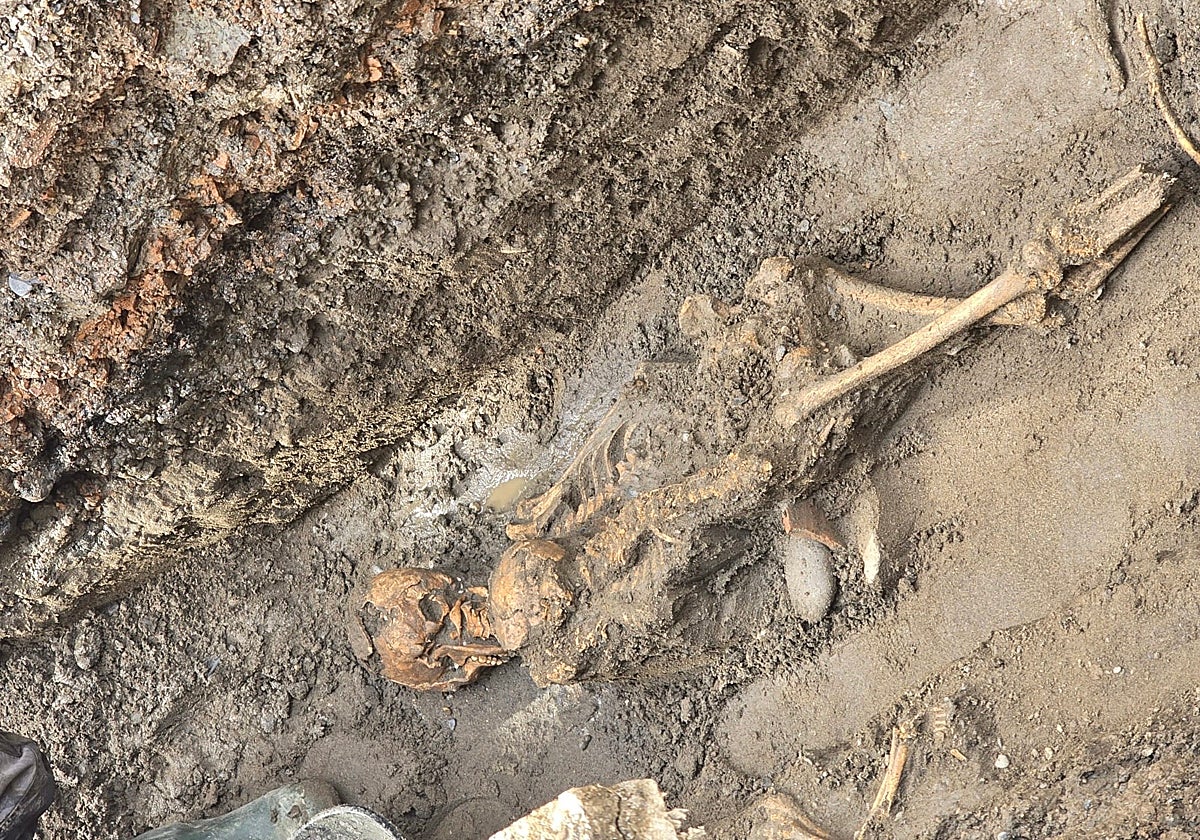
Construction work on a car park in Avenida Juan Carlos I in Estepona has uncovered remains of what, according to municipal archaeologists, is an early 12th-century Arab necropolis.
The discovery was made on 3 February at the intersection of Calles San Roque and Alcalá Galiano, next to the Mar de Alborán building, where a large-diameter pipe is being installed as part of the car park project.
Ildefonso Navarro, the municipal archaeologist, told Sur that “on this occasion, twelve burials have been found, which have already been catalogued, removed by experts, and taken to Estepona’s municipal museum for a thorough analysis”.
Muslim burials in Al-Andalus exhibit very distinct characteristics: the bodies were laid on their right side, oriented towards Mecca, in individual graves without any belongings.
This arrangement is crucial for distinguishing them from later burials, including those associated with Francoist repression, which often contain clothing, footwear or metal items linked to attire.
In this case, Navarro confirmed that “no such remains have been found, and all evidence points to this being part of the Istebbunna necropolis”.
Other archaeologists and historians consulted said: “Without speculating, the first thing to do is to establish the chronological context of the bones, and that it is the responsibility of the regional government to determine which period the discovered bones belong to. If they are from the Muslim era, they have indeed been very well preserved.”
The area where these remains were found is historically sensitive, as the Calle San Roque area was also a site of repression during the Spanish Civil War, with documented executions and burials of victims in nearby locations.
"For this reason, any discovery of human remains, even if they appear to be Arab or medieval, must be reported immediately to the competent authority, in strict compliance with the law of criminal procedure and the Andalusian historical heritage regulations," the sources said.
Sources from the High Court of Justice of Andalucía confirmed to SUR that the court of instruction number three of Estepona, on duty this week, had no record of the discovery.
For her part, Emma Molina, as representative of the socialist municipal group, has submitted documents to the town hall “requesting transparency and compliance with legal protocols, including the precautionary suspension of the works and immediate notification to the culture department and the judicial authority, if necessary”.
However, the municipal archaeologist said: "The competent regional body has the project of the car park work from the beginning, which includes the cataloguing as a protected area in the general urban development plan. The special protection plan for the old town obliges the company carrying out the work to hire an archaeologist to monitor the work at all times."
![[]](http://static.vocstatic.com/voc26/latest/assets/images/favicon/surinenglish/apple-touch-icon-57x57.png)